Asia
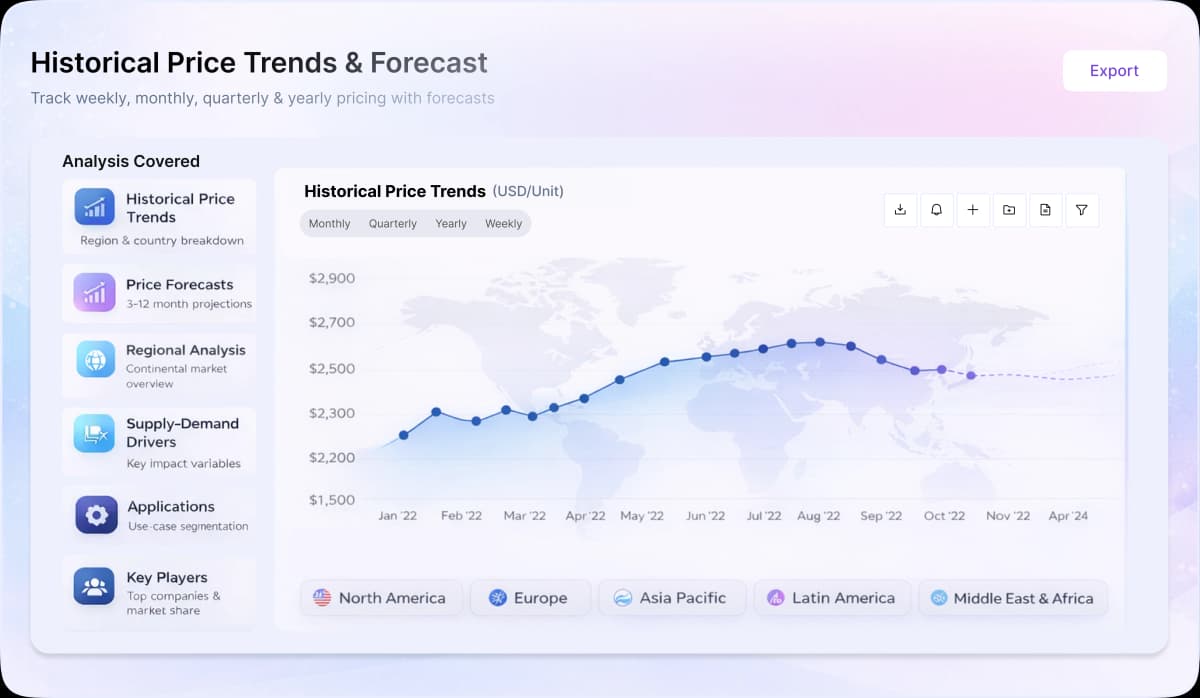
In the second half of 2024, a downtrend in prices was seen in the sodium persulfate market, moving toward a stable path due to oversupply in key markets and decent consumption levels. Prices in Asia were under pressure during the early part of this period, with oversupply prevailing in key manufacturing centres. The consumption levels in industries such as detergents, textiles, and papers were stable, and oversupply resulted in a lower chance for prices to move upward. This was due to improved logistics, allowing for quicker transportation and hence contributing to oversupply in the market, leading to saturation levels. However, a few areas, such as industrial cleaning and packaging, provided a boost to prices during the later part of this period.
Europe
In Europe, the market situation was similar to the one experienced in Asia, with prices facing downward pressure. Industrial demand was low in the important end-use industries of detergents, pulp, and glass manufacturing. Economic uncertainty and the strength of the euro as a currency further favoured the import of raw materials into the region, which contributed to the low prices. Production was stable in the region, and this caused inventories to accumulate, making it a buyer’s market. Although the costs of the raw materials were relatively stable, the low demand did not allow the manufacturers to pass on the costs to the end-users.
North America
A similar trend was also seen in the North American market. Oversupply and weak demand from the detergents, paper, and industrial cleaning sectors led to a gradual fall in prices. The production levels in the region remained stable, and inventory levels were well managed. Although the cost of the raw materials remained consistent, the profitability levels remained weak as the growth in demand was sluggish and the buying habits of the consumers remained weak. The export market remained sluggish, and the oversupply from seasonal factors was compensated by the consistent production levels in the region.