About Our Tool
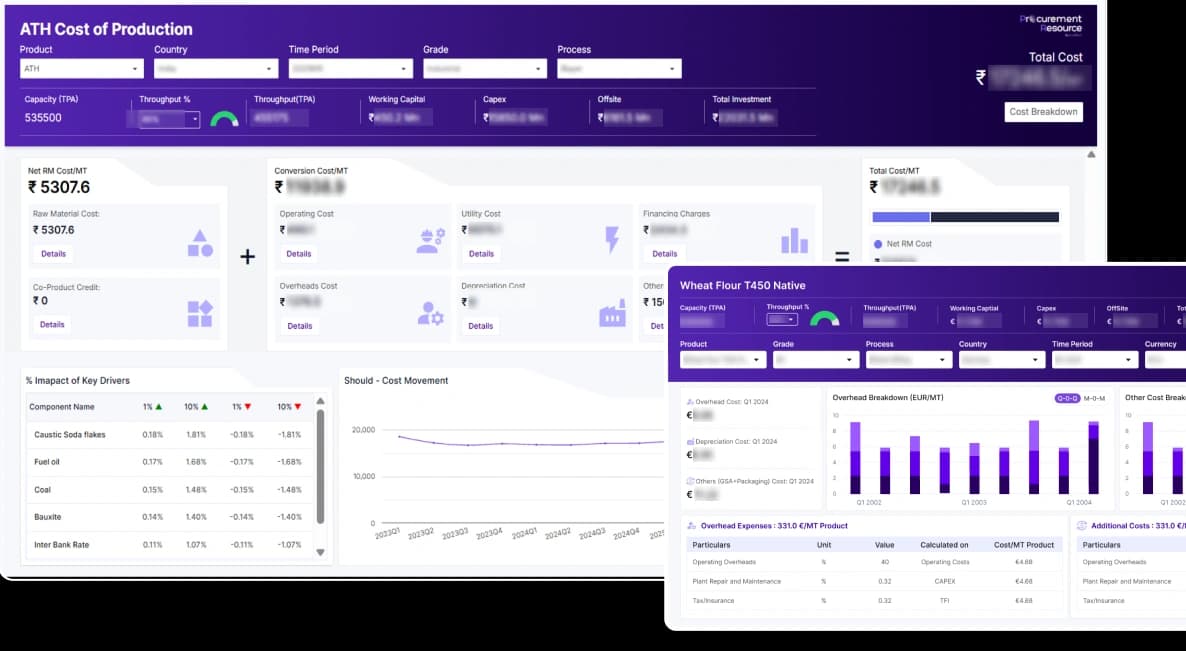
The Digital Cost Model offers a clear view of how supplier prices are built, converting engineering and financial inputs into interactive cost breakdowns. It supports should-cost analysis, scenario comparison, and stronger negotiation decisions.
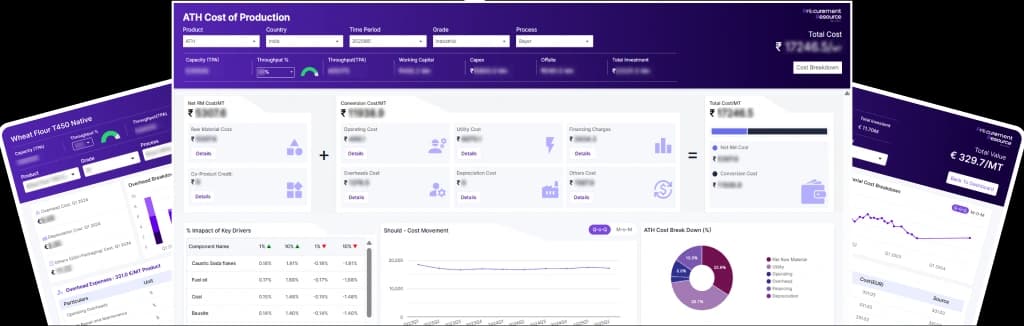
Bring clarity to production costs— compare scenarios, validate suppliers, and drive stronger cost decisions with one unified digital model.
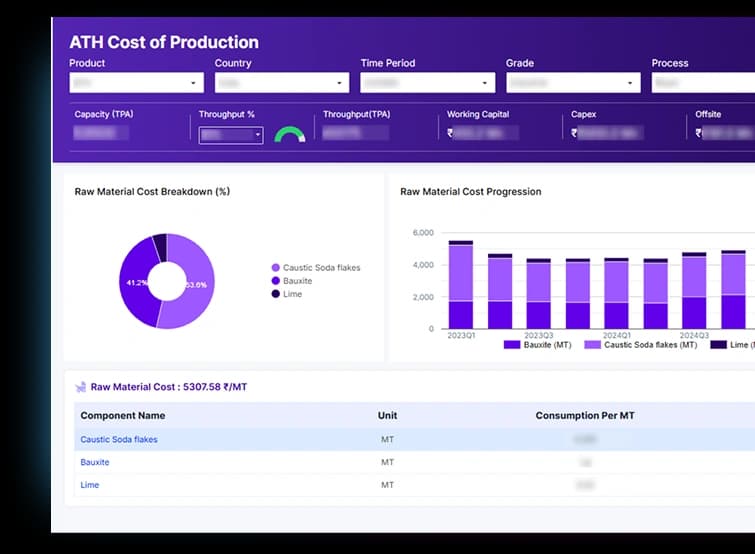
Full Cost Breakdown
Clear visibility across all cost components
Historical Cost Progression
Track cost movements over time
Sensitivity & Scenario Analysis
Test assumptions and cost drivers
Editable Simulator
Adjust inputs and recalculate instantly
Multi-Product & Process View
Compare products, grades, routes
Global Cost Benchmarks
Evaluate costs across regions
Digital Repository & Version Control
Centralized, auditable cost models
- Transparent, production-grade should-cost models for priority categories
- Stronger negotiation positions with defensible cost breakdowns
- Faster pricing decisions when markets move
- Shared view of costs across procurement, finance, operations, and leadership
- A living cost repository instead of scattered spreadsheets and email threads
Case Studies
Chemical Manufacturer
Strengthening Negotiation Control Through Should-Cost Intelligence
A specialty chemical manufacturer lacked clarity on how supplier prices were constructed across key raw materials, limiting negotiation effectiveness. Procurement Resource developed a Digital Cost Model covering 10 materials, including Ammonia, Caustic Soda, Soda Ash, Sodium Sulphate, and Phosphoric Acid. The model detailed cost structures across raw materials, energy, labour, overheads, and CAPEX, enabling accurate should-cost analysis across suppliers and regions. This supported stronger negotiations and improved cost control across critical chemical intermediates.

Our Methodology for Building Digital Cost Models
We follow a structured approach so that every digital cost model is reliable, repeatable, and easy to maintain.
Data Collection & Structuring
Data is sourced from ERP systems, contracts, technical documents, and market databases, then standardised into a unified cost structure.
Process Mapping
Manufacturing routes, material usage, utilities, and site overheads are mapped to reflect real plant operations.
Cost Model Development
Costs are calculated using engineering logic and market inputs, with assumptions kept transparent and traceable.
Validation & Refinement
Outputs are validated against historical costs and supplier quotes to improve accuracy.
Digital Deployment & Enablement
The model is deployed into interactive dashboards, enabling scenario analysis and ongoing updates.
TESTIMONIAL
What They Say About Us