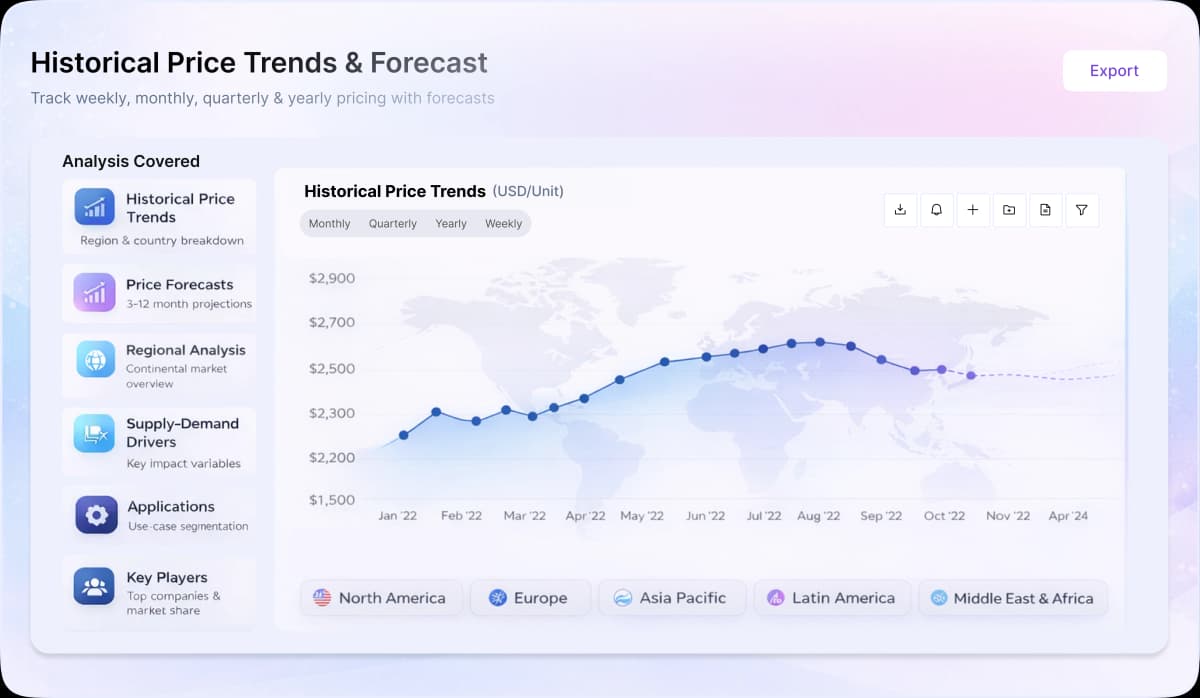
Aerosol Price Trend Analysis 2026: Price Drivers, Supply Demand Analysis, Latest News, Historical Prices & Market Insights

Pragati Agarwal profile photo
Written ByPragati Agarwal

Procurement Resource Database

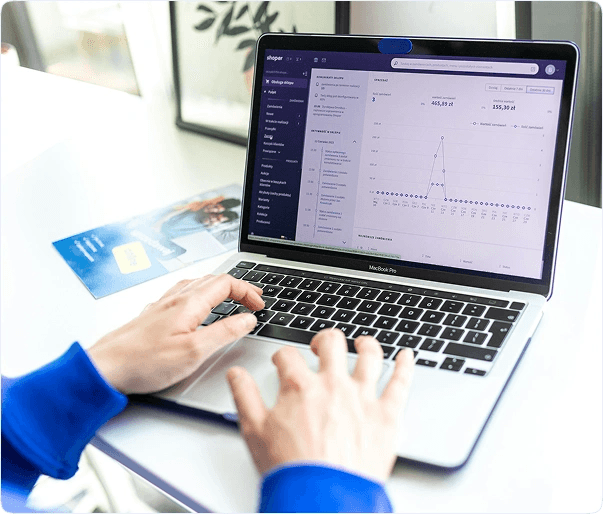
Laptop screen

Turn price intelligence into action with the Procurement Resource Database. Log in or subscribe to unlock live price trends, historical charts, supplier databases, cost curves, and analyst-backed insights across chemicals, agriculture, energy, packaging, and more. Use these tools to benchmark your contracts, plan budgets with confidence, and stay ahead of market moves on every product you buy.

0

+

Products

0

+

Regions

0

+

Subscriptions

The global aerosol market during the fourth quarter demonstrated stable pricing dynamics as supply-demand fundamentals remained balanced across key product categories. Pharmaceutical aerosol segments experienced steady activity, with respiratory therapeutic applications maintaining consistent demand supported by regulatory approvals for generic inhalation products that expanded market accessibility. Medical aerosol manufacturers sustained reliable production output while downstream healthcare sectors demonstrated stable procurement patterns for bronchodilator and corticosteroid delivery systems.

Personal care and household aerosol segments exhibited similar stability throughout the quarter, with demand from deodorant, hairspray, and household cleaning applications reflecting seasonal consumption patterns. Manufacturing capacity remained adequate to meet market requirements without supply constraints that might trigger pricing adjustments. Raw material costs for propellants, including hydrofluorocarbon alternatives and compressed gas systems, held relatively steady, providing predictable input cost structures for aerosol producers.

Industrial and automotive aerosol applications showed measured activity, with coating, lubricant, and adhesive delivery systems maintaining consistent demand from manufacturing sectors. Valve and actuator component availability remained sufficient, while aluminium and tinplate packaging supply conditions supported stable production economics. Distribution channels reported adequate inventory positions without excessive accumulation that would necessitate pricing corrections. Regulatory compliance costs for propellant reformulation and environmental standards remained manageable within existing pricing frameworks.


About Aerosol

An Aerosol is known to be a suspension of fine solid particles or liquid droplets in a gas. Aerosol can be natural or anthropogenic in nature. In day-to-day life, we encounter Aerosol as deodorants, room sprays, etc. Some of the examples of natural aerosol are fog, mist, dust, and geyser steam, while, examples of anthropogenic aerosol include particulate air pollutants and smoke.

Aerosol are generated using devices such as atomiser nozzle or nebuliser, aerosol spray, vibrating orifice aerosol generator (VOAG), and others. For instance, aerosol spray, a type of dispensing system, creates an aerosol mist of liquid droplets or particles. This system is used with a can or bottle having a payload as well as propellant under pressure.

Aerosol Product Detail

Industrial Uses

Cosmetics, Home and Personal Care Products, Food, Paints, Other

Supplier Database

Unilever PLC, Colep UK Ltd, Chicago Aerosol, Exxon Mobil Corporation, Vanesa Care Pvt. Ltd, Honeywell International Inc

Regional Coverage

Asia Pacific

China, India, Indonesia, Pakistan, Bangladesh, Japan, Philippines, Vietnam, Iran, Thailand, South Korea, Iraq, Saudi Arabia, Malaysia, Nepal, Taiwan, Sri Lanka, UAE, Israel, Hongkong, Singapore, Oman, Kuwait, Qatar, Australia, and New Zealand

Europe

Germany, France, United Kingdom, Italy,Spain, Russia, Turkey, Netherlands, Poland, Sweden, Belgium, Austria, Ireland Switzerland, Norway, Denmark, Romania, Finland, Czech Republic, Portugal and Greece

North America

United States and Canada

Latin America

Brazil, Mexico, Argentina, Columbia, Chile, Ecuador, and Peru

Africa

South Africa, Nigeria, Egypt, Algeria, Morocco

CurrencyUS$ (Data can also be provided in local currency)

Supplier Database AvailabilityYes

Customization ScopeThe report can be customized as per the requirements of the customer

Post-Sale Analyst Support360-degree analyst support after report delivery

Note: Our supplier search experts can assist your procurement teams in compiling and validating a list of suppliers indicating they have products, services, and capabilities that meet your company's needs.

Aerosol Production Process

  • Production of Aerosol via Cold Filling; and via Two-Step Filling

In the cold filling process, the primary drug and the propellent are cooled much below their boiling point and liquified. The mixture is added to a cold aerosol container and the liquefied gases is added. After filling is complete, the valve is placed. The container is then passed through water bath to check for leaks.

Frequently Asked Questions

Aerosol prices are expected to remain steady to mildly firm through 2026, underpinned by broadly balanced supply-demand fundamentals across pharmaceutical, personal care, household, and industrial segments. The outlook rests on aluminium can-material costs, energy prices, and propellant-reformulation regulation as the key variables. Adequate inventories and sufficient packaging availability should limit sharp price revisions, though a sustained aluminium price spike or tighter low-GWP regulatory mandates could shift conditions firmer.
Aluminium prices are the primary driver of aerosol production costs, since aluminium cans and valves are core packaging components for canmakers and fillers; periodic volatility in aluminium feeds directly into aerosol manufacturing costs. Hydrocarbon propellant and solvent costs are a second structural driver, tied to natural gas and petrochemical feedstock prices. Regulatory shifts toward low-GWP and low-VOC propellants add reformulation and compliance costs as manufacturers adopt alternative propellants and technologies such as bag-on-valve systems. Demand from deodorant, hairspray, household cleaning, pharmaceutical inhalation, and industrial coating segments determines how much of any cost pressure gets passed through to buyers.
Key companies across the aerosol value chain include Unilever, Colep UK, Chicago Aerosol, ExxonMobil, Vanesa Care, and Honeywell International, spanning formulation, filling, and propellant supply. These firms operate across North America, Europe, and Asia. Production and supply-chain concentration in North America and Europe, combined with broad consumption across Asia Pacific and emerging markets, means any disruption to aluminium can supply or propellant availability in those producing regions carries meaningful supply-security risk for import-dependent markets.
The expiry of the European patent covering HFO-1234ze for industrial aerosol propellants, announced in June 2026, opens the market to additional suppliers, improving long-term availability of low-GWP propellants with no impact on pharmaceutical-grade propellants. The shift toward low-GWP and low-VOC propellants adds modest reformulation costs. Aluminium prices remain the dominant swing factor, with periodic volatility pressuring canmakers and fillers, partly offset by stable hydrocarbon propellant and solvent costs.
Hydrocarbon propellant is the primary feedstock for aerosol production, with its availability and production cost serving as the main cost drivers. The value chain begins with sourcing the propellant and product concentrate, which are combined via a pressure filling process: the concentrate is placed in a sealed container, the propellant is injected under matching pressure, and the unit is hermetically sealed. The finished aerosol is then packaged and distributed to end-use sectors including cosmetics and personal care, household products, healthcare, food, and paints and varnishes.
Aerosol demand is driven by cosmetics and personal care (hairspray, deodorant, sunscreen), household products (cleaning agents, air fresheners), food and beverage packaging (whipped cream, coffee powders), paints and coatings, and pharmaceuticals (inhalers, disinfectants). Cosmetics and personal care generate seasonal demand spikes, while pharmaceuticals and industrial coatings provide steady baseline pull. Together, these sectors underpin firm pricing, with aluminium can costs and the shift to low-GWP propellants the main variables adding cost pressure across the value chain.
In 2026, the 23 June expiry of European patent EP2277969B2, covering sprayable compositions using HFO-1234ze as a propellant, was a notable development for the industrial aerosol industry. The expiry broadened the potential supplier base for HFO-1234ze used in general industrial aerosols, improving sourcing options and competition as manufacturers continued shifting away from higher-GWP propellants. However, other HFO-1234ze patents remain in force, while pharmaceutical-grade applications continue to face separate regulatory and qualification requirements. The industry's transition toward low-GWP propellants remained an important theme through H1 2026, alongside aluminium and energy costs as key cost variables.
Procurement Resource assesses aerosol prices through a structured, data-driven methodology combining primary engagement with producers, suppliers and traders, secondary market data, monitoring of feedstock and input costs, trade-flow and inventory tracking, and exchange or spot benchmarks. These inputs are validated and translated into a transparent price assessment and outlook. The detailed methodology is available on the Procurement Resource website.
Our Price Analysis Methodology

About the Author

Pragati Agarwal profile photo

Pragati Agarwal

Senior Business Insights Analyst

Delivering price trend analysis and procurement market insights at Procurement Resource, with expertise in identifying commodity patterns, supporting purchasing strategies, and improving cost efficiency through actionable market intelligence.

Schedule Demo

Schedule A Demo

Experience how Procurement Resource transforms raw material price data into clear, decision ready intelligence. Optimise your performance with reliable, expert market data and analysis. Schedule your demo today to experience a live walk-through where our experts will showcase interactive price charts, forecasted prices, and insights driving the prices for your key commodities, tailored to your workflows. Contact us now!


Our Team will be happy to assist you

We are just a text away

+1

Still Need Help?

Europe & Africa

+44 7573 171117

Sales@procurementresource.com

USA & Canada

+1 307 363 1045

Sales@procurementresource.com

APAC

+91 8850629517

Sales@procurementresource.com

Unlock full access to Procurement Resource's price databases, interactive charts, and short-term forecasts for thousands of commodities. Elevate your sourcing decisions by comparing prices across regions, downloading historical data, and layering in analyst-backed insights, all with our flexible plans that scale as your portfolio grows.

Still have any Questions

Contact Us
Mastercard
Wire
VISA
Stripe

Why Procurement Database

Commodity Market Intelligence

Commodity Market Intelligence

Track prices, market movements, supply-demand dynamics, and industry developments across hundreds of commodities through a centralized intelligence platform built for informed procurement decisions.

Price Forecasts & Market Outlooks

Price Forecasts & Market Outlooks

Understand market fluctuations using analyst-backed forecasts, historical pricing patterns, and evolving industry trends to strengthen sourcing strategies and budget planning.

Cost & Procurement Optimization

Cost & Procurement Optimization

Leverage cost models, pricing benchmarks, and procurement insights to evaluate purchasing opportunities, improve negotiations, and enhance operational efficiency.

Global & Regional Market Insights

Global & Regional Market Insights

Access region-specific price trends, trade activities, capacity changes, and supply chain developments influencing commodity markets worldwide.

1/4