Allyl Chloride Price Trend Analysis 2026: Market Insights, Price Drivers, Latest News, Historical Prices & Supply Demand Analysis

Pragati Agarwal profile photo
Written ByPragati Agarwal

Procurement Resource Database

Laptop screen

Turn price intelligence into action with the Procurement Resource Database. Log in or subscribe to unlock live price trends, historical charts, supplier databases, cost curves, and analyst-backed insights across chemicals, agriculture, energy, packaging, and more. Use these tools to benchmark your contracts, plan budgets with confidence, and stay ahead of market moves on every product you buy.

0

+

Products

0

+

Regions

0

+

Subscriptions

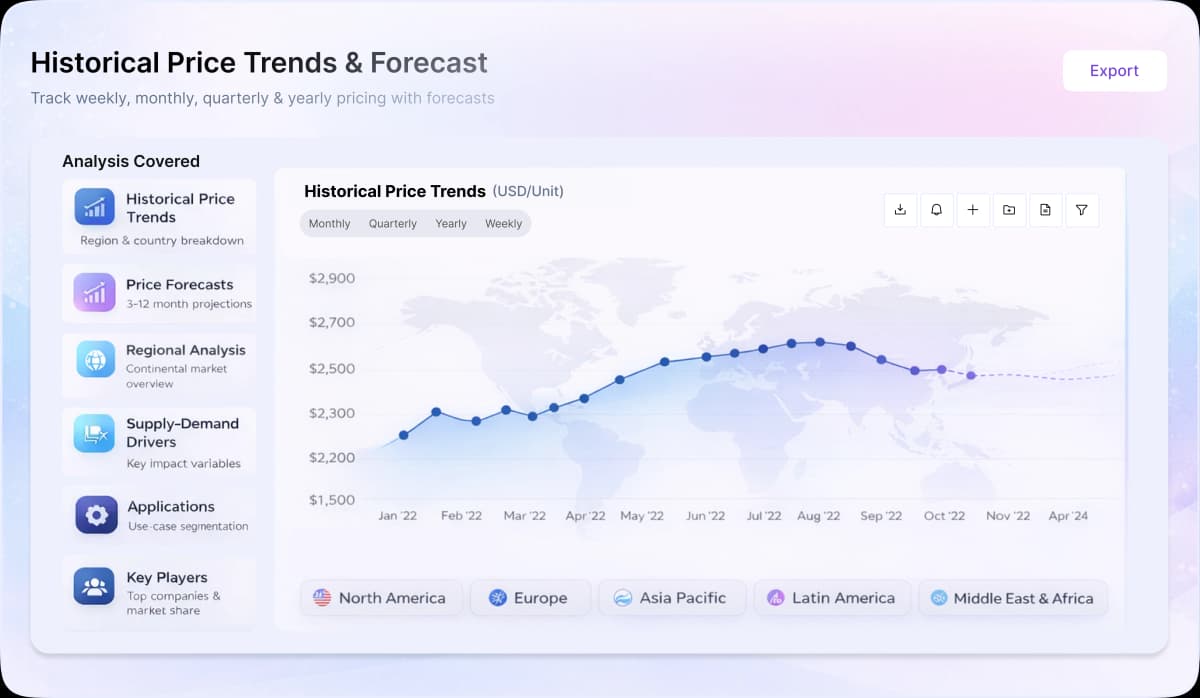
In 2025, the allyl chloride market followed a mixed but largely firm trajectory, with pricing primarily shaped by fluctuations in propylene, its key feedstock, and steady demand from downstream industries. During the first half of the year, prices maintained an upward trend as rising propylene values steadily increased production costs, prompting manufacturers to pass through higher input expenses. Demand from pharmaceuticals, agrochemicals, water treatment, epichlorohydrin, and allyl alcohol production remained supportive, helping sustain balanced market conditions. Domestic supply chains operated efficiently, while the absence of major freight or policy disruptions kept market movements gradual rather than abrupt.

In the third quarter, the market shifted to a more mixed pattern as softer propylene costs and cautious procurement from downstream derivative producers initially weighed on prices. However, this weakness proved temporary, as feedstock values later stabilized and modest replenishment activity from buyers helped restore market balance. By the fourth quarter, allyl chloride prices softened further in the opening phase, particularly in Asian markets, due to lower propylene costs and restrained demand from epichlorohydrin and epoxy resin sectors. Toward year-end, a mild recovery in feedstock economics and improving downstream interest helped prices stabilize within a narrow range.


About Allyl Chloride

Allyl chloride is a colourless liquid that is soluble in common organic solvents but insoluble in water. Its primary conversion product is epichlorohydrin, which is used in the production of plastics. It is a derivative of chlorinated propylene.

Allyl Chloride Product Detail

Molecular Weight
76.52 g/mol
Industrial Uses

Adhesives and sealant chemicals, Intermediates, Water Treatment

Synonyms

3-chloroprop-1-ene, 3-Chloro-1-propene, 3-Chloropropene, 3-Chloropropylene, Chlorallylene, Allylchloride

Supplier Database

OSAKA SODA, Kashima Chemical Co., LTD., INOVYN, Sumitomo Chemical Co., Ltd, Gelest, Inc.

Regional Coverage

Asia Pacific

China, India, Indonesia, Pakistan, Bangladesh, Japan, Philippines, Vietnam, Iran, Thailand, South Korea, Iraq, Saudi Arabia, Malaysia, Nepal, Taiwan, Sri Lanka, UAE, Israel, Hongkong, Singapore, Oman, Kuwait, Qatar, Australia, and New Zealand

Europe

Germany, France, United Kingdom, Italy,Spain, Russia, Turkey, Netherlands, Poland, Sweden, Belgium, Austria, Ireland Switzerland, Norway, Denmark, Romania, Finland, Czech Republic, Portugal and Greece

North America

United States and Canada

Latin America

Brazil, Mexico, Argentina, Columbia, Chile, Ecuador, and Peru

Africa

South Africa, Nigeria, Egypt, Algeria, Morocco

CurrencyUS$ (Data can also be provided in local currency)

Supplier Database AvailabilityYes

Customization ScopeThe report can be customized as per the requirements of the customer

Post-Sale Analyst Support360-degree analyst support after report delivery

Note: Our supplier search experts can assist your procurement teams in compiling and validating a list of suppliers indicating they have products, services, and capabilities that meet your company's needs.

Allyl Chloride Production Processes

  • Production of Allyl Chloride from Propylene

At high temperatures, allyl chloride is produced by chlorinating propylene using a free radical mechanism.

Frequently Asked Questions

Allyl chloride prices are likely to trade within a narrow, slightly soft band through 2026. Persistent propylene oversupply from Chinese PDH capacity expansions will cap upside, while resilient epichlorohydrin and epoxy resin demand provides a floor. The net direction will hinge on how quickly feedstock length clears against downstream restocking pace, and on whether Middle East supply risk re-escalates.
Allyl chloride prices are driven primarily by propylene feedstock costs, since propylene is chlorinated with chlorine gas to produce the finished chemical. New propane dehydrogenation (PDH) capacity, particularly in China, expands propylene supply and typically pressures allyl chloride costs lower, while geopolitical disruptions to Middle East crude and naphtha flows can tighten propylene availability and lift costs. Downstream demand from the epichlorohydrin and epoxy resin chain is the dominant offtake driver: firm construction and electronics-laminate demand for epoxy resins supports allyl chloride prices even when feedstock costs ease.
Key producers of allyl chloride include Osaka Soda, Kashima Chemical, Sumitomo Chemical, INOVYN, and Gelest. Osaka Soda, Kashima Chemical, and Sumitomo Chemical are Japanese producers serving Asia Pacific and global markets, while INOVYN operates in Europe and Gelest focuses on specialty-grade supply in North America. China is the dominant consuming and importing market, driven by its large epichlorohydrin and epoxy resin industries, with significant demand from India, Southeast Asia, and Europe.
Allyl chloride is produced by chlorinating propylene with chlorine gas via a free radical mechanism at high temperatures. Propylene is the sole primary feedstock, with chlorine gas as the reaction input. The finished product is primarily converted to epichlorohydrin, the monomer for epoxy resins used in protective coatings, adhesives, and electronic laminates. It also feeds into allyl alcohol and glycerin for pharmaceutical and food uses, cationic water treatment polymers, pharmaceutical intermediates such as allylamine, and organosilicon specialty chemicals for surface modification.
Epoxy resin production dominates allyl chloride demand as the primary route to epichlorohydrin, so construction and electronics-laminate activity, which drive epoxy resin consumption, are the key swing factors for allyl chloride offtake. Water treatment chemicals, particularly polyamines from the epichlorohydrin chain, add steady baseline demand, while agrochemical and pharmaceutical sectors, including active pharmaceutical ingredient synthesis, contribute consistent smaller-scale consumption. Because epoxy resin demand is comparatively resilient, it tends to provide a price floor even when upstream propylene feedstock costs retreat.
Procurement Resource assesses allyl chloride prices through a structured, data-driven methodology combining primary engagement with producers, suppliers and traders, secondary market data, monitoring of feedstock and input costs, trade-flow and inventory tracking, and exchange or spot benchmarks. These inputs are validated and translated into a transparent price assessment and outlook. The detailed methodology is available on the Procurement Resource website.

Our Price Analysis Methodology

About the Author

Pragati Agarwal profile photo

Pragati Agarwal

Senior Business Insights Analyst

Delivering price trend analysis and procurement market insights at Procurement Resource, with expertise in identifying commodity patterns, supporting purchasing strategies, and improving cost efficiency through actionable market intelligence.

Schedule Demo

Schedule A Demo

Experience how Procurement Resource transforms raw material price data into clear, decision ready intelligence. Optimise your performance with reliable, expert market data and analysis. Schedule your demo today to experience a live walk-through where our experts will showcase interactive price charts, forecasted prices, and insights driving the prices for your key commodities, tailored to your workflows. Contact us now!

Our Team will be happy to assist you

We are just a text away

+1

Still Need Help?

Europe & Africa

+44 7573 171117

[email protected]

USA & Canada

+1 307 363 1045

[email protected]

APAC

+91 8850629517

[email protected]

Unlock full access to Procurement Resource's price databases, interactive charts, and short-term forecasts for thousands of commodities. Elevate your sourcing decisions by comparing prices across regions, downloading historical data, and layering in analyst-backed insights, all with our flexible plans that scale as your portfolio grows.

Still have any Questions

Contact Us
Mastercard
Wire
VISA
Stripe

Why Procurement Database

Commodity Market Intelligence

Commodity Market Intelligence

Track prices, market movements, supply-demand dynamics, and industry developments across hundreds of commodities through a centralized intelligence platform built for informed procurement decisions.

Price Forecasts & Market Outlooks

Price Forecasts & Market Outlooks

Understand market fluctuations using analyst-backed forecasts, historical pricing patterns, and evolving industry trends to strengthen sourcing strategies and budget planning.

Cost & Procurement Optimization

Cost & Procurement Optimization

Leverage cost models, pricing benchmarks, and procurement insights to evaluate purchasing opportunities, improve negotiations, and enhance operational efficiency.

Global & Regional Market Insights

Global & Regional Market Insights

Access region-specific price trends, trade activities, capacity changes, and supply chain developments influencing commodity markets worldwide.

1/4