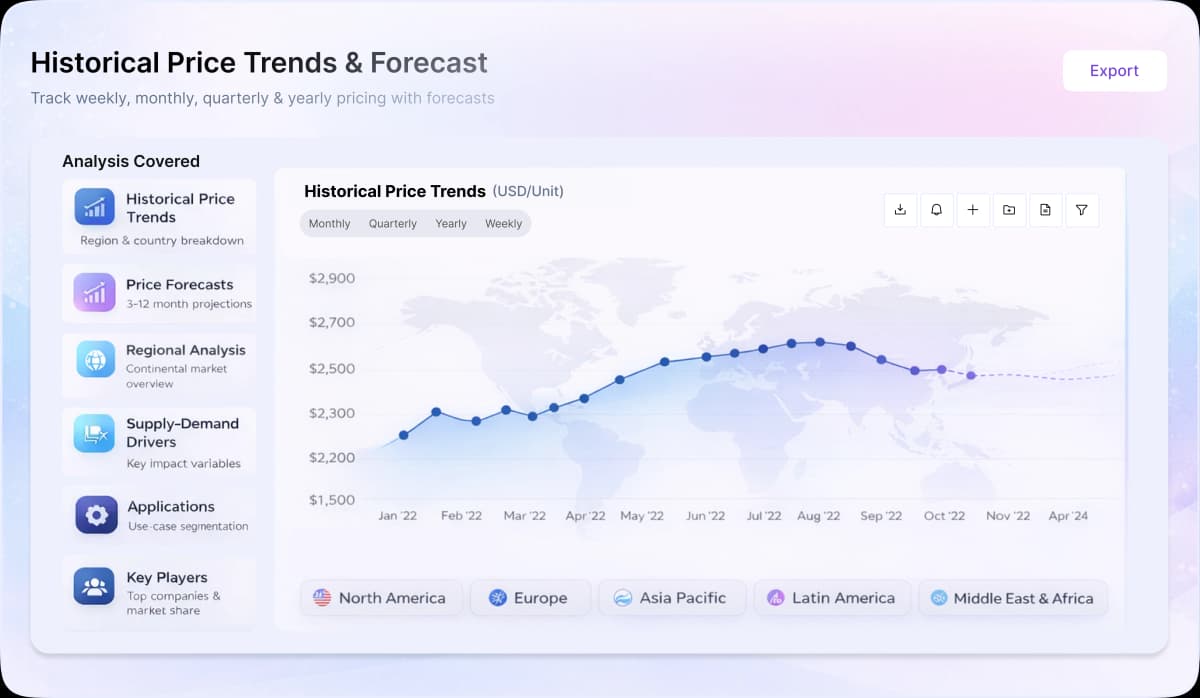
- Antimony prices in China showed a controlled upward movement in Q1 2026, supported by tight global supply and steady domestic demand conditions.
- Feedstock availability remained constrained due to limited ore supply and declining grades, increasing production costs and supporting price levels.
- Downstream demand from flame retardants and photovoltaic glass remained stable, with essential consumption maintaining consistent market absorption.
In China, antimony prices moved upward through Q1 2026, driven primarily by persistent supply tightness and gradual recovery in downstream demand. The global supply base remained highly concentrated, with total mine production estimated at around 100,000 metric tonnes in 2025, while China accounted for roughly 55–60% of global output, reinforcing its dominant role in controlling availability. Domestic ore supply remained constrained despite increased imports, as annual inflows were insufficient to offset declining mine grades and stricter environmental regulations that limited operating rates. Import volumes of antimony ore and concentrates rose toward the end of the previous year, yet overall supply conditions remained tight.
Supply-side constraints were further reinforced by limited overseas production growth and slow capacity additions, keeping the global supply gap intact. Although inflows from Southeast Asia increased during the quarter, they only partially eased domestic shortages without altering the tight supply structure. On the demand side, flame retardants continued to account for the largest share of consumption, while photovoltaic glass demand provided steady support, though procurement remained largely need-based. Export activity for antimony oxide showed recovery trends, supporting overall demand stability, even as seasonal disruptions temporarily slowed trade flows.
Analyst Insight
According to Procurement Resource, in the near term, antimony prices in China are expected to remain firm with slight fluctuations, supported by continued supply constraints and stable downstream demand, though limited purchasing momentum may cap sharper increases.