

Udeesha Tomar
AVP - Strategy and Solutions
Leading procurement research solutions across chemicals, materials, and food & beverages, with expertise in price forecasting and market analytics.

Asia
The prices of barium carbonate in the Asian region registered a firm trend in Q4’25. The region witnessed steady prices, mainly driven by consistent demand from the glass, ceramics, and bricks industry, particularly in China and Southeast Asia. As barium carbonate is a derivative of barite, firm barite prices ensured a stable production cost for the chemical in the region during the reported period. The supply in the region remained firm, as most Asian countries enjoy better raw material availability compared to the Western world. However, the buying activity remained subdued, and the buyers did not engage in bulk buying. The export markets remained firm, but the activity did not remain robust enough to push the prices higher.
Europe
In the European market, barium carbonate prices rose slightly during Q4’25. The European market depended on imported barite, and supply chain issues continued to be a concern in the global market. This kept the prices firm. The overall industrial demand for barium carbonate in the European market was moderate but not very high. The overall demand was for short-term deals, as the economic situation is not very clear. The logistics and import dependency of the European market helped to increase prices slightly. The overall market was steady, and suppliers were operating at normal production rates.
North America
In North America, there was a more noticeable firmness in the prices of barium carbonate in Q4’25. The US continued to be heavily dependent on imported barite, and hence the supply of raw materials remained sensitive to trade risks. However, the positive sentiment in terms of securing local mineral supplies, combined with steady demand from the glass, ceramics, and specialty chemical industries, continued to support prices. Towards the end of the quarter, there was a marginal reduction in buying interest because of natural seasonal influences, although the overall sentiment remained robust because of the underlying structure of import dependence.
Analyst Insight
According to Procurement Resource, Barium Carbonate prices are expected to be firm to stable, driven by ongoing import dependence for barite and steady demand in all major regions.
Related Report
Need latest Barium Carbonate price?
Get real-time price assessments, periodic trends, forecasts and price driver insights across key global markets.
Unlock Price Insights NowOur Clients




























Turn price intelligence into action with the Procurement Resource Database. Log in or subscribe to unlock live price trends, historical charts, supplier databases, cost curves, and analyst-backed insights across chemicals, agriculture, energy, packaging, and more. Use these tools to benchmark your contracts, plan budgets with confidence, and stay ahead of market moves on every product you buy.
0
+Products
0
+Regions
0
+Subscriptions
Asia
In Asia, barium carbonate prices trended slightly higher through the third quarter of 2025. Vietnam’s growing prominence in the regional barite trade indirectly supported the barium carbonate market, as barite availability and logistics affected production costs. Rising FOB Vietnam assessments reflected stronger mining and export activity, particularly for Laos-origin material, which tightened raw material supply in some domestic markets.
In China, steady industrial demand from ceramics and glass sectors, along with the government’s push for cleaner chemical production, kept operating rates stable. However, stricter emission rules and higher energy costs in some provinces led to modest production cost inflation, pushing prices up by the end of the quarter.
Europe
In Europe, barium carbonate prices remained stable to slightly firm during Q3’25. Demand from glass and electronics sectors was steady, though overall consumption was somewhat limited by sluggish construction activity.
Producers continued to face elevated energy and compliance costs, which restricted downward movement in pricing. European buyers also saw longer lead times and higher freight rates for imported barite and related feedstocks, partly due to shifting supply chains toward Asia. As a result, most regional suppliers maintained firm offers to preserve margins amid moderate buying interest.
North America
In North America, market activity improved modestly in Q3’25. Recovery in oil and gas drilling, along with the commissioning of CO2-based chemical projects, supported broader industrial sentiment. The barite market’s rebound influenced sentiment for related barium compounds. Producers in the US benefited from steady domestic demand and limited competition from imports due to higher freight and logistical costs. Price sentiment thus remained cautiously optimistic throughout the quarter.
Analyst Insight
According to Procurement Resource, Barium Carbonate prices are expected to stay slightly firm in early Q4’25, supported by stable industrial demand and ongoing adjustments in global barite supply chains.
Barium carbonate is a white colored, odorless powder that is majorly employed as a flux in glass and ceramics industry. As a flux, it helps in lowering the melting point of mixture and also enhances its properties. It's also employed in electronics for cathode ray tubes, pyrotechnics for green fireworks, and as a contrast agent in medical imaging. Additionally, it serves in oil wells to inhibit scale formation, and in specialty chemical manufacturing, but caution is necessary due to its toxicity.
BaCO3
Brick and tile manufacturing, Glass and ceramic industry, Electronics, Radiology and X-ray imaging, Barium titanate production, Inhibitor in oil and gas wells
Sakai Chemical Industru Co Ltd, Shaanxi Ankang Jianghua Group Co Ltd, Chemical Products Corporation, Solvay, Honeywell International Inc
CurrencyUS$ (Data can also be provided in local currency)
Supplier Database AvailabilityYes
Customization ScopeThe report can be customized as per the requirements of the customer
Post-Sale Analyst Support360-degree analyst support after report delivery
Note: Our supplier search experts can assist your procurement teams in compiling and validating a list of suppliers indicating they have products, services, and capabilities that meet your company's needs.
Carbon dioxide is passed through the solution of barium sulfide to give barium carbonate in slurry form. In subsequent steps, via sulfurization and vacuum filtration and then heating the contents at around 300°, the final product is obtained.
Our Price Analysis Methodology
AVP - Strategy and Solutions
Leading procurement research solutions across chemicals, materials, and food & beverages, with expertise in price forecasting and market analytics.
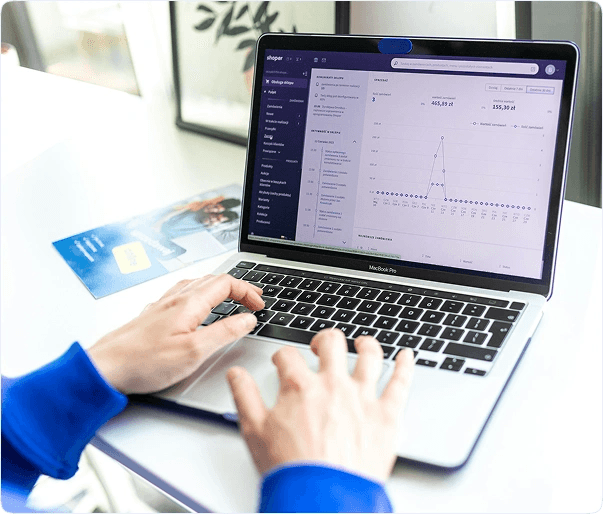
Experience how Procurement Resource transforms raw material price data into clear, decision ready intelligence. Optimise your performance with reliable, expert market data and analysis. Schedule your demo today to experience a live walk-through where our experts will showcase interactive price charts, forecasted prices, and insights driving the prices for your key commodities, tailored to your workflows. Contact us now!
Our Team will be happy to assist you
We are just a text away
Still Need Help?
Europe & Africa
+44 7573 171117
Sales@procurementresource.com
USA & Canada
+1 307 363 1045
Sales@procurementresource.com
APAC
+91 8850629517
Sales@procurementresource.com
Unlock full access to Procurement Resource's price databases, interactive charts, and short-term forecasts for thousands of commodities. Elevate your sourcing decisions by comparing prices across regions, downloading historical data, and layering in analyst-backed insights, all with our flexible plans that scale as your portfolio grows.
Still have any Questions
Contact Us



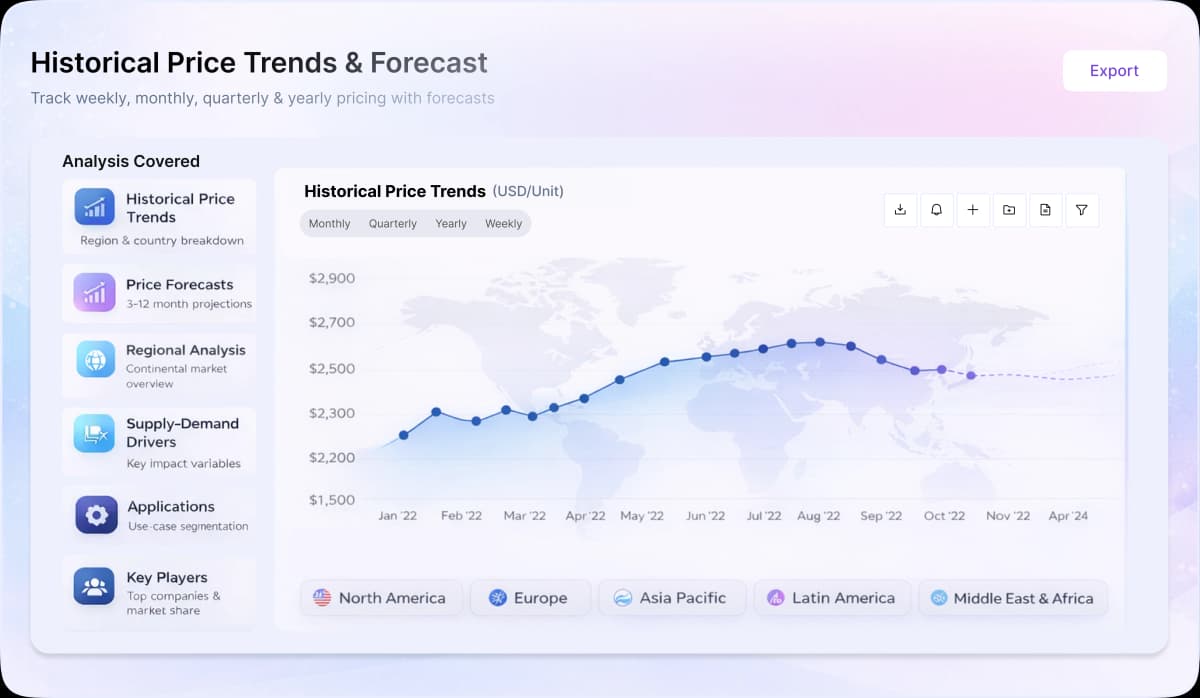
Price Trend Dashboard - What's Included
Price trends across a diverse portfolio of categories and products, spanning board to niche chemicals
Coverage extendable to grade-specific chemicals based on procurement requirements
Regular price tracking supported by robust historical datasets
News, policy updates, and key market drivers impacting price movements
Short-term and long-term price outlooks and forecasts
Supply-demand dynamics and capacity-driven market analysis

Track prices, market movements, supply-demand dynamics, and industry developments across hundreds of commodities through a centralized intelligence platform built for informed procurement decisions.

Understand market fluctuations using analyst-backed forecasts, historical pricing patterns, and evolving industry trends to strengthen sourcing strategies and budget planning.

Leverage cost models, pricing benchmarks, and procurement insights to evaluate purchasing opportunities, improve negotiations, and enhance operational efficiency.
Access region-specific price trends, trade activities, capacity changes, and supply chain developments influencing commodity markets worldwide.