Barium Titanate Price Trend Analysis 2026: Supply Demand Analysis, Historical Prices, Market Insights, Price Drivers & Latest News

Pragati Agarwal profile photo
Written ByPragati Agarwal

Procurement Resource Database

Laptop screen

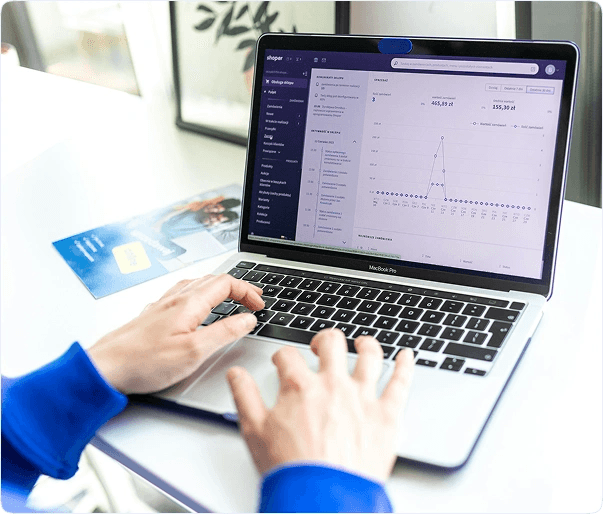
Turn price intelligence into action with the Procurement Resource Database. Log in or subscribe to unlock live price trends, historical charts, supplier databases, cost curves, and analyst-backed insights across chemicals, agriculture, energy, packaging, and more. Use these tools to benchmark your contracts, plan budgets with confidence, and stay ahead of market moves on every product you buy.

0

+

Products

0

+

Regions

0

+

Subscriptions

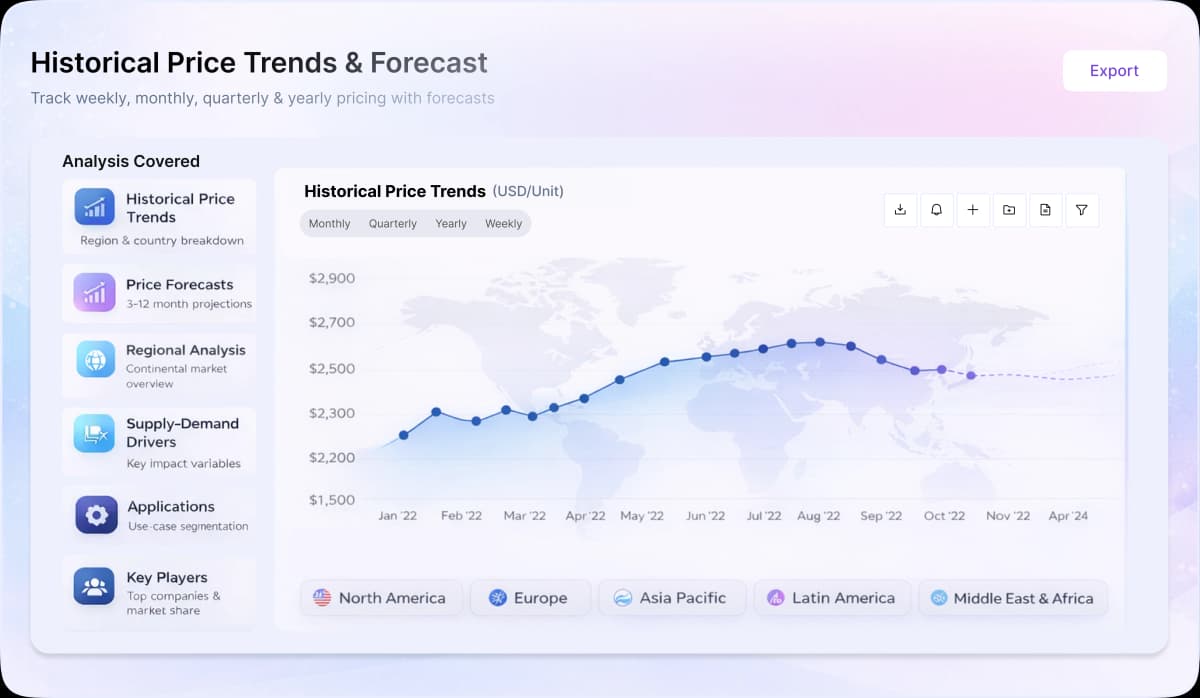
During the first quarter of 2025, barium titanate prices exhibited volatility, driven by supply chain disruptions and consistent demand across major industries. The compound remained in high demand due to its essential use in electronics, particularly in capacitors and sensors, and its growing application in electric vehicle components. This sustained demand helped keep prices relatively stable early in the quarter.

However, production faced challenges due to ongoing shortages of raw materials required for barium titanate, along with transportation constraints. These factors led to temporary price fluctuations, as supply struggled to meet demand. Nevertheless, by the end of the quarter, prices began to stabilize. Market sentiment remained positive, supported by persistent demand from the electronics sector and expanding use in renewable energy applications ahead of the summer months.

About Barium Titanate

Barium Titanate is a ferroelectric ceramic compound with piezoelectric properties. Though originally it is an insulator, but also can be used as a semiconductor if doped or modified. With its high melting point Barium Titanate is primarily used in electronics industry for making various devices, batteries, phones, etc.


Barium Titanate Product Detail

Chemical Formula

BaTiO3

Molecular Weight
233.19 g/mol
Industrial Uses

Piezoelectric Devices, Dielectric Materials, Ferroelectric, Memory Devices, Sonar Transducers, Optoelectronics, High-Permittivity Materials, Ferroelectric Ceramics, Production Process

Supplier Database

Sakai Chemical, Nippon Chemical, Fuji Titanium, Japan Kyoritsu Ceramic, Toho Titanium, Shandong Sinocera

Regional Coverage

Asia Pacific

China, India, Indonesia, Pakistan, Bangladesh, Japan, Philippines, Vietnam, Iran, Thailand, South Korea, Iraq, Saudi Arabia, Malaysia, Nepal, Taiwan, Sri Lanka, UAE, Israel, Hongkong, Singapore, Oman, Kuwait, Qatar, Australia, and New Zealand

Europe

Germany, France, United Kingdom, Italy,Spain, Russia, Turkey, Netherlands, Poland, Sweden, Belgium, Austria, Ireland Switzerland, Norway, Denmark, Romania, Finland, Czech Republic, Portugal and Greece

North America

United States and Canada

Latin America

Brazil, Mexico, Argentina, Columbia, Chile, Ecuador, and Peru

Africa

South Africa, Nigeria, Egypt, Algeria, Morocco

CurrencyUS$ (Data can also be provided in local currency)

Supplier Database AvailabilityYes

Customization ScopeThe report can be customized as per the requirements of the customer

Post-Sale Analyst Support360-degree analyst support after report delivery

Note: Our supplier search experts can assist your procurement teams in compiling and validating a list of suppliers indicating they have products, services, and capabilities that meet your company's needs.

Barium Titanate Production Process

  • Barium Titanate Production via Hydrothermal Synthesis Method

In this process a solution of barium hydroxide and titanium dioxide is subjected to a high temperature and high pressure reaction setup, where they undergo dissolution, nucleation, and crystallization. After cooling down fine powder of Barium Titanate is obtained.

Frequently Asked Questions

Barium titanate prices are likely to remain firm and broadly range-bound through the second half of 2026. Tight titanium dioxide availability and resilient electronics demand from capacitor and sensor makers should limit downside, while cautious procurement activity tempers any sharp upward moves. The outlook would shift if titanium dioxide or barium hydroxide supplies ease substantially, or if electronics demand weakens. Conversely, further feedstock tightening or a surge in EV and grid-storage orders could lift prices.
Barium titanate prices are shaped primarily by feedstock dynamics: titanium dioxide availability and barium hydroxide supply conditions determine production economics, with tighter availability limiting how much prices can soften. Steady downstream pull from capacitor and sensor manufacturing offsets shifts in procurement sentiment. Asian output anchors the global market, while European prices typically carry a premium on elevated energy and logistics costs. The durable growth narrative around electric vehicles and grid-storage applications keeps the underlying demand outlook constructive.
Six barium titanate suppliers anchor the market: five Japan-based (Sakai Chemical, Nippon Chemical, Fuji Titanium, Japan Kyoritsu Ceramic, and Toho Titanium) and one Chinese producer (Shandong Sinocera). This East Asian base sets global prices, supported by firm electronics activity. European markets carry a premium from elevated energy and logistics costs, while North American demand tracks consumer electronics and electrification recovery. Supply concentration in Japan and China creates meaningful dependency for buyers across Asia Pacific, Europe, North America, Latin America, and Africa, who are primarily consumers and importers rather than producers.
Barium titanate is produced primarily via hydrothermal synthesis, where barium hydroxide octahydrate and anatase titania are reacted under high temperature and pressure to dissolve, nucleate, and crystallize into fine powder after cooling. Feedstock costs for barium carbonate, titanium dioxide, mineralizers, and utilities represent roughly 55-70% of total raw material expense. The finished powder is then used in multilayer ceramic capacitors, PTC thermistors, piezoelectric ceramics, sensors, and EV energy-storage capacitors.
The electronics and electric vehicle industries are the primary demand drivers for barium titanate. Electronics manufacturers consume it for capacitors, memory devices, sensors, and optoelectronic components, while EV producers use it in capacitor-based energy storage systems. This dual pull keeps prices firm and range-bound. Tight titanium dioxide supply and snug barium hydroxide availability constrain production economics, limiting any softening. Asian output anchors global pricing, while European markets carry a premium on elevated energy and logistics costs, and North American demand is supported by the broader consumer electronics and electrification recovery.
Procurement Resource assesses barium titanate prices through a structured, data-driven methodology combining primary engagement with producers, suppliers and traders, secondary market data, monitoring of feedstock and input costs, trade-flow and inventory tracking, and exchange or spot benchmarks. These inputs are validated and translated into a transparent price assessment and outlook. The detailed methodology is available on the Procurement Resource website.

Our Price Analysis Methodology

About the Author

Pragati Agarwal profile photo

Pragati Agarwal

Senior Business Insights Analyst

Delivering price trend analysis and procurement market insights at Procurement Resource, with expertise in identifying commodity patterns, supporting purchasing strategies, and improving cost efficiency through actionable market intelligence.

Schedule Demo

Schedule A Demo

Experience how Procurement Resource transforms raw material price data into clear, decision ready intelligence. Optimise your performance with reliable, expert market data and analysis. Schedule your demo today to experience a live walk-through where our experts will showcase interactive price charts, forecasted prices, and insights driving the prices for your key commodities, tailored to your workflows. Contact us now!

Our Team will be happy to assist you

We are just a text away

+1

Still Need Help?

Europe & Africa

+44 7573 171117

Sales@procurementresource.com

USA & Canada

+1 307 363 1045

Sales@procurementresource.com

APAC

+91 8850629517

Sales@procurementresource.com

Unlock full access to Procurement Resource's price databases, interactive charts, and short-term forecasts for thousands of commodities. Elevate your sourcing decisions by comparing prices across regions, downloading historical data, and layering in analyst-backed insights, all with our flexible plans that scale as your portfolio grows.

Still have any Questions

Contact Us
Mastercard
Wire
VISA
Stripe

Why Procurement Database

Commodity Market Intelligence

Commodity Market Intelligence

Track prices, market movements, supply-demand dynamics, and industry developments across hundreds of commodities through a centralized intelligence platform built for informed procurement decisions.

Price Forecasts & Market Outlooks

Price Forecasts & Market Outlooks

Understand market fluctuations using analyst-backed forecasts, historical pricing patterns, and evolving industry trends to strengthen sourcing strategies and budget planning.

Cost & Procurement Optimization

Cost & Procurement Optimization

Leverage cost models, pricing benchmarks, and procurement insights to evaluate purchasing opportunities, improve negotiations, and enhance operational efficiency.

Global & Regional Market Insights

Global & Regional Market Insights

Access region-specific price trends, trade activities, capacity changes, and supply chain developments influencing commodity markets worldwide.

1/4