Behenyl Alcohol Price Trend Analysis 2026: Latest News, Supply Demand Analysis, Market Insights, Historical Prices & Price Drivers
Behenyl Alcohol Price Trend H1 2026
Behenyl alcohol, also known as docosanol, is a long-chain saturated fatty alcohol produced mainly through the hydrogenation of plant oils such as rapeseed, soybean, and peanut oil. Valued for its waxy texture and stable structure, it serves as an emulsifier, thickener, and stabilizer in cosmetic and pharmaceutical formulations, with further use in lubricants, surfactants, detergents, and coatings. Because its manufacture is tied closely to natural oil feedstocks, its pricing moves in sympathy with agricultural oil markets, leaving feedstock cost and availability as the dominant influence.
Through the first half of 2026, behenyl alcohol prices held a firm-to-balanced tone, carrying over the steadier sentiment that emerged after the corrections late in the prior year. Rapeseed oil, the principal feedstock, stayed the central reference point, and its measured movements kept production costs contained rather than driving sharp swings. Asian prices remained largely steady as consistent procurement from personal care and cosmetic manufacturers met adequate supply, firming only when feedstock availability tightened. European material carried a premium tone on dependable demand and elevated energy costs, though improved availability at times tempered the upward pull, while North American prices held firm on steady consumption before easing modestly as supply loosened. Demand proved resilient throughout, underpinned by the compound's entrenched role in emollients, conditioners, and thickening agents, with buyers favouring cautious, need-based purchasing that kept the market range-bound.
Analyst Insight
According to Procurement Resource, behenyl alcohol prices are likely to stay range-bound with a mild upward bias in the near term, as steady demand meets a feedstock market whose own balance will dictate the next decisive move.
Need latest Behenyl Alcohol price?
Get real-time price assessments, periodic trends, forecasts and price driver insights across key global markets.
Unlock Price Insights NowOur Clients































Procurement Resource Database
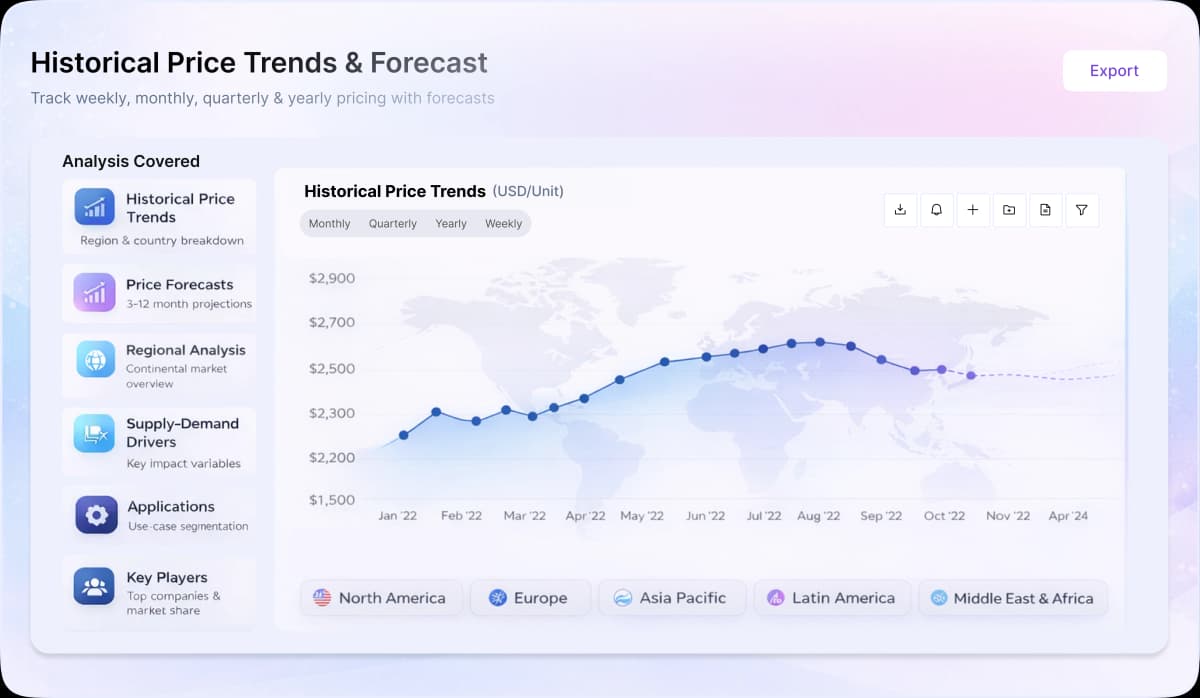
Turn price intelligence into action with the Procurement Resource Database. Log in or subscribe to unlock live price trends, historical charts, supplier databases, cost curves, and analyst-backed insights across chemicals, agriculture, energy, packaging, and more. Use these tools to benchmark your contracts, plan budgets with confidence, and stay ahead of market moves on every product you buy.
0
+Products
0
+Regions
0
+Subscriptions
Asia
The behenyl alcohol market in Asia followed a generally upward trajectory during 2025, influenced primarily by feedstock cost movements and stable downstream demand. In the early phase, prices showed a gradual increase, reflecting firm raw material trends and consistent procurement from personal care and cosmetic manufacturers. Mid-year, the market experienced intermittent fluctuations, as supply conditions adjusted and buyers adopted cautious purchasing strategies. The influence of rapeseed oil as a key feedstock remained evident, with its rising trend translating into cost pressure across the value chain. Demand from applications such as emollients, conditioners, and thickening agents in skincare and haircare products remained steady, preventing any significant downside. Toward the later part of the year, prices strengthened further before witnessing a noticeable correction, aligning with a softening in feedstock trends and easing buying momentum.
Europe
In Europe, behenyl alcohol prices exhibited a similar pattern, characterized by a moderate rise followed by fluctuations and a late-stage decline. Early market conditions reflected balanced supply and demand, with stable consumption from the cosmetics and pharmaceutical sectors. As the year progressed, upward price movement became more visible due to higher input costs and steady industrial demand. However, periodic corrections occurred as supply availability improved and procurement slowed temporarily. The market remained closely linked to feedstock dynamics, with cost pass-through influencing pricing decisions. In the latter phase, prices softened after reaching higher levels, reflecting improved availability and reduced urgency in spot buying. Demand from applications such as emulsifiers, lubricants, and formulation stabilizers remained consistent, supporting overall market stability despite price corrections.
North America
The North American market observed a steady increase in behenyl alcohol prices through much of 2025, followed by a decline toward the end of the year. Early trends were supported by stable demand from personal care, pharmaceutical, and industrial applications. As the year advanced, tighter supply conditions and elevated production costs contributed to a gradual price rise. Market participants reported limited spot availability during certain periods, which supported firmer pricing. However, toward the end of the year, prices declined as supply conditions improved and demand showed signs of moderation. The market remained sensitive to feedstock cost adjustments and downstream consumption trends.
About Behenyl Alcohol
Behenyl alcohol is a long-chain fatty alcohol, typically derived from natural sources like rapeseed oil or peanuts. It is a waxy, white solid at room temperature with the chemical formula C22H46O. Behenyl alcohol has a high melting point and is known for its stable chemical structure. It is considered a saturated alcohol with a relatively simple molecular composition. This compound is part of a group of fatty alcohols and is often used as a building block in the production of various derivatives.
Behenyl Alcohol Product Detail
C22H46O
Docosanol
BASF SE, Godrej Industries, Jarchem Industries Inc., Kao Corporation, Kokyu Alcohol Kogyo Co.Ltd., Koster Keunen, New Japan Chemical Co. Ltd.
Regional Coverage
Asia Pacific
Europe
North America
Latin America
Africa
CurrencyUS$ (Data can also be provided in local currency)
Supplier Database AvailabilityYes
Customization ScopeThe report can be customized as per the requirements of the customer
Post-Sale Analyst Support360-degree analyst support after report delivery
Note: Our supplier search experts can assist your procurement teams in compiling and validating a list of suppliers indicating they have products, services, and capabilities that meet your company's needs.
Behenyl Alcohol Industrial Uses
Behenyl alcohol, a long-chain fatty alcohol derived from natural sources such as rapeseed oil, has a wide range of industrial applications. In the cosmetic and pharmaceutical industries, it is used as an emulsifying agent, thickener, and stabilizer in creams, lotions, and ointments. Its ability to improve texture and provide smoothness makes it popular in skincare products. Additionally, behenyl alcohol is utilized in the production of lubricants, surfactants, and plastics, as well as in the formulation of detergents and coatings. Its versatility makes it a valuable ingredient in many industrial processes.
Frequently Asked Questions
Our Price Analysis Methodology


Schedule a demo
Experience how Procurement Resource transforms raw material price data into clear, decision ready intelligence. Optimise your performance with reliable, expert market data and analysis. Schedule your demo today to experience a live walk-through where our experts will showcase interactive price charts, forecasted prices, and insights driving the prices for your key commodities, tailored to your workflows. Contact us now!
Our Team will be happy to assist you
We are just a text away
Still Need Help?
Unlock full access to Procurement Resource's price databases, interactive charts, and short-term forecasts for thousands of commodities. Elevate your sourcing decisions by comparing prices across regions, downloading historical data, and layering in analyst-backed insights, all with our flexible plans that scale as your portfolio grows.
Still have any Questions
Contact Us



Price Trend Dashboard - What's Included
Price trends across a diverse portfolio of categories and products, spanning board to niche chemicals
Coverage extendable to grade-specific chemicals based on procurement requirements
Regular price tracking supported by robust historical datasets
News, policy updates, and key market drivers impacting price movements
Short-term and long-term price outlooks and forecasts
Supply-demand dynamics and capacity-driven market analysis
Why Procurement Database

Commodity Market Intelligence
Track prices, market movements, supply-demand dynamics, and industry developments across hundreds of commodities through a centralized intelligence platform built for informed procurement decisions.

Price Forecasts & Market Outlooks
Understand market fluctuations using analyst-backed forecasts, historical pricing patterns, and evolving industry trends to strengthen sourcing strategies and budget planning.

Cost & Procurement Optimization
Leverage cost models, pricing benchmarks, and procurement insights to evaluate purchasing opportunities, improve negotiations, and enhance operational efficiency.
Global & Regional Market Insights
Access region-specific price trends, trade activities, capacity changes, and supply chain developments influencing commodity markets worldwide.