Benzyl Chloride Price Trend Analysis 2026: Price Drivers, Latest News, Supply Demand Analysis, Historical Prices & Market Insights

Pragati Agarwal profile photo
Written ByPragati Agarwal

Procurement Resource Database

Laptop screen

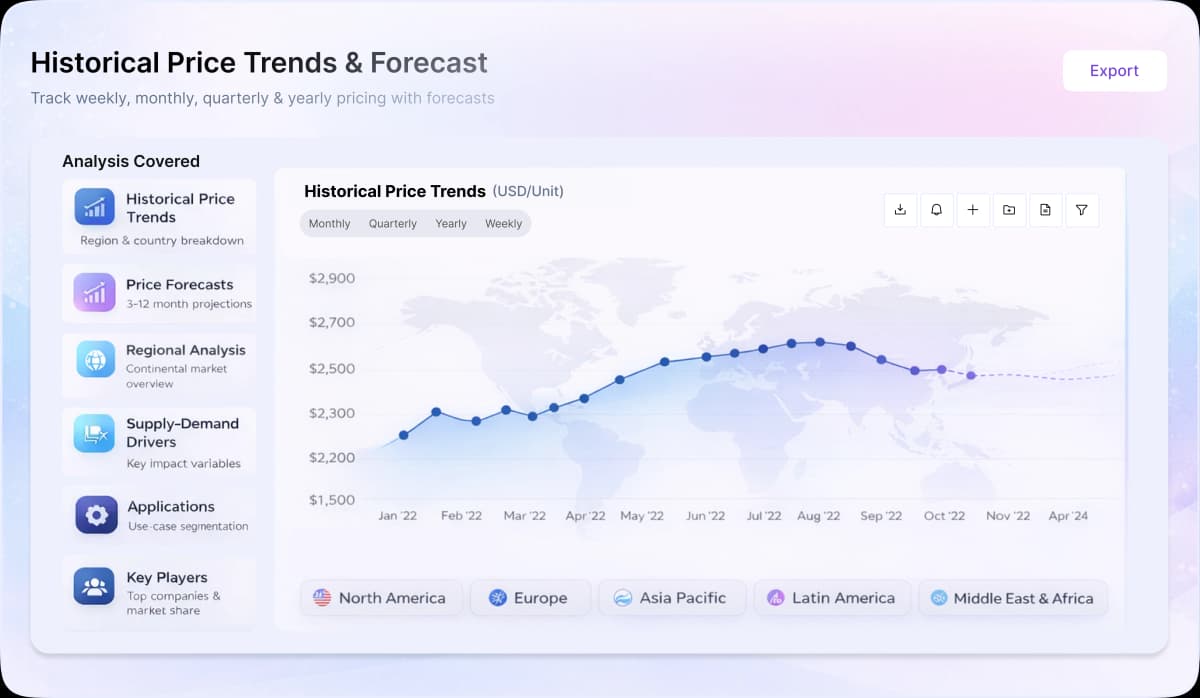
Turn price intelligence into action with the Procurement Resource Database. Log in or subscribe to unlock live price trends, historical charts, supplier databases, cost curves, and analyst-backed insights across chemicals, agriculture, energy, packaging, and more. Use these tools to benchmark your contracts, plan budgets with confidence, and stay ahead of market moves on every product you buy.

0

+

Products

0

+

Regions

0

+

Subscriptions

Asia

The Asian Benzyl Chloride market experienced considerable fluctuations throughout the fourth quarter, influenced by feedstock cost movements and varying downstream consumption patterns. Early in the period, prices declined gradually as producers adjusted their pricing strategies to facilitate inventory movement amid subdued demand. The toluene feedstock market witnessed volatility during this phase, which affected production economics across major manufacturing hubs in China.

Downstream sectors, including pharmaceutical intermediates and benzyl compound manufacturing, maintained cautious purchasing approaches with procurement driven primarily by immediate operational requirements. Mid-quarter brought a recovery phase as improved crude oil values and tighter feedstock availability supported price stabilization.

However, this upturn proved temporary as the latter portion of the quarter introduced renewed weakness. Supply-demand fundamentals remained unbalanced, with adequate material availability meeting limited end-user consumption. Chemical manufacturing and specialty applications demonstrated restrained buying activity as year-end approached, resulting in range-bound price movements despite intermittent attempts at recovery.

Europe

European Benzyl Chloride markets displayed initial strength during the opening phase of the fourth quarter before transitioning into progressive weakness that persisted through year-end. Early price appreciation reflected temporarily improved market fundamentals and tighter feedstock availability, with toluene supply conditions supporting higher production costs initially.

Peak pricing levels emerged during early mid-quarter; however, this momentum dissipated as downstream demand from plasticizer manufacturing, pharmaceutical applications, and specialty chemical production weakened considerably. The broader industrial slowdown across European markets contributed to reduced consumption patterns, with end-users adopting conservative inventory strategies.

Supply availability remained sufficient throughout the period while demand softened progressively, creating downward pressure on pricing. Market sentiment deteriorated alongside declining crude oil values and cautious purchasing behaviour from key consuming sectors.

North America

North American Benzyl Chloride markets followed trajectories similar to Asian patterns, characterized by initial softness, mid-quarter stabilization, and renewed weakness toward period-end. Production operations remained consistent throughout the quarter, with toluene-based manufacturing maintaining steady output levels despite fluctuating demand signals.

Downstream consumption from pharmaceutical intermediates, quaternary ammonium compound production, and chemical synthesis applications followed typical seasonal patterns influenced by feedstock cost dynamics. End-user sectors maintained need-based purchasing approaches rather than building strategic inventories, reflecting balanced but cautious market conditions and limited speculative activity.


About Benzyl Chloride

Benzyl Chloride, a chemical compound with the molecular formula C7H7Cl, is a colorless liquid known for its aromatic scent. It is a pivotal building block in organic synthesis, extensively employed in the pharmaceutical, agrochemical, and specialty chemical industries. This versatile compound serves as a precursor for various chemicals, facilitating the production of pharmaceuticals, pesticides, dyes, and other valuable substances, thereby playing a crucial role in diverse industrial processes and applications.

Benzyl Chloride Product Detail

HS Code
29036940
Chemical Formula

C7H7Cl

CAS Number
100-44-7
Molecular Weight
126 g/mol
Industrial Uses

Pharmaceuticals, Agrochemicals, Specialty Chemicals, Dyes and resins, Perfumes, Textiles

Supplier Database

Lanxess AG, Shanghai Xinglu Chemical Technology Co., Ltd, Nippon Light Metal Co.,Ltd, Valtris Specialty Chemicals, Hubei Phoenix Chemical Company Limited, Benzochem Industries Pvt Ltd.

Synonyms

a-Chlorotoluene, Chloromethyl benzene, Benzylmonochloride

Regional Coverage

Asia Pacific

China, India, Indonesia, Pakistan, Bangladesh, Japan, Philippines, Vietnam, Iran, Thailand, South Korea, Iraq, Saudi Arabia, Malaysia, Nepal, Taiwan, Sri Lanka, UAE, Israel, Hongkong, Singapore, Oman, Kuwait, Qatar, Australia, and New Zealand

Europe

Germany, France, United Kingdom, Italy,Spain, Russia, Turkey, Netherlands, Poland, Sweden, Belgium, Austria, Ireland Switzerland, Norway, Denmark, Romania, Finland, Czech Republic, Portugal and Greece

North America

United States and Canada

Latin America

Brazil, Mexico, Argentina, Columbia, Chile, Ecuador, and Peru

Africa

South Africa, Nigeria, Egypt, Algeria, Morocco

CurrencyUS$ (Data can also be provided in local currency)

Supplier Database AvailabilityYes

Customization ScopeThe report can be customized as per the requirements of the customer

Post-Sale Analyst Support360-degree analyst support after report delivery

Note: Our supplier search experts can assist your procurement teams in compiling and validating a list of suppliers indicating they have products, services, and capabilities that meet your company's needs.

Benzyl Chloride Production Processes

For the industrial production of benzyl chloride, Toluene is chlorinated with chlorine gas in a gas phase photochemical reaction. Along with benzyl chloride, hydrochloric acid is also produced as a side product.

Frequently Asked Questions

The benzyl chloride outlook for 2026 points to soft-to-stable prices in the near term, with the market largely balanced as comfortable supply meets restrained demand. Direction will hinge on toluene feedstock movements and the pace of recovery in pharmaceutical and specialty chemical offtake. Toluene cost relief or firmer crude sentiment could provide intermittent support, while a sustained rebound in pharmaceutical intermediates and benzyl-derivative demand would be needed to shift the market firmer. Ample Chinese supply and cautious procurement are likely to cap any sharp upside in Asia.
Benzyl chloride prices are shaped by several interconnected factors. Toluene feedstock costs are the primary lever, since the product is made via photochlorination of toluene, so comfortable toluene values amid adequate aromatics availability tend to limit upward pressure on production economics. Crude oil sentiment can provide intermittent support to Asian prices, while ample Chinese supply generally keeps Asian material under pressure. In Europe, tighter balances and higher conversion costs typically support a modest premium, though a sluggish industrial backdrop caps gains.
The benzyl chloride market is concentrated in Asia-Pacific for production, with China and India as the primary manufacturing hubs. Key companies include Shanghai Xinglu Chemical Technology, Hubei Phoenix Chemical, Benzochem Industries, Lanxess AG, Nippon Light Metal, and Valtris Specialty Chemicals, alongside plant-report manufacturers such as Shandong Taihe Chemicals, Prakash Chemicals International, Tatva Chintan Pharma Chem, Sanghvi Organics, and Shri Rajaram Chemicals. Europe and North America are key consumption markets, while the heavy production concentration in Asia creates a meaningful supply-security consideration for buyers in other regions.
Through H1 2026, benzyl chloride prices traced a soft-to-stabilising path, carried over from subdued late 2025 momentum. Toluene feedstock values stayed comfortable amid adequate aromatics availability, limiting upward pressure on production costs. Asian material remained under pressure from ample Chinese supply meeting cautious, need-based procurement, while European prices held a modest premium on tighter balances and higher conversion costs, capped by sluggish industrial demand. North American material tracked the softer Asian tone as toluene-based output held steady.

Benzyl chloride is produced via photochemical chlorination of toluene with chlorine gas, yielding hydrochloric acid as a by-product. Toluene comes from crude oil refining, while chlorine derives from sodium chloride electrolysis. The product feeds into benzyl alcohol, benzyl cyanide, benzoic acid, and benzyl esters used as plasticizers, flavoring agents, sanitizers, and agrochemicals. Broader demand spans pharmaceuticals, agrochemicals, dyes, resins, photographic chemicals, lubricants, and perfumes. Asia-Pacific leads on strong pharmaceutical and agrochemical demand, while Europe is supported by stable specialty chemical consumption under strict environmental standards.

Pharmaceutical intermediates are the primary demand driver, with steady offtake for active-ingredient synthesis supporting consistent buying. Specialty chemicals and plasticiser manufacturers add further volume, though purchasing remains need-based and range-bound. Agrochemicals, dyes, resins, and perfumes round out the end-market mix. Together these sectors keep the market balanced: comfortable supply meets restrained downstream pull, limiting price pressure and keeping benzyl chloride values soft to stable through H1 2026.
Procurement Resource assesses benzyl chloride prices through a structured, data-driven methodology combining primary engagement with producers, suppliers and traders, secondary market data, monitoring of feedstock and input costs, trade-flow and inventory tracking, and exchange or spot benchmarks. These inputs are validated and translated into a transparent price assessment and outlook. The detailed methodology is available on the Procurement Resource website.

Our Price Analysis Methodology

About the Author

Pragati Agarwal profile photo

Pragati Agarwal

Senior Business Insights Analyst

Delivering price trend analysis and procurement market insights at Procurement Resource, with expertise in identifying commodity patterns, supporting purchasing strategies, and improving cost efficiency through actionable market intelligence.

Schedule Demo

Schedule A Demo

Experience how Procurement Resource transforms raw material price data into clear, decision ready intelligence. Optimise your performance with reliable, expert market data and analysis. Schedule your demo today to experience a live walk-through where our experts will showcase interactive price charts, forecasted prices, and insights driving the prices for your key commodities, tailored to your workflows. Contact us now!

Our Team will be happy to assist you

We are just a text away

+1

Still Need Help?

Europe & Africa

+44 7573 171117

Sales@procurementresource.com

USA & Canada

+1 307 363 1045

Sales@procurementresource.com

APAC

+91 8850629517

Sales@procurementresource.com

Unlock full access to Procurement Resource's price databases, interactive charts, and short-term forecasts for thousands of commodities. Elevate your sourcing decisions by comparing prices across regions, downloading historical data, and layering in analyst-backed insights, all with our flexible plans that scale as your portfolio grows.

Still have any Questions

Contact Us
Mastercard
Wire
VISA
Stripe

Why Procurement Database

Commodity Market Intelligence

Commodity Market Intelligence

Track prices, market movements, supply-demand dynamics, and industry developments across hundreds of commodities through a centralized intelligence platform built for informed procurement decisions.

Price Forecasts & Market Outlooks

Price Forecasts & Market Outlooks

Understand market fluctuations using analyst-backed forecasts, historical pricing patterns, and evolving industry trends to strengthen sourcing strategies and budget planning.

Cost & Procurement Optimization

Cost & Procurement Optimization

Leverage cost models, pricing benchmarks, and procurement insights to evaluate purchasing opportunities, improve negotiations, and enhance operational efficiency.

Global & Regional Market Insights

Global & Regional Market Insights

Access region-specific price trends, trade activities, capacity changes, and supply chain developments influencing commodity markets worldwide.

1/4