Biotin Price Trend Analysis 2026: Latest News, Historical Prices, Price Drivers, Market Insights & Supply Demand Analysis

Procurement Resource Database

Laptop screen

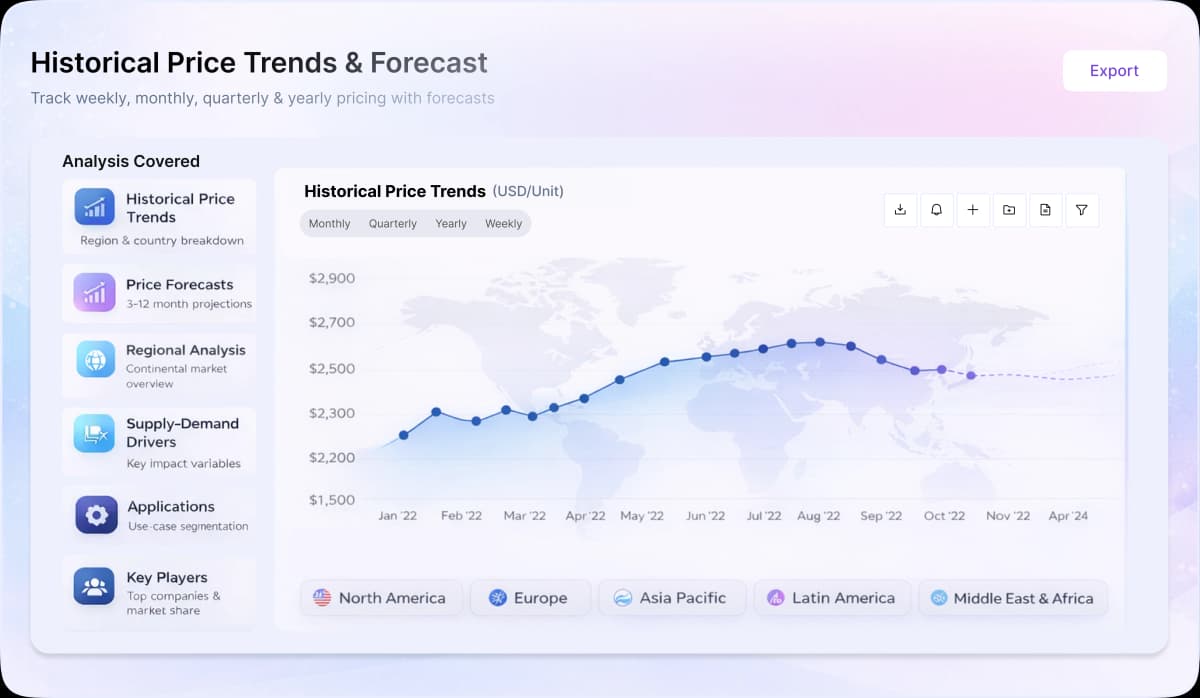
Turn price intelligence into action with the Procurement Resource Database. Log in or subscribe to unlock live price trends, historical charts, supplier databases, cost curves, and analyst-backed insights across chemicals, agriculture, energy, packaging, and more. Use these tools to benchmark your contracts, plan budgets with confidence, and stay ahead of market moves on every product you buy.

0

+

Products

0

+

Regions

0

+

Subscriptions

The third quarter presented a challenging environment for the U.S. Biotin market, marked by constrained trading activity and persistent inventory imbalances that developed from earlier frontloading behaviour. The quarter began with elevated inventory levels as U.S. producers and importers had accelerated purchases in preceding periods to secure material ahead of anticipated tariff implementations. This frontloading activity created an overhang that dampened fresh procurement requirements, with many buyers indicating sufficient coverage for their operational needs. The excess inventory situation weighed on market dynamics and limited transaction urgency.

Price movements reflected these supply-demand imbalances, with quotations experiencing modest fluctuations rather than directional trends. A brief recovery materialized mid-quarter as some restocking activity emerged alongside improved consumer sentiment. However, this uptick proved temporary as cautious purchasing behaviour reasserted itself and buyers focused on working through existing stocks. Trade activity remained subdued throughout the period, with limited spot market engagement. Tariff implementations influenced market structure, providing some pricing support while reinforcing buyer hesitance toward large-scale commitments. Overall sentiment reflected uncertainty about demand trajectories as participants adopted wait-and-see approaches.

Analyst Insight

According to Procurement Resource, looking forward, Biotin prices are likely to remain stable as limited spot activity continues. However, anticipated new production capacity may introduce supply pressure into an already oversupplied U.S. market.


About Biotin

Biotin is also known as vitamin B7 which is an essential ingredient in various metabolic processes. It also acts as a coenzyme in the production of fatty acids, amino acids, glucose and also in energy production processes. It helps in the growth of skin cells, hair, and nails. It is also added to food sources and is also naturally obtained from eggs, nuts, and certain vegetables. Its deficiency can lead to skin disorders, hair loss, and other health issues, making it an important micronutrient for overall well-being.

Biotin Product Detail

HS Code
29362950
Chemical Formula

C10H16N2O3S

CAS Number
58-85-5
Molecular Weight
244.31 g/mol
Industrial Uses

Wastewater treatment, Cosmetics and personal care, Agriculture, Food and beverage industry, Biotechnology

Supplier Database

Church & Dwight Co Inc, Nestle S.A., Nutraceutical Corporation, Life Extension Foundation Buyers Club Inc, The Nature's Bounty Co

Regional Coverage

Asia Pacific

China, India, Indonesia, Pakistan, Bangladesh, Japan, Philippines, Vietnam, Iran, Thailand, South Korea, Iraq, Saudi Arabia, Malaysia, Nepal, Taiwan, Sri Lanka, UAE, Israel, Hongkong, Singapore, Oman, Kuwait, Qatar, Australia, and New Zealand

Europe

Germany, France, United Kingdom, Italy,Spain, Russia, Turkey, Netherlands, Poland, Sweden, Belgium, Austria, Ireland Switzerland, Norway, Denmark, Romania, Finland, Czech Republic, Portugal and Greece

North America

United States and Canada

Latin America

Brazil, Mexico, Argentina, Columbia, Chile, Ecuador, and Peru

Africa

South Africa, Nigeria, Egypt, Algeria, Morocco

CurrencyUS$ (Data can also be provided in local currency)

Supplier Database AvailabilityYes

Customization ScopeThe report can be customized as per the requirements of the customer

Post-Sale Analyst Support360-degree analyst support after report delivery

Note: Our supplier search experts can assist your procurement teams in compiling and validating a list of suppliers indicating they have products, services, and capabilities that meet your company's needs.

Biotin Production Processes

The reaction of cyclic acid with dextroamine produces cyclic amine that on further reaction with potassium borohydride and hydrochloric acid gives a product which is combined with potassium thioacetate to give thioketone. In the next step, thioketone is reacted with formate reagent, and then is subjected to hydrogenation. Finally, via debenzylation, crude biotin is produced and by the help of charcoal, pure biotin is finally produced.

Frequently Asked Questions

The biotin outlook remains tied to Chinese and Indian producer operating rates, since these two countries account for the bulk of global fermentation-based supply. Sustained high-capacity utilization among these producers tends to keep the market oversupplied and prices under pressure, while any coordinated output discipline or plant disruption would tighten availability quickly given the geographic concentration. Downstream demand from dietary supplement, food fortification, animal feed, and pharmaceutical buyers sets the pace of restocking; comfortable inventory positions among these buyers currently limit urgency, while a demand rebound or supply-side tightening would be needed to shift pricing firmer.
Biotin prices are shaped primarily by Chinese and Indian producer operating rates, since these two countries supply the bulk of global fermentation-based output; when facilities run at full capacity, expanded supply intensifies competitive pricing pressure. Demand-side, buyer inventory positioning across dietary supplement, food fortification, and pharmaceutical sectors is the key swing factor: comfortable inventories reduce restocking urgency and soften spot demand, while depleted stock triggers active buying. Freight rates and currency movements in emerging markets add a secondary layer of cost pressure that can constrain purchasing power.
Biotin production is heavily concentrated in Asia, particularly China, with key manufacturers including Zhejiang Medicine Co., Ltd., Shandong Hongda, Anhui Tiger Biotech Co., Ltd., SDM (Sichuan Tianxin Pharmaceutical), and Teva Pharmaceutical Industries Ltd. This geographic concentration creates meaningful supply security exposure, since disruption at any of these Chinese production hubs would ripple through global availability. Consumption spans North America, Europe, Asia Pacific, Latin America, and Africa, drawing on dietary supplement, food fortification, animal feed, and pharmaceutical formulation channels worldwide.
Biotin is produced via a multi-step chemical synthesis route using cyclic acid, dextroamine, potassium borohydride, potassium thioacetate, and formate reagent as key feedstocks. Cyclic acid and dextroamine combine to form cyclic amine, which reacts with potassium borohydride and hydrochloric acid. The solution is treated with potassium thioacetate to yield thioketone, then reacted with formate reagent to produce ketene. Ketene undergoes hydrogenation and debenzylation to yield crude biotin, refined using charcoal to produce pure biotin used in dietary supplements, animal feed, cosmetics, and fortified foods.
Biotin demand is driven primarily by dietary supplements targeting hair, skin, and nail health, animal nutrition feed for livestock coat quality, food fortification, and the pharmaceutical sector. These downstream industries set the pace for procurement: when supplement, food, and pharma buyers hold comfortable inventories, restocking urgency drops and spot demand softens, while depleted inventories prompt more active buying. Because Chinese and Indian output can expand quickly toward full capacity, supply tends to respond faster than demand, which is the structural reason this market leans toward periodic oversupply.
Biotin manufacturing is heavily concentrated in Asia, particularly China, with Chinese and Indian facilities capable of running at full capacity when demand or pricing conditions warrant it. This concentration means supply can expand quickly, intensifying competitive pressure and often keeping prices soft amid ample availability. Buyers benefit from that availability and generally lower pricing, but any disruption or policy shift in these hubs would rapidly tighten global supply, extend lead times, and shift negotiating power sharply toward suppliers, exposing the structural concentration risk for buyers reliant on Asian-origin biotin.


Procurement Resource assesses biotin prices through a structured, data-driven methodology that combines primary engagement with producers, suppliers and traders, secondary market data, monitoring of feedstock and input costs, trade-flow and inventory tracking, and exchange or spot benchmarks. These inputs are validated and translated into a transparent price assessment and outlook. The detailed methodology is available on the Procurement Resource website.

Our Price Analysis Methodology

About the Author

Vishakha Agrawal profile photo

Vishakha Agrawal

Lead - Social & Development Research

Delivering procurement intelligence and supply chain analytics across healthcare, FMCG, and chemicals sectors, with expertise in cost modeling, vendor mapping, and spend optimization to support data-driven sourcing decisions and procurement outcomes.

Schedule Demo

Schedule A Demo

Experience how Procurement Resource transforms raw material price data into clear, decision ready intelligence. Optimise your performance with reliable, expert market data and analysis. Schedule your demo today to experience a live walk-through where our experts will showcase interactive price charts, forecasted prices, and insights driving the prices for your key commodities, tailored to your workflows. Contact us now!

Our Team will be happy to assist you

We are just a text away

+1

Still Need Help?

Europe & Africa

+44 7573 171117

Sales@procurementresource.com

USA & Canada

+1 307 363 1045

Sales@procurementresource.com

APAC

+91 8850629517

Sales@procurementresource.com

Unlock full access to Procurement Resource's price databases, interactive charts, and short-term forecasts for thousands of commodities. Elevate your sourcing decisions by comparing prices across regions, downloading historical data, and layering in analyst-backed insights, all with our flexible plans that scale as your portfolio grows.

Still have any Questions

Contact Us
Mastercard
Wire
VISA
Stripe

Why Procurement Database

Commodity Market Intelligence

Commodity Market Intelligence

Track prices, market movements, supply-demand dynamics, and industry developments across hundreds of commodities through a centralized intelligence platform built for informed procurement decisions.

Price Forecasts & Market Outlooks

Price Forecasts & Market Outlooks

Understand market fluctuations using analyst-backed forecasts, historical pricing patterns, and evolving industry trends to strengthen sourcing strategies and budget planning.

Cost & Procurement Optimization

Cost & Procurement Optimization

Leverage cost models, pricing benchmarks, and procurement insights to evaluate purchasing opportunities, improve negotiations, and enhance operational efficiency.

Global & Regional Market Insights

Global & Regional Market Insights

Access region-specific price trends, trade activities, capacity changes, and supply chain developments influencing commodity markets worldwide.

1/4