Blue Hydrogen Price Trend Analysis 2026: Market Insights, Latest News, Price Drivers, Historical Prices & Supply Demand Analysis

Rakesh Nandi profile photo
Written ByRakesh Nandi

Procurement Resource Database

Laptop screen

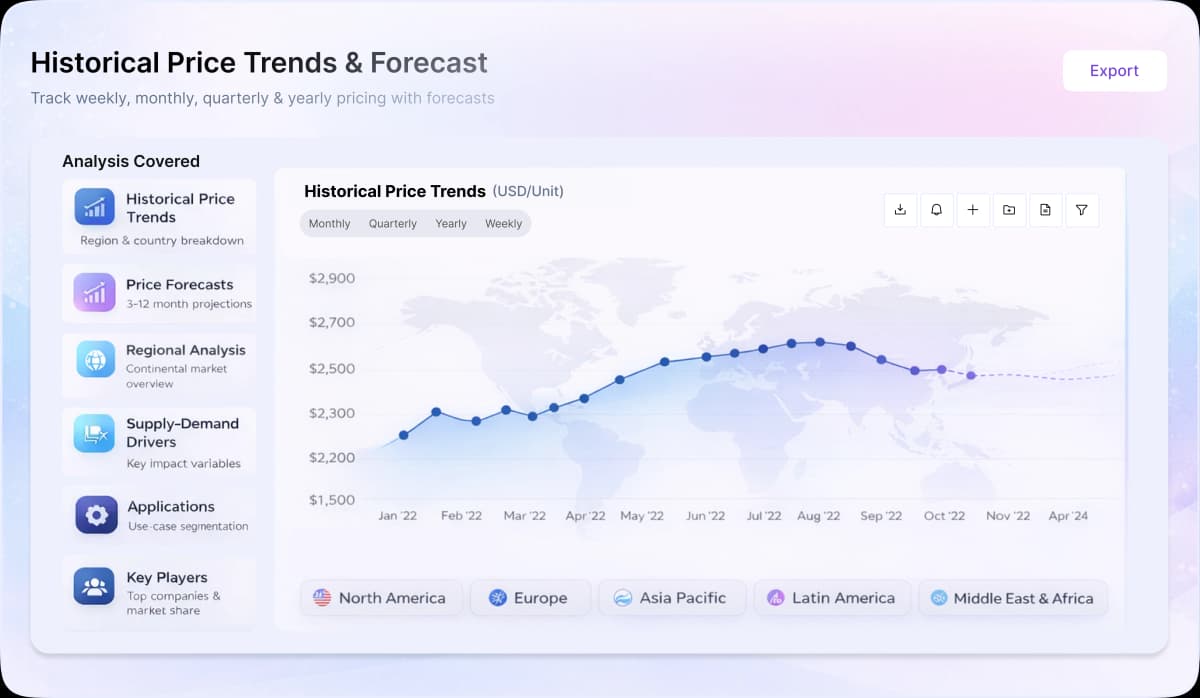
Turn price intelligence into action with the Procurement Resource Database. Log in or subscribe to unlock live price trends, historical charts, supplier databases, cost curves, and analyst-backed insights across chemicals, agriculture, energy, packaging, and more. Use these tools to benchmark your contracts, plan budgets with confidence, and stay ahead of market moves on every product you buy.


Blue Hydrogen Dashboard Inclusions

Blue Hydrogen Price Dasboard

0

+

Products

0

+

Regions

0

+

Subscriptions

About Blue Hydrogen

Blue hydrogen is a low-carbon form of hydrogen produced primarily from natural gas through steam methane reforming (SMR) or autothermal reforming (ATR), combined with carbon capture and storage (CCS) technology. Most of the carbon dioxide generated during production is captured and permanently stored, significantly reducing greenhouse gas emissions compared to conventional hydrogen production.

Blue Hydrogen Product Detail

Hs Code
2804
Chemical Formula

H2

Cas Number
1333-74-0
Molecular Weight
2.016 g/mol
Supplier Database

Air Products , Air Liquide , Linde plc ,Shell plc ,Equinor ,Exxon Mobil

Synonyms

Blue Hydrogen, Low-Carbon Hydrogen, CCS Hydrogen, Carbon-Captured Hydrogen, Decarbonized Hydrogen

Regional Coverage

Asia Pacific

China, India, Indonesia, Pakistan, Bangladesh, Japan, Philippines, Vietnam, Iran, Thailand, South Korea, Iraq, Saudi Arabia, Malaysia, Nepal, Taiwan, Sri Lanka, UAE, Israel, Hongkong, Singapore, Oman, Kuwait, Qatar, Australia, and New Zealand

Europe

Germany, France, United Kingdom, Italy,Spain, Russia, Turkey, Netherlands, Poland, Sweden, Belgium, Austria, Ireland Switzerland, Norway, Denmark, Romania, Finland, Czech Republic, Portugal and Greece

North America

United States and Canada

Latin America

Brazil, Mexico, Argentina, Columbia, Chile, Ecuador, and Peru

Africa

South Africa, Nigeria, Egypt, Algeria, Morocco

CurrencyUS$ (Data can also be provided in local currency)

Supplier Database AvailabilityYes

Customization ScopeThe report can be customized as per the requirements of the customer

Post-Sale Analyst Support360-degree analyst support after report delivery

Note: Our supplier search experts can assist your procurement teams in compiling and validating a list of suppliers indicating they have products, services, and capabilities that meet your company's needs.

Production Process

Blue Hydrogen Production by: Blue hydrogen is produced by converting natural gas into hydrogen through steam methane reforming or autothermal reforming. During the process, methane reacts with steam and oxygen to generate hydrogen and carbon dioxide. Carbon capture systems then remove a large portion of the generated CO2, which is transported and permanently stored underground or utilized in industrial applications.

Blue Hydrogen Industrial Uses

Blue hydrogen is used in petroleum refining, ammonia production, methanol manufacturing, power generation, steelmaking, and industrial heating applications. It is increasingly adopted as a transition fuel for decarbonizing hard-to-abate sectors and supports low-carbon energy systems while existing natural gas infrastructure and carbon capture facilities remain available.

Frequently Asked Questions

During Q1 2026, blue hydrogen production economics faced upward pressure as natural gas markets reacted to disruptions affecting energy flows through the Strait of Hormuz. Since blue hydrogen is produced from natural gas with carbon capture, higher feedstock and energy costs increased production expenses. Rising freight, insurance, and logistics costs also contributed to a firmer cost environment for downstream industrial users.
The outlook for blue hydrogen in 2026 is cautiously positive, supported by policy incentives and growing interest from industrial users seeking lower carbon hydrogen alternatives. Reports highlight significant project pipelines and investment forecasts, with the blue hydrogen market expected to expand as decarbonisation mandates and carbon pricing frameworks band together to make lower carbon hydrogen pathways more bankable, even as competition from green hydrogen grows.
Natural gas costs, carbon capture expenses, and project development timelines were key factors affecting blue hydrogen prices and demand in Q1 2026. Because blue hydrogen is produced from natural gas with carbon capture, feedstock costs strongly influence production economics. Investment decisions, carbon pricing policies, and the pace of CCS infrastructure deployment also affected supply growth and market adoption during the quarter.
Blue hydrogen activity is concentrated in regions with abundant natural gas and emerging CCS capacity: the United States, the Netherlands, and other parts of Western Europe. The Netherlands has been a hub for CCS deployment tied to hydrogen production, while the U.S. has sizable pilot and early stage commercial blue hydrogen projects driven by tax credits and carbon management incentives. Asia (especially Japan and South Korea) is also exploring blue pathways alongside green hydrogen.
A notable development in 2026 was the revised schedule for the Porthos CCS project in the Netherlands. Following a project review, start-up was pushed from the end of 2026 to the second half of 2027. Because Porthos is expected to become a major carbon storage hub supporting industrial decarbonization and low-carbon hydrogen production, the delay has influenced expectations for the timing of some CCS-linked hydrogen projects.
Blue hydrogen is typically produced by steam methane reforming (SMR) or autothermal reforming (ATR) of natural gas with carbon capture, utilisation and storage (CCUS) applied to trap most CO₂ emissions. The supply chain includes upstream natural gas sourcing, reforming and syngas processing, CO₂ capture systems, pipeline transport of captured CO₂ to storage sites, and distribution of the hydrogen to industrial offtake points such as refineries, ammonia plants, and chemical facilities.
Blue hydrogen demand in Q1 2026 was supported by traditional heavy users of hydrogen such as refining, ammonia production and petrochemicals, where hydrogen volumes are large and immediate emissions reductions are sought. These sectors can often integrate hydrogen from existing SMR infrastructure with CCUS retrofits, creating clear industrial pathways for early blue hydrogen deployment.
In early 2026, several markets continued to refine incentive frameworks linking carbon capture performance to tax credits and clean fuel standards. For example, the U.S. 45V tax credit regime for hydrogen production credits production based on lifecycle carbon intensity, directly affecting blue hydrogen project economics by rewarding higher capture rates. Projects that failed to meet rigorous capture thresholds faced reduced eligibility, shaping investments and pricing signals in the first quarter.
Procurement Resource employs a structured methodology combining primary research, secondary market data, analytical models, and validation processes to assess blue hydrogen prices and trends. Price evaluations incorporate supply-demand dynamics, feedstock movements, trade flows, and value chain analysis, supported by continuous market monitoring to ensure accurate and reliable insights.

About the Author

Rakesh Nandi profile photo

Rakesh Nandi

Team Lead - Market Research

Leading procurement-focused market intelligence across chemicals, composites, advanced materials, aerospace & defense, and energy, delivering commodity forecasts, supply chain analysis, and competitive benchmarking to support sourcing decisions.

Our Price Analysis Methodology

Schedule Demo

Schedule a demo

Experience how Procurement Resource transforms raw material price data into clear, decision ready intelligence. Optimise your performance with reliable, expert market data and analysis. Schedule your demo today to experience a live walk-through where our experts will showcase interactive price charts, forecasted prices, and insights driving the prices for your key commodities, tailored to your workflows. Contact us now!

Our Team will be happy to assist you

We are just a text away

+1

Still Need Help?

Europe & Africa

+44 7573 171117

[email protected]

USA & Canada

+1 307 363 1045

[email protected]

APAC

+91 8850629517

[email protected]

Unlock full access to Procurement Resource's price databases, interactive charts, and short-term forecasts for thousands of commodities. Elevate your sourcing decisions by comparing prices across regions, downloading historical data, and layering in analyst-backed insights, all with our flexible plans that scale as your portfolio grows.

Still have any Questions

Contact Us
Mastercard
Wire
VISA
Stripe

Why Procurement Database

Commodity Market Intelligence

Commodity Market Intelligence

Track prices, market movements, supply-demand dynamics, and industry developments across hundreds of commodities through a centralized intelligence platform built for informed procurement decisions.

Price Forecasts & Market Outlooks

Price Forecasts & Market Outlooks

Understand market fluctuations using analyst-backed forecasts, historical pricing patterns, and evolving industry trends to strengthen sourcing strategies and budget planning.

Cost & Procurement Optimization

Cost & Procurement Optimization

Leverage cost models, pricing benchmarks, and procurement insights to evaluate purchasing opportunities, improve negotiations, and enhance operational efficiency.

Global & Regional Market Insights

Global & Regional Market Insights

Access region-specific price trends, trade activities, capacity changes, and supply chain developments influencing commodity markets worldwide.

1/4