Broccoli Powder Price Trend Analysis 2026: Price Drivers, Supply Demand Analysis, Latest News, Market Insights & Historical Prices

Siddharth David profile photo
Written BySiddharth David

Procurement Resource Database

Laptop screen

Turn price intelligence into action with the Procurement Resource Database. Log in or subscribe to unlock live price trends, historical charts, supplier databases, cost curves, and analyst-backed insights across chemicals, agriculture, energy, packaging, and more. Use these tools to benchmark your contracts, plan budgets with confidence, and stay ahead of market moves on every product you buy.

0

+

Products

0

+

Regions

0

+

Subscriptions

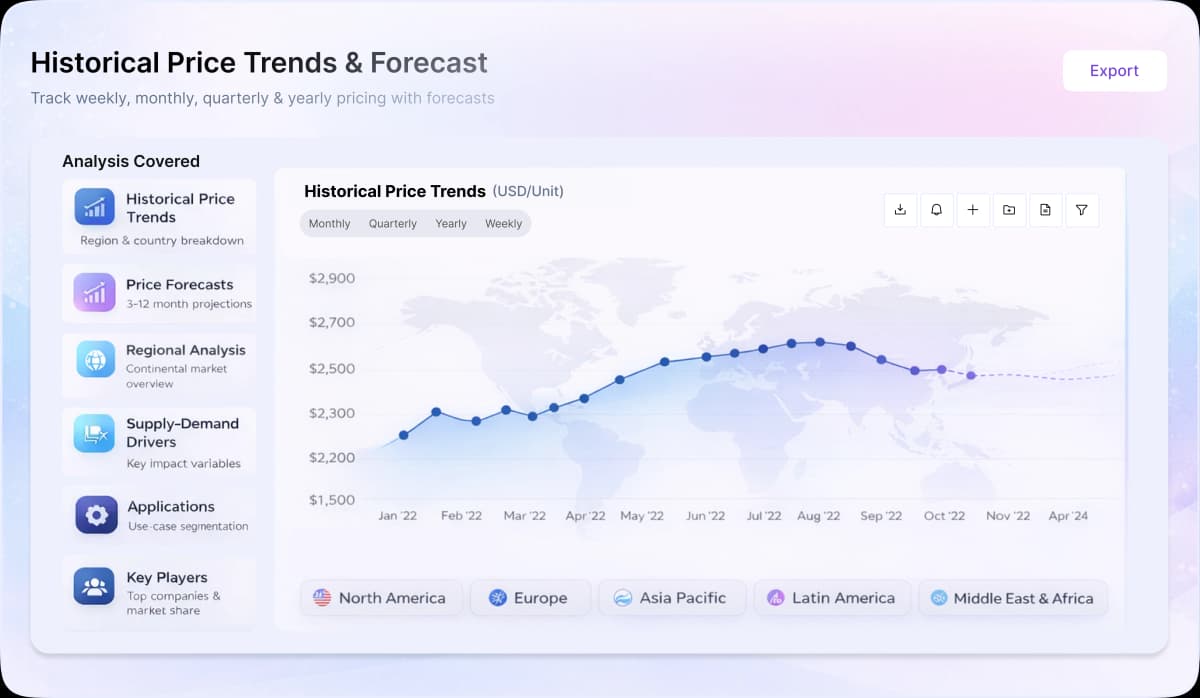
Throughout 2024, the global broccoli powder market experienced notable price volatility, driven by a confluence of supply chain disruptions and shifting demand dynamics.  On the supply side, adverse weather conditions including prolonged heat spells, excessive rainfall, and crop quality deterioration significantly constrained broccoli yields across key production regions, particularly California. This reduction in raw material availability placed upward pressure on broccoli powder prices throughout the year. Compounding these challenges, labor shortages and persistent transportation bottlenecks further strained supply chains, limiting the timely movement of both fresh broccoli and processed derivatives to end markets.

Simultaneously, demand-side pressures intensified price trends. Growing consumer preference for health-conscious, plant-based nutrition drove increased uptake of broccoli powder across the food and beverage, nutraceuticals, and cosmetics sectors. The broader shift toward natural and functional ingredients reinforced broccoli powder's position as a sought-after commodity. Additionally, the rising adoption of organic and sustainable agricultural practices contributed to elevated production costs, as these methodologies require greater resource investment and third-party certification compliance.


About Broccoli Powder

Broccoli Powder, as the name states, is basically the dried form of Broccoli. Its consumption offers several health benefits. It is known to fight fatal and deadly diseases such as cancer. It does so as it is known to be rich in the beta-carotene.

Broccoli Powder Product Detail

Industrial Uses

Health and dietary supplements, Organic products, Food and beverages

Supplier Database

Z Natural Foods, LLC, Bulk Powders Nutraceuticals Private Limited, Golden Greens Organic Ltd.

Regional Coverage

Asia Pacific

China, India, Indonesia, Pakistan, Bangladesh, Japan, Philippines, Vietnam, Iran, Thailand, South Korea, Iraq, Saudi Arabia, Malaysia, Nepal, Taiwan, Sri Lanka, UAE, Israel, Hongkong, Singapore, Oman, Kuwait, Qatar, Australia, and New Zealand

Europe

Germany, France, United Kingdom, Italy,Spain, Russia, Turkey, Netherlands, Poland, Sweden, Belgium, Austria, Ireland Switzerland, Norway, Denmark, Romania, Finland, Czech Republic, Portugal and Greece

North America

United States and Canada

Latin America

Brazil, Mexico, Argentina, Columbia, Chile, Ecuador, and Peru

Africa

South Africa, Nigeria, Egypt, Algeria, Morocco

CurrencyUS$ (Data can also be provided in local currency)

Supplier Database AvailabilityYes

Customization ScopeThe report can be customized as per the requirements of the customer

Post-Sale Analyst Support360-degree analyst support after report delivery

Note: Our supplier search experts can assist your procurement teams in compiling and validating a list of suppliers indicating they have products, services, and capabilities that meet your company's needs.

Broccoli Powder Production Process

  • Production of Broccoli Powder via Dehydration

In order to produce Broccoli Powder, the extracts of the broccoli plant are dried with the help of a spray or freeze dryer. The obtained product, which is dry and devoid of any water content, is milled or grounded to finally obtain Broccoli Powder.

Frequently Asked Questions

The broccoli powder outlook remains tied primarily to fresh broccoli availability across key Indian production regions, since the product is made exclusively from broccoli florets. Seasonal harvest timing and weather conditions, including monsoon disruptions, determine how tight or comfortable raw material supply runs, with tighter supply lifting processor costs. Sustained demand from health-oriented and functional food segments, along with a growing preference for organic and sustainably sourced broccoli, tends to keep price levels supported even as seasonal supply gaps close. Currency movements and broader global supply variability remain additional swing factors.
Fresh broccoli availability across key Indian production regions is the dominant price driver, since broccoli powder is made exclusively from broccoli florets. Adverse monsoon conditions or flooding can disrupt supply and push raw material costs higher, while seasonal harvest gaps that require sourcing from more distant states add transportation expense. Demand from food and beverage, nutraceuticals, and personal care sectors provides steady underlying support. Currency movements and broader global trade conditions also shape procurement strategies for importers and manufacturers sourcing from concentrated production regions.
Production is led by Xi'an Lifewe Biological Technology in China, alongside North American manufacturers American International Foods and VDF FutureCeuticals, with Saipro Biotech and NutraDry also active. Additional suppliers include Z Natural Foods, Bulk Powders Nutraceuticals Private Limited, and Golden Greens Organic. North America and Europe drive the strongest consumer demand through health and wellness channels, while Asia Pacific is the fastest-growing region. India faces monsoon-driven raw broccoli shortages pushing input costs higher, creating a notable supply-side vulnerability given manufacturing concentration in a few producing countries.
Broccoli powder is produced exclusively from fresh broccoli florets, which are the sole raw material. The production chain begins with sourcing quality broccoli heads, trimming them into florets, and washing them. The florets are then blanched and dried using either a spray dryer or freeze dryer to remove all moisture. The dried material is milled or ground into a fine powder, sieved for consistency, and packaged. The finished product is used in health supplements, organic products, and the food and beverage industry.
Broccoli powder demand is driven primarily by the food and beverage industry, which incorporates it into shakes, smoothies, soups, stews, pasta, dips, salad dressings, coffee, and egg-based dishes. The nutraceutical and dietary supplement sector draws on its high vitamin and sulforaphane content for health-focused products. Personal care manufacturers use it in skincare formulations for its antioxidant properties. Together, these downstream sectors sustain firm demand, as consumer preference for plant-based, functional, and ready-to-eat products continues to grow.
Seasonal supply and input-cost changes are a key driver of broccoli powder prices. Adverse monsoons and flooding across key Indian production regions can disrupt fresh broccoli availability, while seasonal harvest transitions create supply gaps that push raw material costs higher. Sourcing from more distant states adds transportation expense, and consumer preference for organic and sustainably sourced broccoli further elevates production costs. Combined with steady demand from food and beverage, nutraceuticals, and personal care sectors, these supply-side constraints tend to keep market sentiment tilted toward higher prices during lean supply periods.
Broccoli powder quality is determined at the raw-material stage: florets are graded by size, uniformity, and nutritional content, directly affecting procurement cost. The product is produced via spray drying or freeze drying, then milled to a fine powder. Food-safety compliance requires adherence to FSSAI, FDA, and EU standards, covering pesticide residue limits, microbial contamination controls, and grading tolerances. Organic certification commands premium positioning in health supplements and clean-label food products, while conventional grades serve broader food and beverage formulations.
Procurement Resource assesses broccoli powder prices through a structured methodology combining primary engagement with producers, suppliers and traders, secondary market data, monitoring of feedstock and input costs, trade-flow and inventory tracking, and exchange or spot benchmarks. These inputs are validated and translated into a transparent price assessment and outlook. The detailed methodology is available on the Procurement Resource website.

Our Price Analysis Methodology

About the Author

Siddharth David profile photo

Siddharth David

Manager - Market Research

Delivering market research and procurement intelligence at Procurement Resource with a focus on economic forecasting, commodity analysis, and client advisory to help sourcing teams make data-backed purchasing decisions.

Schedule Demo

Schedule A Demo

Experience how Procurement Resource transforms raw material price data into clear, decision ready intelligence. Optimise your performance with reliable, expert market data and analysis. Schedule your demo today to experience a live walk-through where our experts will showcase interactive price charts, forecasted prices, and insights driving the prices for your key commodities, tailored to your workflows. Contact us now!
Our Team will be happy to assist you

We are just a text away

+1

Still Need Help?

Europe & Africa

+44 7573 171117

Sales@procurementresource.com

USA & Canada

+1 307 363 1045

Sales@procurementresource.com

APAC

+91 8850629517

Sales@procurementresource.com

Other Related Reports

Broccoli Powder Production from Dehydration

This report provides the cost structure of broccoli powder production from the dehydration process.

Unlock full access to Procurement Resource's price databases, interactive charts, and short-term forecasts for thousands of commodities. Elevate your sourcing decisions by comparing prices across regions, downloading historical data, and layering in analyst-backed insights, all with our flexible plans that scale as your portfolio grows.

Still have any Questions

Contact Us
Mastercard
Wire
VISA
Stripe

Related News

View All

Why Procurement Database

Commodity Market Intelligence

Commodity Market Intelligence

Track prices, market movements, supply-demand dynamics, and industry developments across hundreds of commodities through a centralized intelligence platform built for informed procurement decisions.

Price Forecasts & Market Outlooks

Price Forecasts & Market Outlooks

Understand market fluctuations using analyst-backed forecasts, historical pricing patterns, and evolving industry trends to strengthen sourcing strategies and budget planning.

Cost & Procurement Optimization

Cost & Procurement Optimization

Leverage cost models, pricing benchmarks, and procurement insights to evaluate purchasing opportunities, improve negotiations, and enhance operational efficiency.

Global & Regional Market Insights

Global & Regional Market Insights

Access region-specific price trends, trade activities, capacity changes, and supply chain developments influencing commodity markets worldwide.

1/4