
Prakhar Panchbhaiya
Assistant Manager: Business Insights and Content
Supporting procurement teams with category intelligence, market research, price trends, supply-demand analysis, and strategic sourcing insights across key industries.

In 2025, capsicum oleoresin prices experienced a strong upward trend due to several supply-side challenges. Heavy rainfall in key producing regions damaged crops, reducing the availability of fresh capsicum and affecting quality. At the same time, geopolitical tensions, caused border closures that limited the movement of vegetables, creating shortages in the markets.
Transportation issues and rising input costs also added pressure on processors, as fewer raw vegetables were available for oleoresin production. Additionally, global factors, including increased demand for processed food and spices, supported higher capsicum oleoresin prices. Traders and processors responded to the tight supply by holding stocks, which further reinforced the price rise. Even with some local produce reaching markets, overall availability remained lower than usual, sustaining the firm market trend.
These combined factors made capsicum oleoresin one of the more volatile spice extracts in 2025, with prices moving up sharply during periods of supply disruption and remaining sensitive to regional crop conditions.
Related Report
Need Latest Capsicum Oleoresin Prices?
Get real-time price assessments, periodic trends, forecasts and price driver insights across key global markets.
Our Clients































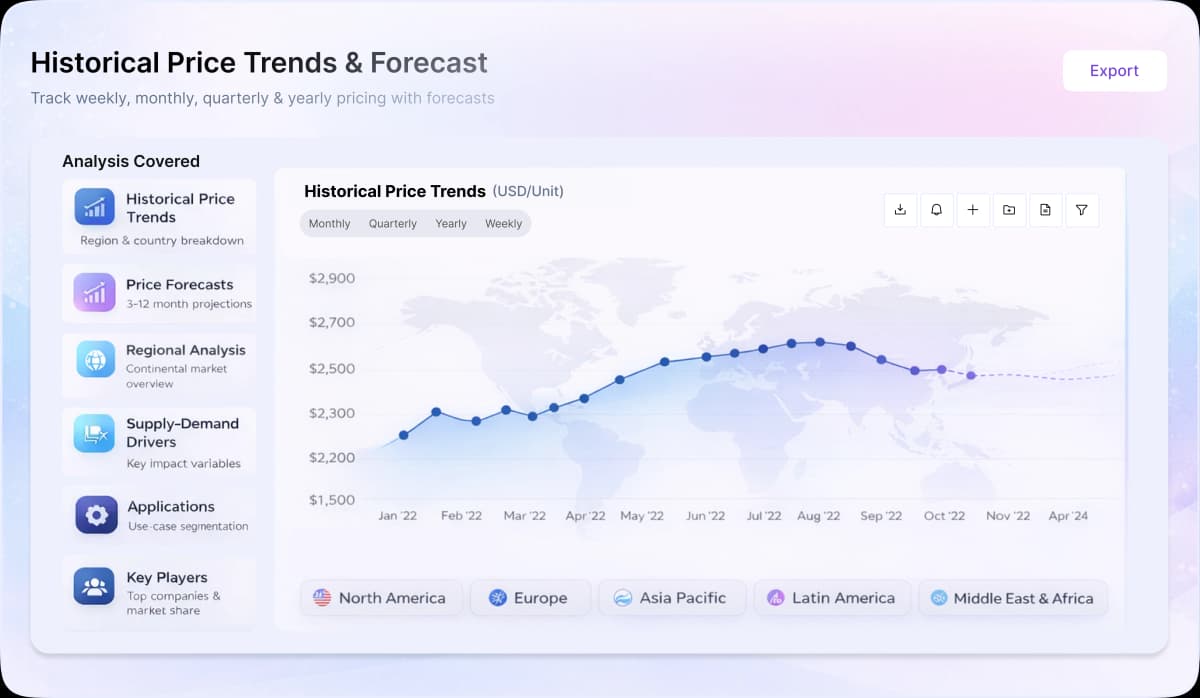
Turn price intelligence into action with the Procurement Resource Database. Log in or subscribe to unlock live price trends, historical charts, supplier databases, cost curves, and analyst-backed insights across chemicals, agriculture, energy, packaging, and more. Use these tools to benchmark your contracts, plan budgets with confidence, and stay ahead of market moves on every product you buy.
0
+Products
0
+Regions
0
+Subscriptions
In the second half of 2024, capsicum oleoresin prices saw a noticeable upward trend due to a combination of supply constraints and weather-related challenges. Heavy rains and subsequent heat waves in major vegetable-producing regions disrupted crop growth, reducing the availability of fresh capsicum. Transportation issues further limited the movement of vegetables from key states to major markets, which pushed up costs for both raw materials and processed oleoresin.
Additionally, imports of vegetables from other states slowed down, creating pressure on local supplies. Traders and processors faced higher procurement costs as the limited availability of quality capsicum forced them to compete for the remaining stocks. This, combined with increased demand from food and spice industries for colour and flavouring applications, contributed to a steady rise in capsicum oleoresin prices. Even home-grown vegetables that were previously more affordable did not see further price reductions, reinforcing the overall upward trend. Market participants also noted that production losses during peak crop periods created uncertainty, leading to cautious buying and stockpiling, which further supported higher prices.
Capsicum Oleoresin is an oily organic resin extracted from capsicum, a solanaceous (nightshade species) plant belonging to the genus Capsicum. The active ingredient of Capsicum Oleoresin is capsaicinoid and the predominant capsaicinoid component is capsaicin. The fruits of the capsicum plants are finely ground and Capsicum Oleoresin is formed after the extraction process of capsaicin with the organic solvents like ethanol. This product, owing to its flavour, is widely utilised as a culinary spice across the world.
Culinary Spice, Medical Treatment, Flavour and Fragrance , Pacifier, Other
Capsicum annum L, Capsicum fruitescens L.
BOS Natural Flavours (P.) Limited, Moellhausen S.p.A., Kancor Ingredients Limited, Akay Group Ltd., Universal Oleoresins, Naturite Agro Products Ltd
CurrencyUS$ (Data can also be provided in local currency)
Supplier Database AvailabilityYes
Customization ScopeThe report can be customized as per the requirements of the customer
Post-Sale Analyst Support360-degree analyst support after report delivery
Note: Our supplier search experts can assist your procurement teams in compiling and validating a list of suppliers indicating they have products, services, and capabilities that meet your company's needs.
In this process, the fruits of the capsicum plants are finely ground, followed by the extraction of capsaicin, the primary component of the product. Organic solvent such as ethanol is utilised while extracting grounded capsaicin. After this, vacuum distillation of the resulting product is carried out to remove the solvent traces and finally obtain Capsicum Oleoresin.
Our Price Analysis Methodology
Assistant Manager: Business Insights and Content
Supporting procurement teams with category intelligence, market research, price trends, supply-demand analysis, and strategic sourcing insights across key industries.

Experience how Procurement Resource transforms raw material price data into clear, decision ready intelligence. Optimise your performance with reliable, expert market data and analysis. Schedule your demo today to experience a live walk-through where our experts will showcase interactive price charts, forecasted prices, and insights driving the prices for your key commodities, tailored to your workflows. Contact us now!
Our Team will be happy to assist you
We are just a text away
Still Need Help?
Europe & Africa
+44 7573 171117
Sales@procurementresource.com
USA & Canada
+1 307 363 1045
Sales@procurementresource.com
APAC
+91 8850629517
Sales@procurementresource.com
This report provides the cost structure of capsicum oleoresin production by the solvent extraction method. The process involves the solvent extraction of grounded capsaicin with a suitable organic solvent such as ethanol.
Unlock full access to Procurement Resource's price databases, interactive charts, and short-term forecasts for thousands of commodities. Elevate your sourcing decisions by comparing prices across regions, downloading historical data, and layering in analyst-backed insights, all with our flexible plans that scale as your portfolio grows.
Still have any Questions
Contact Us



Price Trend Dashboard - What's Included
Price trends across a diverse portfolio of categories and products, spanning board to niche chemicals
Coverage extendable to grade-specific chemicals based on procurement requirements
Regular price tracking supported by robust historical datasets
News, policy updates, and key market drivers impacting price movements
Short-term and long-term price outlooks and forecasts
Supply–demand dynamics and capacity-driven market analysis

Track prices, market movements, supply-demand dynamics, and industry developments across hundreds of commodities through a centralized intelligence platform built for informed procurement decisions.

Understand market fluctuations using analyst-backed forecasts, historical pricing patterns, and evolving industry trends to strengthen sourcing strategies and budget planning.

Leverage cost models, pricing benchmarks, and procurement insights to evaluate purchasing opportunities, improve negotiations, and enhance operational efficiency.
Access region-specific price trends, trade activities, capacity changes, and supply chain developments influencing commodity markets worldwide.