Carrot Price Trend Analysis 2026: Supply Demand Analysis, Latest News, Price Drivers, Market Insights & Historical Prices

Neha Gawande profile photo
Written ByNeha Gawande

Procurement Resource Database

Laptop screen

Turn price intelligence into action with the Procurement Resource Database. Log in or subscribe to unlock live price trends, historical charts, supplier databases, cost curves, and analyst-backed insights across chemicals, agriculture, energy, packaging, and more. Use these tools to benchmark your contracts, plan budgets with confidence, and stay ahead of market moves on every product you buy.

0

+

Products

0

+

Regions

0

+

Subscriptions

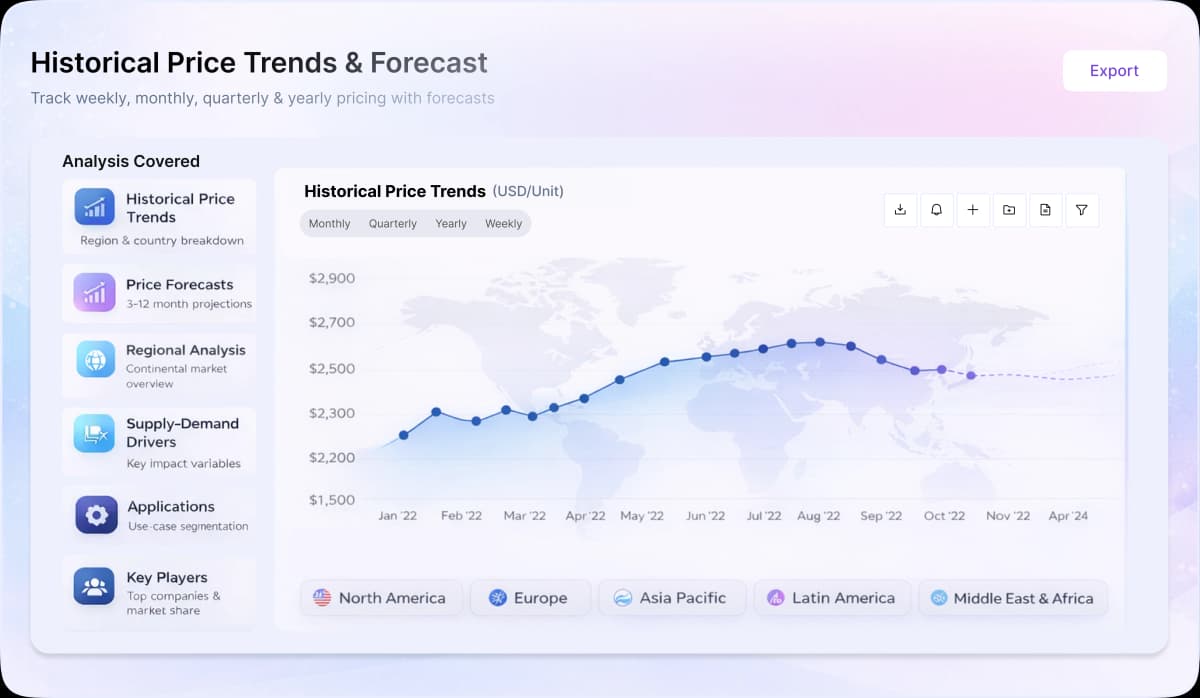
In the second half of 2024, carrot prices showed a strong upward trend in many producing regions, mainly due to lower supply and active demand. During July and August, prices rose as the availability of lower quality carrots dropped, and many farmers held back the best-quality produce, expecting higher returns. Wholesale and retail buyers continued purchasing actively, which supported firm prices.

In September and October, supply remained tight because off-season crops were limited and mid-season varieties were mostly sold out. Delays in harvesting later-season carrots also contributed to price increases. Market operators reported that demand from retail chains and processors remained healthy despite the higher costs, helping maintain steady market activity.

Towards the end of the year, in November and December, prices continued to climb moderately. Limited storage options and cautious sales by large farms kept supply controlled, while seasonal consumer demand and ongoing purchases from urban markets sustained upward momentum. Even with rising prices, the market remained active as buyers focused on securing quality carrots for immediate consumption.


About Carrot

Carrot is a root vegetable belonging to the genus Daucus which has long tapered body and a sweet, earthy flavor, with crisp texture. Carrots are commonly consumed as a nutritious vegetable and are used in a wide range of culinary dishes, both raw and cooked. They are valued for their high content of essential nutrients, particularly beta-carotene, which is converted into vitamin A in the body, and dietary fiber.

Carrot Product Detail

HS Code
0706
Industrial Uses

Pharmaceuticals, Textile industry, Biodegradable plastics, Cosmetics

Supplier Database

Suttind Seeds, Premium Fresh, Jung Seeds, Willowbrook Foods, Charles Hard Seed Company

Regional Coverage

Asia Pacific

China, India, Indonesia, Pakistan, Bangladesh, Japan, Philippines, Vietnam, Iran, Thailand, South Korea, Iraq, Saudi Arabia, Malaysia, Nepal, Taiwan, Sri Lanka, UAE, Israel, Hongkong, Singapore, Oman, Kuwait, Qatar, Australia, and New Zealand

Europe

Germany, France, United Kingdom, Italy,Spain, Russia, Turkey, Netherlands, Poland, Sweden, Belgium, Austria, Ireland Switzerland, Norway, Denmark, Romania, Finland, Czech Republic, Portugal and Greece

North America

United States and Canada

Latin America

Brazil, Mexico, Argentina, Columbia, Chile, Ecuador, and Peru

Africa

South Africa, Nigeria, Egypt, Algeria, Morocco

CurrencyUS$ (Data can also be provided in local currency)

Supplier Database AvailabilityYes

Customization ScopeThe report can be customized as per the requirements of the customer

Post-Sale Analyst Support360-degree analyst support after report delivery

Note: Our supplier search experts can assist your procurement teams in compiling and validating a list of suppliers indicating they have products, services, and capabilities that meet your company's needs.

Frequently Asked Questions

The carrot outlook remains tied to weather-driven yield swings in key producing origins such as Ukraine and Uzbekistan, since adverse weather there can reduce harvest quality and available volume. Producer stock-holding behaviour, where growers withhold inventory anticipating firmer prices, adds a further layer of near-term tightness. Consistent import demand from the U.S., China, and Europe provides a steady floor for export pricing. A meaningful easing would require a strong harvest recovery in the main producing origins or a pullback in international demand.
Weather-driven yield outcomes in key producing origins such as Ukraine and Uzbekistan are the central driver of carrot prices, since adverse weather can reduce yields and deplete stored stocks faster than expected. Producer stock-withholding in anticipation of firmer future prices can further tighten available supply. Harvest timing matters as well: early arrivals bring fresh volume to market, but limited quantities may not fully satisfy wholesale and retail demand. Consistent import demand from the U.S., China, and Europe provides steady support for export market levels.
Ukraine and Uzbekistan are key producing and exporting countries, where weather-driven yield swings and stock levels directly shape available export volume. The U.S., China, and European markets are dominant consuming and importing centres, maintaining consistent buying that supports firm prices. Supply concentration in a limited number of producing regions, combined with steady demand from large import markets, creates meaningful supply-security exposure for buyers reliant on these trade flows.
Carrot planting-to-harvest windows vary by region and growing season, since carrots thrive in cooler climates across various planting cycles. Harvest timing and stock management are key structural price drivers: early-arriving harvests can ease prices when volumes are ample, but limited volumes fail to prevent tightness, while depleted prior-season stocks combined with delayed harvests can keep supply tight and prices climbing. Producer stock-withholding in either region can amplify the effect, as can limited off-season availability.
The food and beverage industry is the largest downstream driver, consuming carrots for purees, sauces, juices, and fresh culinary applications, which sustains steady baseline demand. The health and wellness sector adds meaningful volume through dietary supplements, drawn by carrots' high vitamin and antioxidant content. The cosmetics industry procures carrots for extracts and oils used in skin-nourishing products. Animal feed represents a further commercial outlet. Together, these sectors underpin firm price levels, as constrained supply from prior-season weather shortfalls meets broad-based, multi-industry demand.
Procurement Resource assesses carrot price trends through a structured, data-driven methodology that combines primary engagement with producers, suppliers and traders, secondary market data, monitoring of feedstock and input costs, trade-flow and inventory tracking, and exchange or spot benchmarks. These inputs are validated and translated into a transparent price assessment and outlook. The detailed methodology is available on the Procurement Resource website.

Our Price Analysis Methodology

About the Author

Neha Gawande profile photo

Neha Gawande

Senior Lead Analyst

Delivering procurement intelligence and commodity research across automotive, oil & gas, chemicals, aerospace, and energy, helping sourcing teams decode complex supply chain data to sharpen purchasing strategies and achieve sustainable cost outcomes.

Schedule Demo

Schedule A Demo

Experience how Procurement Resource transforms raw material price data into clear, decision ready intelligence. Optimise your performance with reliable, expert market data and analysis. Schedule your demo today to experience a live walk-through where our experts will showcase interactive price charts, forecasted prices, and insights driving the prices for your key commodities, tailored to your workflows. Contact us now!

Our Team will be happy to assist you

We are just a text away

+1

Still Need Help?

Europe & Africa

+44 7573 171117

Sales@procurementresource.com

USA & Canada

+1 307 363 1045

Sales@procurementresource.com

APAC

+91 8850629517

Sales@procurementresource.com

Unlock full access to Procurement Resource's price databases, interactive charts, and short-term forecasts for thousands of commodities. Elevate your sourcing decisions by comparing prices across regions, downloading historical data, and layering in analyst-backed insights, all with our flexible plans that scale as your portfolio grows.

Still have any Questions

Contact Us
Mastercard
Wire
VISA
Stripe

Why Procurement Database

Commodity Market Intelligence

Commodity Market Intelligence

Track prices, market movements, supply-demand dynamics, and industry developments across hundreds of commodities through a centralized intelligence platform built for informed procurement decisions.

Price Forecasts & Market Outlooks

Price Forecasts & Market Outlooks

Understand market fluctuations using analyst-backed forecasts, historical pricing patterns, and evolving industry trends to strengthen sourcing strategies and budget planning.

Cost & Procurement Optimization

Cost & Procurement Optimization

Leverage cost models, pricing benchmarks, and procurement insights to evaluate purchasing opportunities, improve negotiations, and enhance operational efficiency.

Global & Regional Market Insights

Global & Regional Market Insights

Access region-specific price trends, trade activities, capacity changes, and supply chain developments influencing commodity markets worldwide.

1/4