Chlorobenzene Price Trend Analysis 2026: Historical Prices, Latest News, Price Drivers, Supply Demand Analysis & Market Insights

Udeesha Tomar profile photo
Written ByUdeesha Tomar

Procurement Resource Database

Laptop screen

Turn price intelligence into action with the Procurement Resource Database. Log in or subscribe to unlock live price trends, historical charts, supplier databases, cost curves, and analyst-backed insights across chemicals, agriculture, energy, packaging, and more. Use these tools to benchmark your contracts, plan budgets with confidence, and stay ahead of market moves on every product you buy.

0

+

Products

0

+

Regions

0

+

Subscriptions

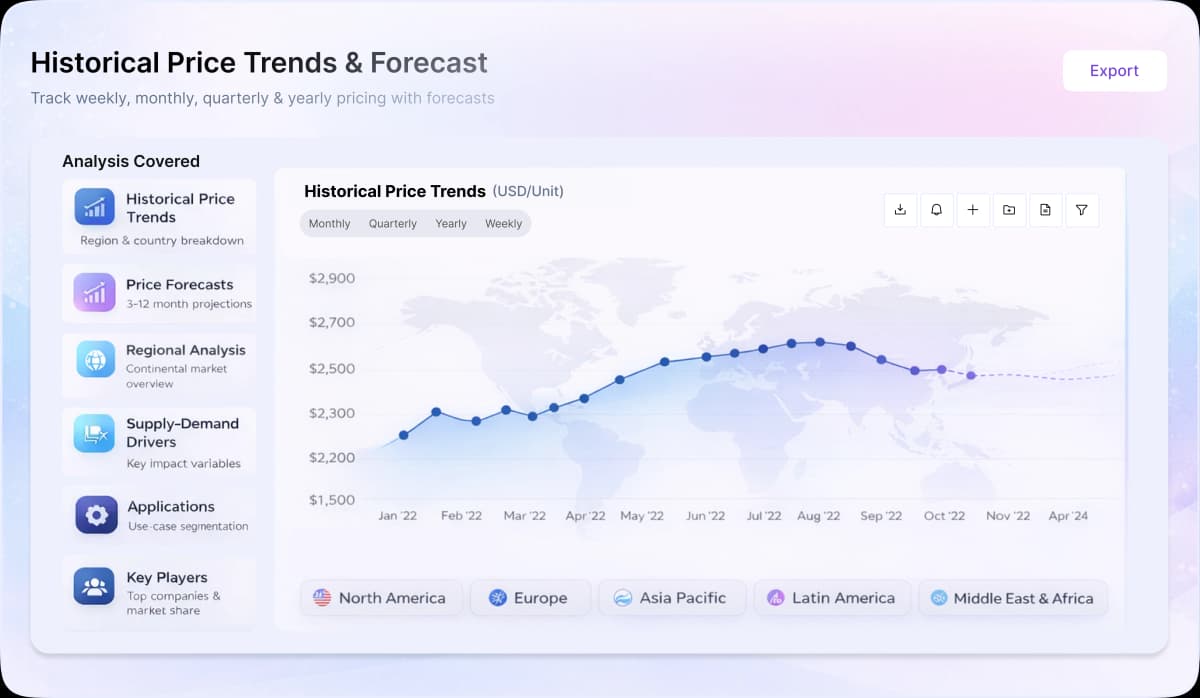
In 2025, the global chlorobenzene market exhibited a largely weak-to-fluctuating trend, influenced by movements in its key feedstock benzene and varying downstream demand dynamics. The year began with relatively stable-to-slightly soft pricing conditions, as adequate supply and cautious demand from derivatives such as agrochemicals, solvents, and intermediates limited upward momentum. As the first half progressed, persistent softness in benzene markets across major regions, particularly Asia and Europe, exerted downward pressure on production economics, while ample availability and conservative procurement strategies further weighed on sentiment. Mid-year, the market showed brief phases of stabilization, supported by intermittent improvements in trading activity and marginal recovery in upstream energy markets. However, these gains were not sustained, as downstream consumption remained moderate and largely need-based. In the latter half of the year, continued oversupply conditions, fluctuating feedstock costs, and weak derivative margins kept pricing under pressure across regions. Although occasional supply-side adjustments and short-term restocking offered temporary support, the overall market remained subdued. By year-end, chlorobenzene prices reflected a cautious and balanced outlook, with participants maintaining restrained buying strategies amid uncertain global demand conditions.


About Chlorobenzene

Chlorobenzene is an aromatic organic compound with the chemical formula C6H5Cl. It consists of a benzene ring substituted with a chlorine atom. This colorless, flammable liquid has a mild almond-like odor and is primarily used as an intermediate in the manufacture of chemicals such as phenol, aniline, and dyes. It also serves as a solvent in pesticide formulations and industrial degreasing. Chlorobenzene's production involves the direct chlorination of benzene, making it a significant chemical in various industrial processes.

Chlorobenzene Product Detail

HS Code
29036110
Chemical Formula

C6H5Cl

CAS Number
108-90-7
Molecular Weight
112.6 g/mol
Industrial Uses

Solvent Production, Pesticide Manufacture, Degreasing Agent, Intermediate in Aniline Production, Phenol Synthesis, Dye Manufacture, Rubber Processing

Supplier Database

ITW Reagents Division (PanReac Applichem), China Petrochemical Corporation, Jiangsu Yangnong Chemicals Group Co., Ltd., Kureha Corporation, Lanxess

Regional Coverage

Asia Pacific

China, India, Indonesia, Pakistan, Bangladesh, Japan, Philippines, Vietnam, Iran, Thailand, South Korea, Iraq, Saudi Arabia, Malaysia, Nepal, Taiwan, Sri Lanka, UAE, Israel, Hongkong, Singapore, Oman, Kuwait, Qatar, Australia, and New Zealand

Europe

Germany, France, United Kingdom, Italy,Spain, Russia, Turkey, Netherlands, Poland, Sweden, Belgium, Austria, Ireland Switzerland, Norway, Denmark, Romania, Finland, Czech Republic, Portugal and Greece

North America

United States and Canada

Latin America

Brazil, Mexico, Argentina, Columbia, Chile, Ecuador, and Peru

Africa

South Africa, Nigeria, Egypt, Algeria, Morocco

CurrencyUS$ (Data can also be provided in local currency)

Supplier Database AvailabilityYes

Customization ScopeThe report can be customized as per the requirements of the customer

Post-Sale Analyst Support360-degree analyst support after report delivery

Note: Our supplier search experts can assist your procurement teams in compiling and validating a list of suppliers indicating they have products, services, and capabilities that meet your company's needs.

Chlorobenzene Production Process

  • Chlorobenzene Production by the Raschig Process.

The Raschig process is a commercial method that is used to produce chlorobenzene. It is a gas-phase reaction between benzene vapor and hydrogen chloride in the presence of oxygen and copper dichloride at around 230 °C. The reaction results in the production of chlorobenzene as the end product.

Frequently Asked Questions

The chlorobenzene outlook remains tied to benzene feedstock trends and downstream agrochemical, solvent, and intermediate demand. Stable-to-soft benzene trends across Asia and Europe tend to weigh on production economics, while moderate, need-based downstream demand offers limited upside. Oversupply conditions and weak derivative margins tend to keep sentiment subdued, though intermittent supply-side adjustments and short-term restocking can provide temporary support. A sustained recovery in benzene costs or a meaningful pickup in downstream consumption would be needed to shift the trajectory higher.
Benzene feedstock costs across Asia and Europe are central to chlorobenzene pricing, since softer benzene trends tend to reduce production costs and weigh on sentiment. Supply availability and the conservatism of downstream buyers in agrochemicals, solvents, and intermediates set the pace of demand-side pressure, with ample supply and cautious procurement tending to limit upward movement. Weak derivative margins can keep demand subdued, while occasional supply-side adjustments and short-term restocking offer only temporary support against a generally oversupplied backdrop.
Chlorobenzene production is concentrated among a handful of global chemical manufacturers. Leading producers include China Petrochemical Corporation and Jiangsu Yangnong Chemicals Group in China, Lanxess in Germany, Kureha Corporation in Japan, Dow Chemical in the United States, and Aarti Industries, Seya Industries, Panoli Intermediates, and Chemieorganics in India. Major consuming sectors span the dye and pigment, rubber and textile, agrochemical, and automotive industries across Asia Pacific, Europe, and North America. China's dominance in benzene derivatives and anti-dumping policy environment warrants close attention for supply security.
Chlorobenzene is produced via the Raschig process, a gas-phase reaction in which benzene vapor and hydrogen chloride react with oxygen and copper dichloride at around 230 °C. Benzene and hydrogen chloride are the primary feedstocks, with benzene supply sensitive to crude oil price swings, refinery disruptions, and anti dumping trade barriers. Chlorobenzene serves as a solvent and intermediate in dye and pigment manufacture, rubber processing, paint and herbicide formulation, automotive parts degreasing, and as a precursor to phenol, aniline, DDT, and other chlorine-based compounds for the agrochemical and chemical industries.
Agrochemical, paints and coatings, rubber, textile, automotive, and chemical production industries are the primary demand drivers for chlorobenzene. Agrochemical producers use it as a solvent and intermediate for herbicides and pesticides; paints, dyes, and rubber manufacturers as a processing solvent; the automotive sector for degreasing parts; and chemical producers as a precursor for aniline, phenol, and other chlorine based compounds. When these industries ramp up output, procurement intensifies and supports prices, while moderate, need-based buying tends to keep pricing under sustained downward pressure.
Procurement Resource assesses chlorobenzene prices through a structured, data-driven methodology. Primary engagement with producers, suppliers and traders is combined with secondary market data, continuous monitoring of feedstock and input costs, trade-flow and inventory tracking, and exchange or spot benchmarks. All inputs are validated and translated into a transparent price assessment and outlook. The detailed methodology is available on the Procurement Resource website.

Our Price Analysis Methodology

About the Author

Udeesha Tomar profile photo

Udeesha Tomar

AVP - Strategy and Solutions

Leading procurement research solutions across chemicals, materials, and food & beverages, with expertise in price forecasting and market analytics.

Schedule Demo

Schedule A Demo

Experience how Procurement Resource transforms raw material price data into clear, decision ready intelligence. Optimise your performance with reliable, expert market data and analysis. Schedule your demo today to experience a live walk-through where our experts will showcase interactive price charts, forecasted prices, and insights driving the prices for your key commodities, tailored to your workflows. Contact us now!

Our Team will be happy to assist you

We are just a text away

+1

Still Need Help?

Europe & Africa

+44 7573 171117

Sales@procurementresource.com

USA & Canada

+1 307 363 1045

Sales@procurementresource.com

APAC

+91 8850629517

Sales@procurementresource.com

Unlock full access to Procurement Resource's price databases, interactive charts, and short-term forecasts for thousands of commodities. Elevate your sourcing decisions by comparing prices across regions, downloading historical data, and layering in analyst-backed insights, all with our flexible plans that scale as your portfolio grows.

Still have any Questions

Contact Us
Mastercard
Wire
VISA
Stripe

Why Procurement Database

Commodity Market Intelligence

Commodity Market Intelligence

Track prices, market movements, supply-demand dynamics, and industry developments across hundreds of commodities through a centralized intelligence platform built for informed procurement decisions.

Price Forecasts & Market Outlooks

Price Forecasts & Market Outlooks

Understand market fluctuations using analyst-backed forecasts, historical pricing patterns, and evolving industry trends to strengthen sourcing strategies and budget planning.

Cost & Procurement Optimization

Cost & Procurement Optimization

Leverage cost models, pricing benchmarks, and procurement insights to evaluate purchasing opportunities, improve negotiations, and enhance operational efficiency.

Global & Regional Market Insights

Global & Regional Market Insights

Access region-specific price trends, trade activities, capacity changes, and supply chain developments influencing commodity markets worldwide.

1/4