Chlorophenol Price Trend Analysis 2026: Supply Demand Analysis, Latest News, Historical Prices, Price Drivers & Market Insights

Pragati Agarwal profile photo
Written ByPragati Agarwal

Procurement Resource Database

Laptop screen

Turn price intelligence into action with the Procurement Resource Database. Log in or subscribe to unlock live price trends, historical charts, supplier databases, cost curves, and analyst-backed insights across chemicals, agriculture, energy, packaging, and more. Use these tools to benchmark your contracts, plan budgets with confidence, and stay ahead of market moves on every product you buy.

0

+

Products

0

+

Regions

0

+

Subscriptions

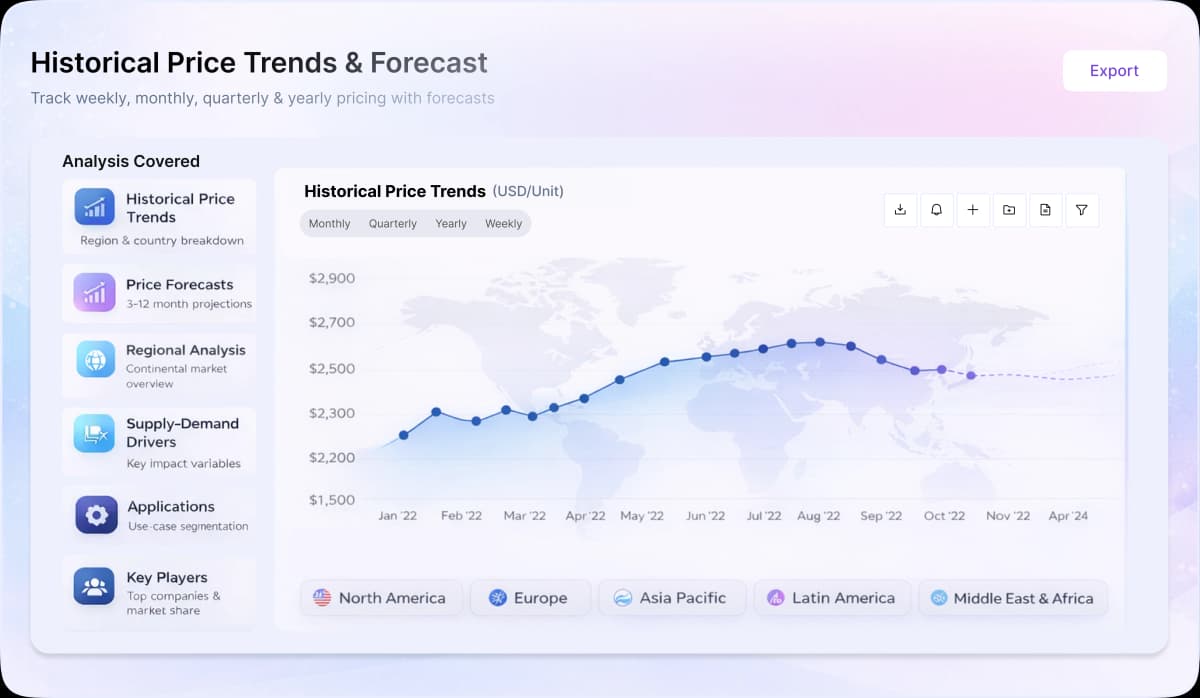
During the first quarter of the year 2024, chlorophenol prices were observed to fluctuate between confined limits with occasionally upward and downward-facing trends. These market trends showcased a close resemblance to the primary feedstock materials phenol and chlorine. Since chlorination of phenol yields chlorophenol, the prices for the latter are usually dependent on the rates of its raw materials. The general trend in the phenol market was inclined and in the chlorine market was stable, the chlorophenol’s price trajectory was relatively tepid.

Cleaning, disinfectants, and preservative industries are the primary consumers of the chlorophenol industry, thereby, their demand patterns also influence the selling rates for chlorophenol. During the said period, chlorophenol consumption from these downstream sectors was also very average. Conclusively, suppliers became cautious with procurement and acquired a wait-and-watch approach.

This helped the global chlorophenol markets sustain their momentum. Trade disruptions in the international markets, with spurring logistical challenges amidst growing geopolitical uncertainties, pushed back the market growth for chlorophenol. As a result, chlorophenol prices were mostly in a tugged situation for the majority of the said time period. And thereby, a wavering price trajectory was witnessed.

Analyst Insight

According to Procurement Resource, the market projections exhibit a moderate performance going forward too, however, different regional trade dynamics will play a huge role in maneuvering the price trajectories.


About Chlorophenol

Chlorophenol refers to any of the several chemical compounds where one or more chlorine atoms are substituted onto a phenol molecule. These compounds are typically colorless to pale yellow and possess a distinct, often sharp odor. Chlorophenols are primarily used as intermediates in the synthesis of pesticides, herbicides, and other chemicals. They also serve as effective disinfectants and preservatives. Due to their antimicrobial properties, chlorophenols are employed in preserving wood and in various industrial applications.

Chlorophenol Product Detail

Chemical Formula

C6H4OHCl

CAS Number
95-57-8
Molecular Weight
128.56 g/mol
Industrial Uses

Disinfectants, Pesticides, Herbicides, Wood Preservatives, Antimicrobials, Intermediate in Pharmaceutical Synthesis, Synthesis of Dyes and Pigments

Supplier Database

Jiangsu Ding Ye Pharmaceutical Co., Ltd., Lianyungang Baierte Chemical Co.Ltd., Zhonglan Industry Co. Ltd., NS Chemicals, Tokyo Chemical Industry, Alfa Chemistry, Pure Chemistry Scientific Inc., HBCChem, Inc., Junsei Chemical, Kanto Chemical

Regional Coverage

Asia Pacific

China, India, Indonesia, Pakistan, Bangladesh, Japan, Philippines, Vietnam, Iran, Thailand, South Korea, Iraq, Saudi Arabia, Malaysia, Nepal, Taiwan, Sri Lanka, UAE, Israel, Hongkong, Singapore, Oman, Kuwait, Qatar, Australia, and New Zealand

Europe

Germany, France, United Kingdom, Italy,Spain, Russia, Turkey, Netherlands, Poland, Sweden, Belgium, Austria, Ireland Switzerland, Norway, Denmark, Romania, Finland, Czech Republic, Portugal and Greece

North America

United States and Canada

Latin America

Brazil, Mexico, Argentina, Columbia, Chile, Ecuador, and Peru

Africa

South Africa, Nigeria, Egypt, Algeria, Morocco

CurrencyUS$ (Data can also be provided in local currency)

Supplier Database AvailabilityYes

Customization ScopeThe report can be customized as per the requirements of the customer

Post-Sale Analyst Support360-degree analyst support after report delivery

Note: Our supplier search experts can assist your procurement teams in compiling and validating a list of suppliers indicating they have products, services, and capabilities that meet your company's needs.

Chlorophenol Production Process

The reaction is conducted in a controlled environment, which promotes the chlorination of phenol. Here, phenol acts as the base compound, which is chlorinated by using chlorine gas. The reaction can yield a variety of chlorophenols as the end product, depending upon the reaction conditions. Some of the common chlorophenols obtained by chlorination include 2-chlorophenol, 4-chlorophenol, etc.

Frequently Asked Questions

The chlorophenol outlook for 2026 remains range bound to firm, with prices tracking phenol and chlorine movements. Regional trade flows and agrochemical demand are the principal swing factors. Elevated phenol feedstock costs from upstream benzene and cumene dynamics provide underlying support, while balanced chlorine availability moderates input pressure. Moderate downstream demand from agrochemical, disinfectant and wood-preservation segments sustains the measured tone, though sharp feedstock cost shifts, chlorine supply tightening, trade flow changes, or a pickup in agrochemical buying could alter the trajectory.
Phenol feedstock costs, transmitted through upstream benzene and cumene dynamics, are central to chlorophenol pricing, since phenol is the principal raw material in chlorination-based production. Chlorine availability is the other key input, with balanced conditions generally limiting cost swings. European prices tend to carry a premium from higher energy and compliance costs, North American values track feedstock strength but can be capped by subdued spot activity, and Asian markets tend to trade steadily on comfortable domestic supply. Downstream demand from agrochemical, disinfectant and wood-preservation segments sustains the market's generally measured tone.
China and India are the principal producing and exporting countries for chlorophenol, with Asian supply anchoring global availability. European and North American markets primarily consume and import, with European prices reflecting higher energy and compliance costs. Key suppliers include Jiangsu Ding Ye Pharmaceutical, Lianyungang Baierte Chemical, and Zhonglan Industry in China, and NS Chemicals in India. This Asia-centric concentration is a meaningful supply-security consideration for Western buyers.
Chlorophenol is produced by chlorinating phenol with chlorine gas at 30 to 70°C, with FeCl3 or AlCl3 catalyst steering selectivity toward 4-chlorophenol. The process yields monochlorophenol isomers (2-chlorophenol, 3-chlorophenol, and 4-chlorophenol), with further chlorination producing 2,4-dichlorophenol and pentachlorophenol. 2-Chlorophenol is a key intermediate for 2,4-D herbicide and dye manufacturing; 4-chlorophenol is the dominant precursor for triazole fungicides, herbicides, and pharmaceutical APIs such as climbazole and chlorphenesin; and pentachlorophenol has historically served as a wood preservative. Broader derivatives support disinfectants, antiseptics, and preservatives for paints, textiles, and leather.
Agrochemical production is the dominant demand driver, with chlorophenol's antimicrobial properties making it essential in pesticides, herbicides and fungicides formulation. The medical and disinfectant sector provides steady pull through antiseptic and sanitizer applications. Paints and coatings, wood preservation, textiles and leather treatment rely on chlorophenol as a preservative, while pharmaceutical synthesis and dyes and pigments use it as a key intermediate. Together, these sectors translate into consistent procurement volumes that keep chlorophenol pricing tethered to phenol and chlorine feedstock movements.
Procurement Resource assesses chlorophenol prices through a structured, data driven methodology combining primary engagement with producers, suppliers and traders, secondary market data, monitoring of feedstock and input costs, trade-flow and inventory tracking, and exchange or spot benchmarks. These inputs are validated and translated into a transparent price assessment and outlook. The detailed methodology is available on the Procurement Resource website.

Our Price Analysis Methodology

About the Author

Pragati Agarwal profile photo

Pragati Agarwal

Senior Business Insights Analyst

Delivering price trend analysis and procurement market insights at Procurement Resource, with expertise in identifying commodity patterns, supporting purchasing strategies, and improving cost efficiency through actionable market intelligence.

Schedule Demo

Schedule A Demo

Experience how Procurement Resource transforms raw material price data into clear, decision ready intelligence. Optimise your performance with reliable, expert market data and analysis. Schedule your demo today to experience a live walk-through where our experts will showcase interactive price charts, forecasted prices, and insights driving the prices for your key commodities, tailored to your workflows. Contact us now!

Our Team will be happy to assist you

We are just a text away

+1

Still Need Help?

Europe & Africa

+44 7573 171117

[email protected]

USA & Canada

+1 307 363 1045

[email protected]

APAC

+91 8850629517

[email protected]

Unlock full access to Procurement Resource's price databases, interactive charts, and short-term forecasts for thousands of commodities. Elevate your sourcing decisions by comparing prices across regions, downloading historical data, and layering in analyst-backed insights, all with our flexible plans that scale as your portfolio grows.

Still have any Questions

Contact Us
Mastercard
Wire
VISA
Stripe

Why Procurement Database

Commodity Market Intelligence

Commodity Market Intelligence

Track prices, market movements, supply-demand dynamics, and industry developments across hundreds of commodities through a centralized intelligence platform built for informed procurement decisions.

Price Forecasts & Market Outlooks

Price Forecasts & Market Outlooks

Understand market fluctuations using analyst-backed forecasts, historical pricing patterns, and evolving industry trends to strengthen sourcing strategies and budget planning.

Cost & Procurement Optimization

Cost & Procurement Optimization

Leverage cost models, pricing benchmarks, and procurement insights to evaluate purchasing opportunities, improve negotiations, and enhance operational efficiency.

Global & Regional Market Insights

Global & Regional Market Insights

Access region-specific price trends, trade activities, capacity changes, and supply chain developments influencing commodity markets worldwide.

1/4