Chloroprene Price Trend Analysis 2026: Price Drivers, Supply Demand Analysis, Historical Prices, Market Insights & Latest News

Udeesha Tomar profile photo
Written ByUdeesha Tomar

Procurement Resource Database

Laptop screen

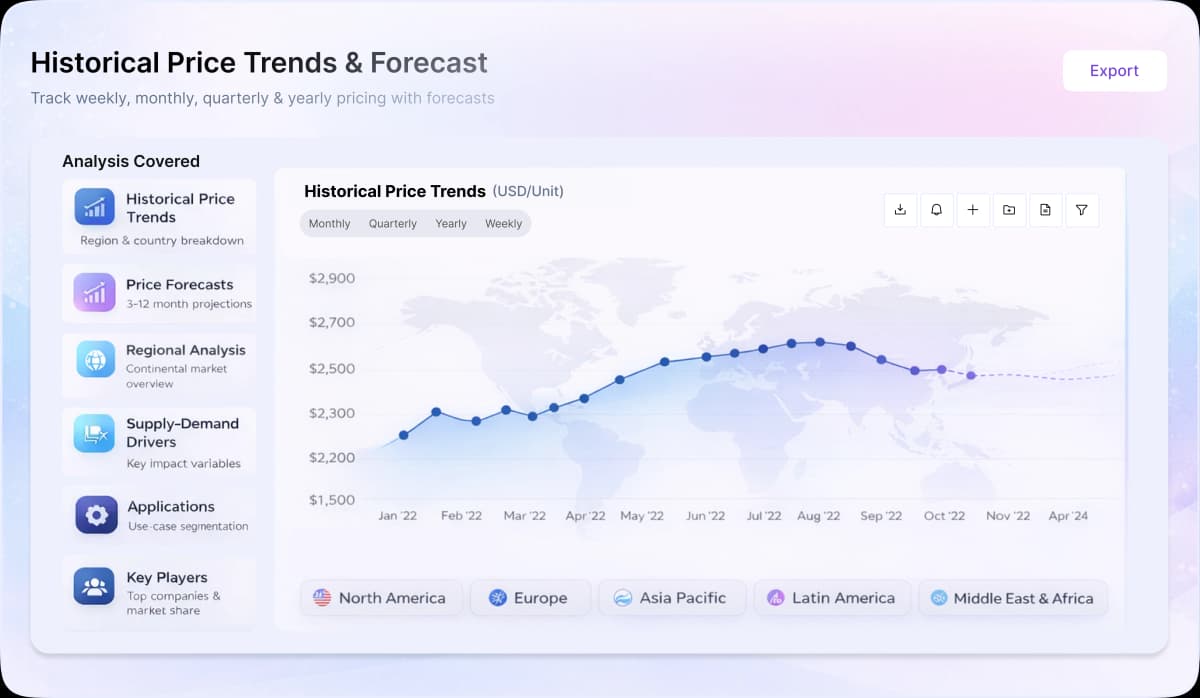
Turn price intelligence into action with the Procurement Resource Database. Log in or subscribe to unlock live price trends, historical charts, supplier databases, cost curves, and analyst-backed insights across chemicals, agriculture, energy, packaging, and more. Use these tools to benchmark your contracts, plan budgets with confidence, and stay ahead of market moves on every product you buy.

0

+

Products

0

+

Regions

0

+

Subscriptions

Asia

In Asia, chloroprene prices trended slightly lower in the third quarter of 2025, following a sharp fall in the price of butadiene, its main feedstock. The drop in butadiene costs reduced overall production costs, leading to softer market sentiment. Demand from downstream chemical and polymer sectors stayed muted, as slower manufacturing activity in China and weak export orders weighed on consumption.

Producers in Japan, South Korea, and China maintained moderate operating rates, but high inventories and limited buying interest pushed prices down. Overall, market conditions were balanced but weak, with chloroprene values easing slightly through the quarter.

Europe

In Europe, chloroprene prices also moved lower through Q3’25 amid subdued industrial activity and cheaper raw materials. Falling feedstock prices and sluggish demand from downstream sectors particularly in adhesives, coatings, and specialty intermediates kept the market under pressure. Supply remained stable, supported by consistent plant operations, but sellers faced challenges clearing inventories. Imports from Asia offered added competition, prompting some European producers to reduce offers to maintain market share. Despite occasional restocking toward the end of the quarter, the overall tone of the market stayed soft.

North America

In North America, chloroprene prices showed a stable to slightly downward trend during Q3. Weaker feedstock costs limited cost support, while demand from key consuming industries such as construction materials and performance chemicals remained steady but unspectacular. Refinery and petrochemical run rates stayed high, ensuring adequate feedstock availability. However, export activity stayed muted as Asian prices were more competitive. As a result, chloroprene prices drifted slightly lower, though the market remained relatively balanced without major supply disruptions.

Analyst Insight

According to Procurement Resource, Chloroprene prices are expected to remain under mild pressure, with weak butadiene costs and slow downstream demand keeping market sentiment soft across all major regions.


About Chloroprene

Chloroprene is a colourless, combustible, carcinogenic chlorinated hydrocarbon with an odour that is strong and ethereal. It is a chemical intermediate used in the production of neoprene rubber.

Chloroprene Product Detail

Chemical Formula

C4H4Cl

Molecular Weight
126-99-8
Industrial Uses

Rubber Industry, Raw material for adhesives, For production of insulating joints and coatings for protecting environment, Sound insulation, Automotive industry, Cutting

Synonyms

2-Chlorobuta-1,3-diene, 2-Chloro-1,3-butadiene

Supplier Database

Tosoh Corp, Denka Company Ltd., ARLANXEO, Sedo Chemicals Neoprene GmbH, Qingdao Nova Rubber

Regional Coverage

Asia Pacific

China, India, Indonesia, Pakistan, Bangladesh, Japan, Philippines, Vietnam, Iran, Thailand, South Korea, Iraq, Saudi Arabia, Malaysia, Nepal, Taiwan, Sri Lanka, UAE, Israel, Hongkong, Singapore, Oman, Kuwait, Qatar, Australia, and New Zealand

Europe

Germany, France, United Kingdom, Italy,Spain, Russia, Turkey, Netherlands, Poland, Sweden, Belgium, Austria, Ireland Switzerland, Norway, Denmark, Romania, Finland, Czech Republic, Portugal and Greece

North America

United States and Canada

Latin America

Brazil, Mexico, Argentina, Columbia, Chile, Ecuador, and Peru

Africa

South Africa, Nigeria, Egypt, Algeria, Morocco

CurrencyUS$ (Data can also be provided in local currency)

Supplier Database AvailabilityYes

Customization ScopeThe report can be customized as per the requirements of the customer

Post-Sale Analyst Support360-degree analyst support after report delivery

Note: Our supplier search experts can assist your procurement teams in compiling and validating a list of suppliers indicating they have products, services, and capabilities that meet your company's needs.

Chloroprene Production Processes

  • Production of Chloroprene from Acetylene; from Butadiene

In the process using acetylene, a dimer known as mono vinyl acetate is made from acetylene, followed by its reaction with HCl chloride to obtain dichloroallene. Rearrangement of this intermediate forms chloroprene.

Frequently Asked Questions

The chloroprene outlook remains tied to automotive and construction recovery as the primary demand catalyst. In Asia, a soft-to-stable trend could firm if synthetic rubber buying picks up. In Europe, feedstock cost conditions and supply stability provide a floor, though competitive pressures and weak industrial demand may cap gains. In North America, sufficient supply points to a steady baseline, with producer operating decisions and energy markets as watchpoints. Selective upside remains tied to downstream recovery.
Butadiene market trends are a central driver of chloroprene pricing in Asia. Since chloroprene is a downstream derivative and softer synthetic rubber demand there tends to weigh on prices. In Europe, feedstock cost movements shape production expenses, with easing costs supporting stable pricing even amid muted automotive and construction demand. In North America, industrial activity from adhesives and seals underpins prices, though uncertainty around production-unit operations can temper upside momentum. Supply conditions across regions generally limit how sharply prices move.
Chloroprene production is concentrated among a small group of integrated manufacturers, including Denka Company Limited, Tosoh Corporation, LANXESS AG, Sedo Chemicals Neoprene GmbH, ARLANXEO, Shanxi Synthetic Rubber Group, Showa Denko K.K., Resonac Holdings Corporation, Nairit Plant CJSC, Zenith Industrial Rubber Products, Asahi Kasei Chemicals Corporation, and Qingdao Nova Rubber. Major consuming regions span Asia Pacific, Europe, and North America, with automotive, construction, adhesives, and wire and cable coating as primary end-use sectors.
Chloroprene is produced from two primary feedstocks: butadiene and acetylene. Via the butadiene route, butadiene is reacted with chlorine to form 3,4-dichlorobutene-1, which is then dehydrohalogenated with caustic soda to yield chloroprene. Via the acetylene route, acetylene is dimerized to mono vinyl acetate, reacted with HCl to form dichloroallene, and rearranged into chloroprene. The finished monomer is polymerized into polychloroprene and neoprene rubber, used in automotive components, construction sealants, wire and cable coatings, protective clothing, gloves, footwear, and adhesives.
Chloroprene demand is driven by the automotive industry for tire sidewalls, O-rings, fan belts, and synthetic rubber components; the construction sector for adhesives and bridge bearing pads; and the electronics industry for cable jackets and wire coatings. The chemical and rubber industries also drive demand as chloroprene is a key intermediate for polychloroprene and neoprene. Mixed automotive and construction demand in Asia and Europe tends to keep prices soft to stable, while steady industrial activity from adhesives and seals tends to support firmer pricing in North America.
Procurement Resource assesses chloroprene prices through a structured, data-driven methodology combining primary engagement with producers, suppliers and traders, secondary market data, continuous monitoring of feedstock and input costs, trade-flow and inventory tracking, and exchange or spot benchmarks. Each assessment is validated and translated into a transparent price outlook. The detailed methodology is available on the Procurement Resource website.

Our Price Analysis Methodology

About the Author

Udeesha Tomar profile photo

Udeesha Tomar

AVP - Strategy and Solutions

Leading procurement research solutions across chemicals, materials, and food & beverages, with expertise in price forecasting and market analytics.

Schedule Demo

Schedule A Demo

Experience how Procurement Resource transforms raw material price data into clear, decision ready intelligence. Optimise your performance with reliable, expert market data and analysis. Schedule your demo today to experience a live walk-through where our experts will showcase interactive price charts, forecasted prices, and insights driving the prices for your key commodities, tailored to your workflows. Contact us now!

Our Team will be happy to assist you

We are just a text away

+1

Still Need Help?

Europe & Africa

+44 7573 171117

[email protected]

USA & Canada

+1 307 363 1045

[email protected]

APAC

+91 8850629517

[email protected]

Unlock full access to Procurement Resource's price databases, interactive charts, and short-term forecasts for thousands of commodities. Elevate your sourcing decisions by comparing prices across regions, downloading historical data, and layering in analyst-backed insights, all with our flexible plans that scale as your portfolio grows.

Still have any Questions

Contact Us
Mastercard
Wire
VISA
Stripe

Why Procurement Database

Commodity Market Intelligence

Commodity Market Intelligence

Track prices, market movements, supply-demand dynamics, and industry developments across hundreds of commodities through a centralized intelligence platform built for informed procurement decisions.

Price Forecasts & Market Outlooks

Price Forecasts & Market Outlooks

Understand market fluctuations using analyst-backed forecasts, historical pricing patterns, and evolving industry trends to strengthen sourcing strategies and budget planning.

Cost & Procurement Optimization

Cost & Procurement Optimization

Leverage cost models, pricing benchmarks, and procurement insights to evaluate purchasing opportunities, improve negotiations, and enhance operational efficiency.

Global & Regional Market Insights

Global & Regional Market Insights

Access region-specific price trends, trade activities, capacity changes, and supply chain developments influencing commodity markets worldwide.

1/4