

Udeesha Tomar
AVP - Strategy and Solutions
Leading procurement research solutions across chemicals, materials, and food & beverages, with expertise in price forecasting and market analytics.

Asia
In Asian countries, the price trend of chloroxylenol closely followed the market trend of phenol and chlorine as they are its primary feedstock. Initially, in China, chlorine prices were stagnant, but as the quarter progressed, the market momentum turned sour. However, the trajectory was then supported by the phenol prices, which grew by a noticeable margin.
The surge in production prices was also influenced by the decline in the output of the petrochemical industries. The consumption rates of the commodity also witnessed a positive inclination, supporting the northward movement of chloroxylenol prices.
Europe
In Europe, the market for chloroxylenol faced several challenges as the production volumes declined amid the surge in the cost of raw materials like phenol. However, another market driver, chlorine, continued its downward pricing movement but exerted a limited influence on chloroxylenol prices. The market was throughout rattled by the decline in Russian oil output after Ukraine attacked its oil refineries.
Additionally, the European countries had to shift their focus on imports to fulfill their domestic needs, leading to a positive movement in chloroxylenol prices. Further, the geopolitical tensions such as the Israel-Hamas crisis, disruption, and re-routing of the Red Sea route, along with a noticeable incline in transportation costs, also contributed to the uptick of chloroxylenol prices during the first quarter of 2024.
North America
In North America, the chloroxylenol market registered a consistent decline as the driving factors asserted only limited support. The cost of primary feedstocks like phenol and chlorine registered a gradual decline throughout the quarter, while consumer sentiments also looked bleak.
The market noticed the sluggish outlook of the downstream pharmaceutical and related industries as they themselves adopted a wait-and-watch approach amid the ongoing economic turmoil of the region. The production side of the commodity was also weak during this phase and the constriction of supply chains further lowered the existing level of inventories. However, the procurement of downstream industries was even weaker than this, resulting in the meek outlook of chloroxylenol prices during Q1 of 2024.
Analyst Insight
According to Procurement Resource, the price trend of Chloroxylenol is expected to experience some fluctuations in the upcoming quarters as the current dynamics of feedstock and downstream industries do not look promising.
Procurement Resource provides latest prices of Chloroxylenol. Each price database is tied to a user-friendly graphing tool dating back to 2014, which provides a range of functionalities: configuration of price series over user defined time period; comparison of product movements across countries; customisation of price currencies and unit; extraction of price data as excel files to be used offline.
Related Report
Need Latest Chloroxylenol Prices?
Get real-time price assessments, periodic trends, forecasts and price driver insights across key global markets.
Our Clients






























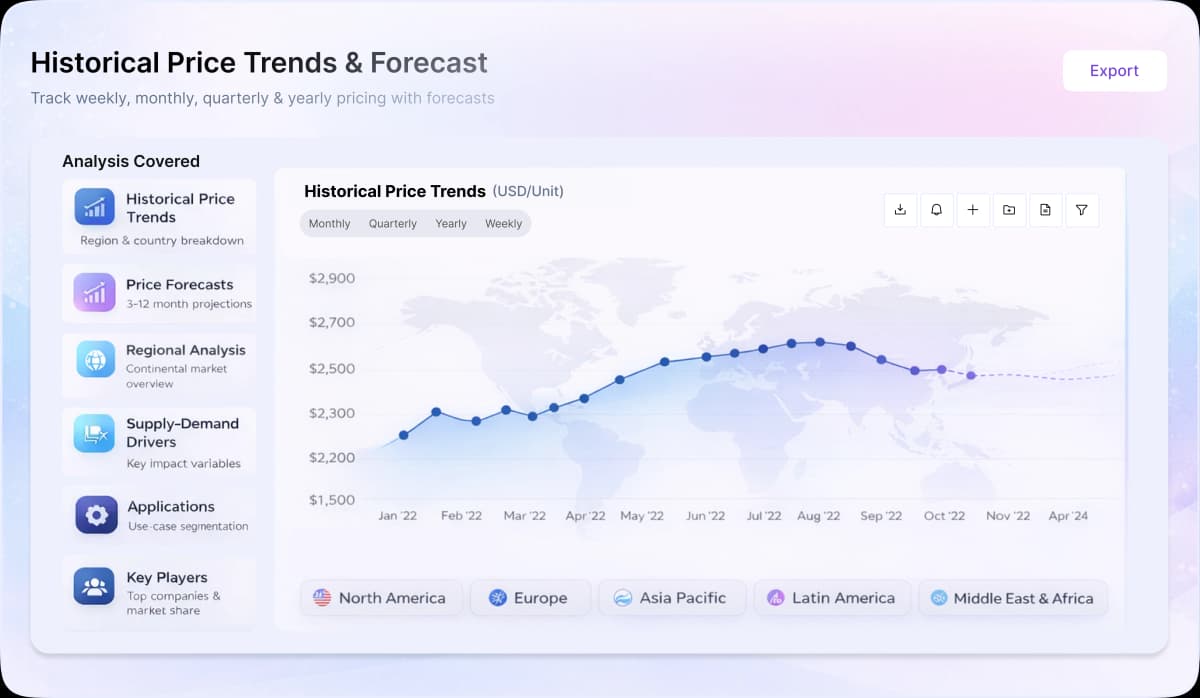
Turn price intelligence into action with the Procurement Resource Database. Log in or subscribe to unlock live price trends, historical charts, supplier databases, cost curves, and analyst-backed insights across chemicals, agriculture, energy, packaging, and more. Use these tools to benchmark your contracts, plan budgets with confidence, and stay ahead of market moves on every product you buy.
0
+Products
0
+Regions
0
+Subscriptions
Chloroxylenol is a white crystalline solid with a mild phenolic odor. It is slightly soluble in water but highly soluble in organic solvents like ethanol and acetone. Known for its strong antimicrobial properties, chloroxylenol effectively kills bacteria, fungi, and viruses, making it a potent antiseptic and disinfectant. It exhibits low toxicity to humans and animals, which contributes to its widespread use in healthcare and household products. Additionally, chloroxylenol is stable under normal storage conditions, maintaining its efficacy over time. Its versatility and efficacy make it a valuable component in a variety of personal care and industrial applications.
C8H9ClO
Disinfectant, Pharmaceuticals, Soaps and shampoos
ComWin International, Nanjing Datang Chemical, Jiangsu Equalchem, Hunan Lijie Biochemical
CurrencyUS$ (Data can also be provided in local currency)
Supplier Database AvailabilityYes
Customization ScopeThe report can be customized as per the requirements of the customer
Post-Sale Analyst Support360-degree analyst support after report delivery
Note: Our supplier search experts can assist your procurement teams in compiling and validating a list of suppliers indicating they have products, services, and capabilities that meet your company's needs.
The simple halogenation of 3,5-dimethylphenol with chlorine produces chloroxylenol as the final product. Additionally, a similar synthesis with sulfuryl chloride instead of chlorine also gives chloroxylenol but with sulfur dioxide and hydrochloric acid as side products.
Our Price Analysis Methodology
AVP - Strategy and Solutions
Leading procurement research solutions across chemicals, materials, and food & beverages, with expertise in price forecasting and market analytics.
Experience how Procurement Resource transforms raw material price data into clear, decision ready intelligence. Optimise your performance with reliable, expert market data and analysis. Schedule your demo today to experience a live walk-through where our experts will showcase interactive price charts, forecasted prices, and insights driving the prices for your key commodities, tailored to your workflows. Contact us now!
Our Team will be happy to assist you
We are just a text away
Still Need Help?
Unlock full access to Procurement Resource's price databases, interactive charts, and short-term forecasts for thousands of commodities. Elevate your sourcing decisions by comparing prices across regions, downloading historical data, and layering in analyst-backed insights, all with our flexible plans that scale as your portfolio grows.
Still have any Questions
Contact Us



Price Trend Dashboard - What's Included
Price trends across a diverse portfolio of categories and products, spanning board to niche chemicals
Coverage extendable to grade-specific chemicals based on procurement requirements
Regular price tracking supported by robust historical datasets
News, policy updates, and key market drivers impacting price movements
Short-term and long-term price outlooks and forecasts
Supply–demand dynamics and capacity-driven market analysis

Track prices, market movements, supply-demand dynamics, and industry developments across hundreds of commodities through a centralized intelligence platform built for informed procurement decisions.

Understand market fluctuations using analyst-backed forecasts, historical pricing patterns, and evolving industry trends to strengthen sourcing strategies and budget planning.

Leverage cost models, pricing benchmarks, and procurement insights to evaluate purchasing opportunities, improve negotiations, and enhance operational efficiency.
Access region-specific price trends, trade activities, capacity changes, and supply chain developments influencing commodity markets worldwide.