Cocoa Powder Price Trend Analysis 2026: Latest News, Supply Demand Analysis, Price Drivers, Market Insights & Historical Prices

Siddharth David profile photo
Written BySiddharth David

Procurement Resource Database

Laptop screen

Turn price intelligence into action with the Procurement Resource Database. Log in or subscribe to unlock live price trends, historical charts, supplier databases, cost curves, and analyst-backed insights across chemicals, agriculture, energy, packaging, and more. Use these tools to benchmark your contracts, plan budgets with confidence, and stay ahead of market moves on every product you buy.

Cocoa Powder Dashboard Inclusions

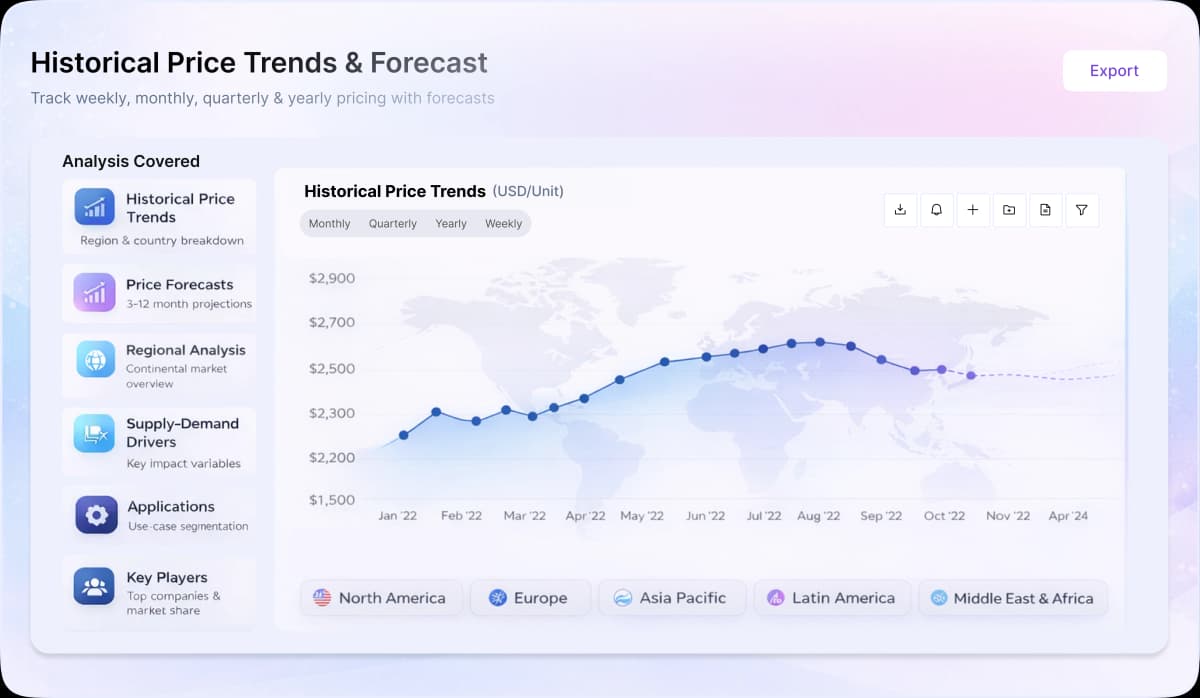
Cocoa Powder Price Dasboard

0

+

Products

0

+

Regions

0

+

Subscriptions

Global cocoa powder markets experienced continued price correction during the fourth quarter, extending the downward trajectory that began earlier in the year following the significant price surge observed throughout 2024. The market adjustment reflected improved crop prospects in major producing regions, particularly West Africa, where weather conditions showed marked improvement compared to the previous year's challenging climate patterns. Côte d'Ivoire and Ghana, which collectively account for the majority of global cocoa bean production, reported better-than-anticipated harvest conditions as the effects of El Niño diminished and plant disease pressures eased.

Supply fundamentals shifted favourably as agricultural conditions stabilized, contributing to more optimistic production forecasts for the crop year. This supply improvement prompted market participants to reassess pricing levels that had reached unprecedented heights during the preceding period. Downstream chocolate manufacturers and confectionery producers responded to the evolving supply dynamics, with several major industry participants adjusting their procurement strategies and cost projections. Demand patterns remained steady from established consumer markets, while interest from Asian regions and premium segment applications continued. Processing activity maintained regular levels as improved bean availability supported consistent grinding operations. Trade flows normalized as logistics constraints that had previously affected supply chains showed a gradual resolution. Market sentiment shifted noticeably as speculation that had characterized earlier periods subsided.

About Cocoa Powder

Cocoa powder is made by crushing cocoa beans and removing the fat or cocoa butter. The remaining dried and fermented solids are processed into a fine powder. It has a rich brown color and a deep chocolate flavor, making it a key ingredient in a variety of foods, including baked goods, confectionery, and beverages. Cocoa powder is also used in cosmetics and pharmaceuticals for its flavor, color, and antioxidant properties.

Cocoa Powder Product Detail

Cas Number
84649990
Industrial Uses

Food and Beverages, Confectionery Items, Dairy Products, Cosmetics and Skincare, Pharmaceuticals

Supplier Database

Barry Callebaut AG, Cargill Incorporated, Olam International Limited, Blommer Chocolate Company, Mondelez International, Guan Chong Berhad, ECOM Cocoa, BT Cocoa, Nestlé SA

Regional Coverage

Asia Pacific

China, India, Indonesia, Pakistan, Bangladesh, Japan, Philippines, Vietnam, Iran, Thailand, South Korea, Iraq, Saudi Arabia, Malaysia, Nepal, Taiwan, Sri Lanka, UAE, Israel, Hongkong, Singapore, Oman, Kuwait, Qatar, Australia, and New Zealand

Europe

Germany, France, United Kingdom, Italy,Spain, Russia, Turkey, Netherlands, Poland, Sweden, Belgium, Austria, Ireland Switzerland, Norway, Denmark, Romania, Finland, Czech Republic, Portugal and Greece

North America

United States and Canada

Latin America

Brazil, Mexico, Argentina, Columbia, Chile, Ecuador, and Peru

Africa

South Africa, Nigeria, Egypt, Algeria, Morocco

CurrencyUS$ (Data can also be provided in local currency)

Supplier Database AvailabilityYes

Customization ScopeThe report can be customized as per the requirements of the customer

Post-Sale Analyst Support360-degree analyst support after report delivery

Note: Our supplier search experts can assist your procurement teams in compiling and validating a list of suppliers indicating they have products, services, and capabilities that meet your company's needs.

Cocoa Powder Production Process

  • Cocoa Powder Production by Cocoa Seeds: The production process of cocoa powder is initiated by processing cocoa seeds. Initially, the seeds of the cocoa plants, also known as cocoa beans, undergo roasting at a high temperature to develop the desired flavor in the beans. Passing through winnowing, the meat of the beans or nib is separated from its shell and then ground to form its paste, also known as the cocoa liquor. The liquor obtained from the cocoa bean is then pressed under high pressure (measuring approximately 550 bars) to obtain cocoa cake. The process is further carried out by grinding the cake obtained after pressing the liquor and producing cocoa powder as the final product.

Frequently Asked Questions

Cocoa powder prices witnessed an approximate 15% decline in US from January to March 2026. This correction reflected improved harvest expectations in West Africa, where favourable weather in Côte d’Ivoire and Ghana lifted crop outlooks. Market sentiment shifted from shortage-driven buying to more balanced supply expectations, which eased previous high pricing pressures.
Cocoa powder prices in the USA showed an approximate 20.31% decrease from Q4 2025 to Q1 2026. The quarter-on-quarter drop was influenced by stronger arrivals of beans in global markets, better-than-expected crop conditions in key producing regions, and cautious buyer sentiment following a period of elevated prices.
The cocoa powder outlook for 2026 remains moderately stable. While production recovery in West Africa is expected to improve supply, disease risk, crop management challenges, and global consumption patterns will influence pricing. Seasonal demand from confectionery, chocolate, and food manufacturing sectors may provide short-term support during peak consumption periods, such as Easter.
The main factor driving cocoa powder prices in Q1 2026 was improved harvest expectations in Côte d’Ivoire and Ghana. Favourable rainfall and optimal pod development boosted confidence in a surplus crop, which reduced the urgency for speculative buying. Additionally, moderate demand and high inventory levels from previous cycles kept prices from rising despite persistent freight and logistics costs.
Côte d’Ivoire and Ghana together account for more than 60% of global cocoa production. Other significant producers include Nigeria, Cameroon, Indonesia, and Ecuador. Cocoa is primarily exported as beans and semi-processed products to Europe, North America, and Asia, where it is processed into cocoa powder, chocolate, confectionery, beverages, and bakery products.
Nestlé India expanded chocolate production at its Sanand factory in Gujarat by adding a new line for its Munch chocolate brand. The expansion is expected to add around 8,300 tonnes of annual production capacity. This development showed continued investment in chocolate manufacturing despite softer cocoa prices and cautious demand conditions.
Cocoa trees have two main harvest cycles: a main crop from October to March and a mid-crop from May to July. Timing, rainfall, and temperature during flowering and pod development influence yield and bean quality. In Q1 2026, favourable main crop conditions in West Africa improved supply expectations, directly contributing to the 15% price decline during the quarter.
Cocoa powder consumption is primarily driven by chocolate, confectionery, bakery, beverages, ice cream, and cosmetics industries. In Q1 2026, high retail chocolate prices and cautious manufacturer buying kept demand measured. Seasonal factors, such as Easter-related production, provided temporary support, but overall demand remained moderate, aligning with lower pricing pressures observed during the quarter.
In February 2026, the Eurasian Economic Union (EAEU) introduced temporary zero rate import tariff quotas for certain cocoa products, including undefatted cocoa paste, cocoa butter, and cocoa fat, applicable from 8 March 2026 through April 2027. This policy provided duty relief for specified volumes, potentially lowering landed costs for cocoa processors and buyers in Armenia, Belarus, Kyrgyzstan, and Russia during the first quarter.
Procurement Resource employs a structured methodology combining primary research, secondary market data, analytical models, and validation processes to assess cocoa powder prices and trends. Price evaluations incorporate supply-demand dynamics, feedstock movements, trade flows, and value chain analysis, supported by continuous market monitoring to ensure accurate and reliable insights.

About the Author

Siddharth David profile photo

Siddharth David

Manager - Market Research

Delivering market research and procurement intelligence at Procurement Resource with a focus on economic forecasting, commodity analysis, and client advisory to help sourcing teams make data-backed purchasing decisions.

Our Price Analysis Methodology

Schedule Demo

Schedule a demo

Experience how Procurement Resource transforms raw material price data into clear, decision ready intelligence. Optimise your performance with reliable, expert market data and analysis. Schedule your demo today to experience a live walk-through where our experts will showcase interactive price charts, forecasted prices, and insights driving the prices for your key commodities, tailored to your workflows. Contact us now!

Our Team will be happy to assist you

We are just a text away

+1

Still Need Help?

Europe & Africa

+44 7573 171117

[email protected]

USA & Canada

+1 307 363 1045

[email protected]

APAC

+91 8850629517

[email protected]

Unlock full access to Procurement Resource's price databases, interactive charts, and short-term forecasts for thousands of commodities. Elevate your sourcing decisions by comparing prices across regions, downloading historical data, and layering in analyst-backed insights, all with our flexible plans that scale as your portfolio grows.

Still have any Questions

Contact Us
Mastercard
Wire
VISA
Stripe

Why Procurement Database

Commodity Market Intelligence

Commodity Market Intelligence

Track prices, market movements, supply-demand dynamics, and industry developments across hundreds of commodities through a centralized intelligence platform built for informed procurement decisions.

Price Forecasts & Market Outlooks

Price Forecasts & Market Outlooks

Understand market fluctuations using analyst-backed forecasts, historical pricing patterns, and evolving industry trends to strengthen sourcing strategies and budget planning.

Cost & Procurement Optimization

Cost & Procurement Optimization

Leverage cost models, pricing benchmarks, and procurement insights to evaluate purchasing opportunities, improve negotiations, and enhance operational efficiency.

Global & Regional Market Insights

Global & Regional Market Insights

Access region-specific price trends, trade activities, capacity changes, and supply chain developments influencing commodity markets worldwide.

1/4