Cotton Price Trend Analysis 2026: Historical Prices, Latest News, Market Insights, Price Drivers & Supply Demand Analysis

Pragati Agarwal profile photo
Written ByPragati Agarwal

Procurement Resource Database

Laptop screen

Turn price intelligence into action with the Procurement Resource Database. Log in or subscribe to unlock live price trends, historical charts, supplier databases, cost curves, and analyst-backed insights across chemicals, agriculture, energy, packaging, and more. Use these tools to benchmark your contracts, plan budgets with confidence, and stay ahead of market moves on every product you buy.

Cotton Dashboard Inclusions

Cotton Price Dasboard

0

+

Products

0

+

Regions

0

+

Subscriptions

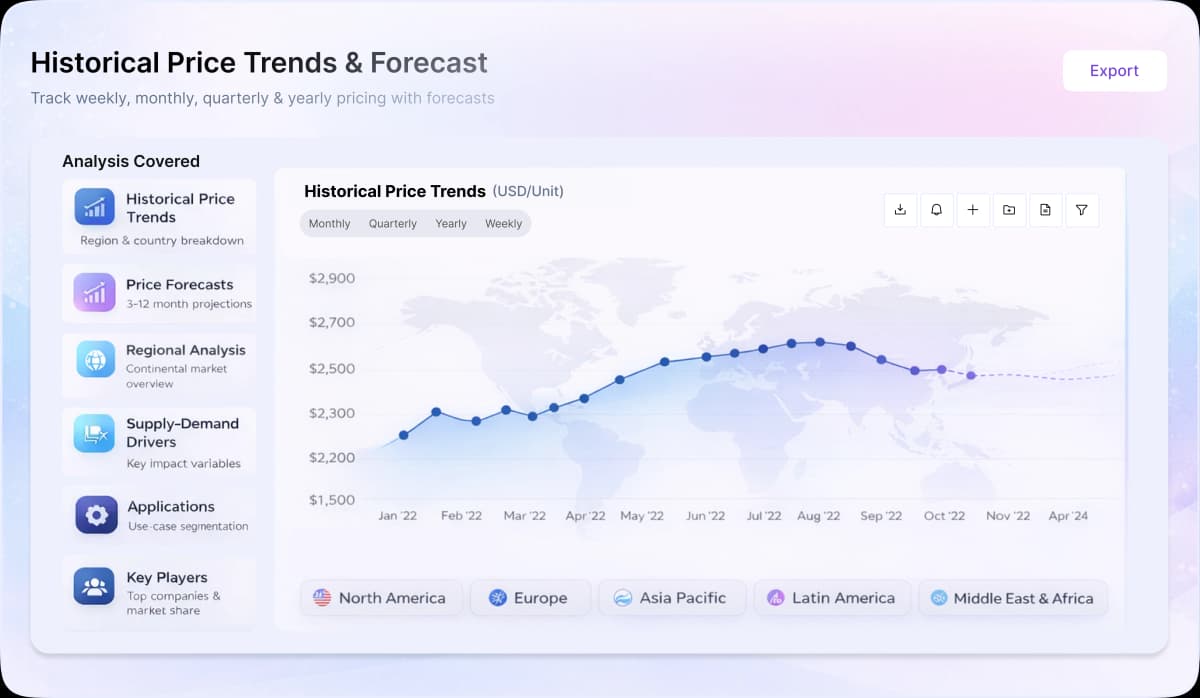
India's cotton markets experienced downward pressure during the fourth quarter, influenced by the government's extension of duty-free import provisions. Quarterly import volumes reached record levels, rising compared to the prior year as textile mills shifted procurement toward cheaper overseas sources offering better quality fibre. This import activity coincided with domestic production challenges stemming from adverse weather conditions across major growing states, including Maharashtra, Gujarat, Andhra Pradesh, and Telangana, where heavy and unseasonal rainfall damaged crops and pushed output to its lowest level in over a decade and a half. Despite reduced domestic availability, prices declined as duty-free access created cost advantages for imported material.

Domestic spot prices moved downward in alignment with international benchmarks, creating gaps between market realizations and officially announced minimum support prices. Cotton Corporation procurement operations expanded across multiple states and districts, though delayed contract finalization with ginning units limited immediate intervention. Farmer distress intensified as arrivals accelerated while spot prices remained depressed, forcing sales below support thresholds. The textile industry faced pressures from elevated import competition and contracting export orders following tariff increases by a key destination market, resulting in reduced domestic consumption forecasts.

About Cotton

Cotton is obtained from the seeds of cotton plants that mainly compose cellulose and have a natural shine and thus is widely used as a natural fiber in the textile industry. Its softness, absorbency and breathability make it ideal for synthesis of several types of apparel.

Cotton Product Detail

Industrial Uses

Home textiles, Medicinal and hygiene products, Packaging, Paper production, Oil spill cleanup

Supplier Database

Allenberg, Dunavant Enterprises, Cargill, Trelleborg Engineered Coated Fabrics

Regional Coverage

Asia Pacific

China, India, Indonesia, Pakistan, Bangladesh, Japan, Philippines, Vietnam, Iran, Thailand, South Korea, Iraq, Saudi Arabia, Malaysia, Nepal, Taiwan, Sri Lanka, UAE, Israel, Hongkong, Singapore, Oman, Kuwait, Qatar, Australia, and New Zealand

Europe

Germany, France, United Kingdom, Italy,Spain, Russia, Turkey, Netherlands, Poland, Sweden, Belgium, Austria, Ireland Switzerland, Norway, Denmark, Romania, Finland, Czech Republic, Portugal and Greece

North America

United States and Canada

Latin America

Brazil, Mexico, Argentina, Columbia, Chile, Ecuador, and Peru

Africa

South Africa, Nigeria, Egypt, Algeria, Morocco

CurrencyUS$ (Data can also be provided in local currency)

Supplier Database AvailabilityYes

Customization ScopeThe report can be customized as per the requirements of the customer

Post-Sale Analyst Support360-degree analyst support after report delivery

Note: Our supplier search experts can assist your procurement teams in compiling and validating a list of suppliers indicating they have products, services, and capabilities that meet your company's needs.

Frequently Asked Questions

In Q1 2026, cotton prices showed modest increases across major regions. In China, prices rose 3.71% from January to March, while India saw a 0.12% rise. The USA recorded a 2.31% increase, Germany also 2.31%, and Canada 3.34%. Price movements were influenced by strong demand from textile mills, cautious restocking, and anticipation of tighter 2026/27 global supply.
The global cotton outlook for 2026 is mixed. USDA/FAS projected global production to decline to 116.0 million 480-lb bales in 2026/27, down from 122.6 million bales in 2025/26. China’s output is expected to be 33.5 million bales, India at 24.0 million bales, Brazil at 17.5 million bales, and the USA at 13.3 million bales. Global consumption is projected to rise to 121.7 million bales, while ending stocks are expected to fall to 71.8 million bales, indicating tighter market coverage next year. Global cotton mill use is projected to exceed production in 2026/27, contributing to a drawdown in inventories and supporting a firmer long-term supply-demand balance.
Cotton prices were influenced by weather conditions, water availability, planting decisions, and expectations for the 2026/27 crop. ENSO-related weather variability, combined with lower irrigation in Australia and uneven rainfall in parts of China and Pakistan, affected production prospects, while steady mill demands and forecasts of declining global stocks supported market sentiment. Global demand from textile mills and expectations of a tighter 2026/27 supply also supported higher prices.
Major global cotton producers include China, India, Brazil, the United States, Pakistan, Australia, Turkey, and Uzbekistan. China led production with 35.8 million bales in 2025/26, followed by India at 23.8 million bales and Brazil at 19.5 million bales. The USA produced 13.9 million bales, while Pakistan contributed 5.3 million bales. These countries dominated both global exports and domestic textile supply chains.
In India, Ambika Cotton Mills expanded its FY26 capacity by adding 6,048 spindles and planned another 6,480 spindles by May 2026. With these additions, its total capacity is expected to reach about 120,816 spindles. Also, USDA's initial 2026/27 outlook forecast global cotton production at 116 million bales while consumption is expected to rise to 121.7 million bales, indicating tighter supplies and lower ending stocks.
India implemented the Mission for Cotton Productivity under the 2025/26 Union Budget, with a ₹5,659.22 crore outlay for 2026/27–2030/31. The program focuses on improving yields, promoting pest-resistant, high-quality varieties, and enhancing fiber quality. This initiative aims to boost productivity, strengthen competitiveness, and address structural bottlenecks in India’s cotton sector over the next five years.
Cotton requires 150–180 days from sowing to harvest, depending on variety and region. The crop needs well-drained soil, warm temperatures above 20°C, and adequate sunlight for germination. Seedlings emerge in 5–15 days. Development stages include vegetative growth, squaring, flowering, boll formation, and boll opening. Yield depends on water availability and temperature consistency during flowering and boll development.

This year, cotton production was affected by ENSO conditions. NOAA reported La Niña persisted in January 2026, with a 75% chance of transitioning to ENSO-neutral during Q1. This climate shift influenced rainfall timing, soil moisture, and heat accumulation, impacting cotton planting, growth, and yield expectations across major producing countries including Australia, China, and Pakistan.

Procurement Resource employs a structured methodology combining primary research, secondary market data, analytical models, and validation processes to assess cotton prices and trends. Price evaluations incorporate supply-demand dynamics, harvesting activities, trade flows, and value chain analysis, supported by continuous market monitoring to ensure accurate and reliable insights.

About the Author

Pragati Agarwal profile photo

Pragati Agarwal

Senior Business Insights Analyst

Delivering price trend analysis and procurement market insights at Procurement Resource, with expertise in identifying commodity patterns, supporting purchasing strategies, and improving cost efficiency through actionable market intelligence.

Our Price Analysis Methodology

Schedule Demo

Schedule a demo

Experience how Procurement Resource transforms raw material price data into clear, decision ready intelligence. Optimise your performance with reliable, expert market data and analysis. Schedule your demo today to experience a live walk-through where our experts will showcase interactive price charts, forecasted prices, and insights driving the prices for your key commodities, tailored to your workflows. Contact us now!

Our Team will be happy to assist you

We are just a text away

+1

Still Need Help?

Europe & Africa

+44 7573 171117

[email protected]

USA & Canada

+1 307 363 1045

[email protected]

APAC

+91 8850629517

[email protected]

Unlock full access to Procurement Resource's price databases, interactive charts, and short-term forecasts for thousands of commodities. Elevate your sourcing decisions by comparing prices across regions, downloading historical data, and layering in analyst-backed insights, all with our flexible plans that scale as your portfolio grows.

Still have any Questions

Contact Us
Mastercard
Wire
VISA
Stripe

Why Procurement Database

Commodity Market Intelligence

Commodity Market Intelligence

Track prices, market movements, supply-demand dynamics, and industry developments across hundreds of commodities through a centralized intelligence platform built for informed procurement decisions.

Price Forecasts & Market Outlooks

Price Forecasts & Market Outlooks

Understand market fluctuations using analyst-backed forecasts, historical pricing patterns, and evolving industry trends to strengthen sourcing strategies and budget planning.

Cost & Procurement Optimization

Cost & Procurement Optimization

Leverage cost models, pricing benchmarks, and procurement insights to evaluate purchasing opportunities, improve negotiations, and enhance operational efficiency.

Global & Regional Market Insights

Global & Regional Market Insights

Access region-specific price trends, trade activities, capacity changes, and supply chain developments influencing commodity markets worldwide.

1/4