Diethyl Sulfate Analysis 2026: Supply Demand Analysis, Price Drivers, Historical Prices, Market Insights & Latest News

Udeesha Tomar profile photo
Written ByUdeesha Tomar

Procurement Resource Database

Laptop screen

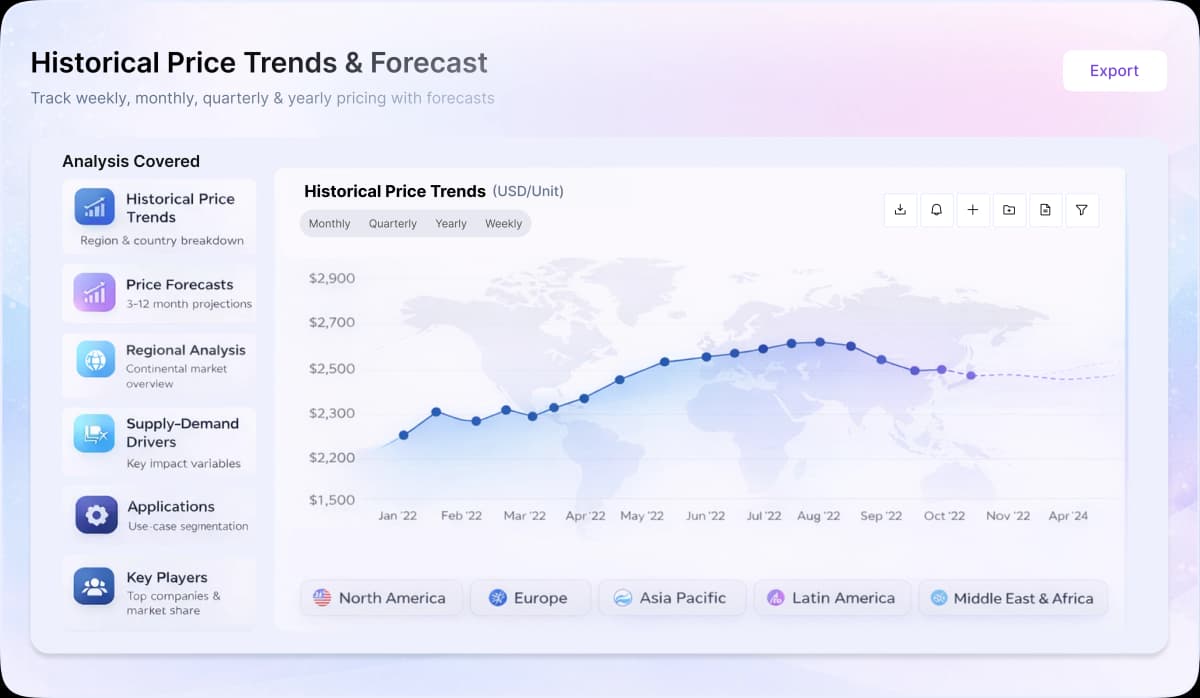
Turn price intelligence into action with the Procurement Resource Database. Log in or subscribe to unlock live price trends, historical charts, supplier databases, cost curves, and analyst-backed insights across chemicals, agriculture, energy, packaging, and more. Use these tools to benchmark your contracts, plan budgets with confidence, and stay ahead of market moves on every product you buy.

0

+

Products

0

+

Regions

0

+

Subscriptions

Asia

In the third quarter of 2025, Diethyl Sulfate prices in Asia showed mixed movement, influenced by feedstock and downstream conditions. The overall market stayed supported during July and August as regional sulfur values firmed, driven by tighter supply at Chinese ports and stronger costs for sulfur-based intermediates. However, toward late September, traders became cautious as high raw material costs reduced margins for local producers.

In China, stable operating rates in the fertilizer and chemical sectors kept domestic demand steady, though inventory levels at major ports indicated limited room for further price increases. Southeast Asia saw moderate activity, with Thailand and Malaysia showing steady consumption from the ethoxylates and surfactant sectors. Export interest remained limited due to competitive offers from other regions.

Europe

In Europe, Diethyl Sulfate prices edged slightly higher through most of Q3 as supply constraints supported production costs. The region also faced higher logistics and energy expenses, adding mild upward pressure on overall pricing. However, downstream chemical production in Western Europe was subdued amid sluggish industrial recovery and cautious buying. Producers focused on balancing supply to avoid stock build-up, leading to a mostly stable-to-firm price trend. Market players noted that improved sulfuric acid values earlier in the quarter contributed to higher manufacturing costs, though softer demand by September moderated any significant gains.

North America

In North America, Diethyl Sulfate prices remained mostly steady, supported by consistent domestic production and soft but stable demand from the agrochemical and pharmaceutical intermediates sectors. Feedstock conditions were relatively favorable as local raw material availability improved. However, the broader petrochemical market sentiment was mixed. Despite the strength in base olefin prices, downstream demand did not accelerate significantly. The overall sentiment of the market was balanced, with minimal volatility reported through the quarter.


About Diethyl Sulfate

Diethyl sulfate is a colourless, caustic, oily liquid with a slight peppermint odour that darkens over time. The primary usage of diethyl sulfate is as an ethylating agent in chemical synthesis, dye production, and textile manufacturing. This material severely irritates the eyes, skin, and respiratory system when exposed to it. Based on evidence of its carcinogenicity in laboratory animals, it is a potential mutagen and is reasonably anticipated to be a human carcinogen. It may also be linked to the development of laryngeal cancer.

Diethyl Sulfate Product Detail

HS Code
29209010
Chemical Formula

C4H10O4S

CAS Number
64-67-5
Molecular Weight
154.19 g/mol
Industrial Uses

Ethylating agent, Accelerator in the sulfation of ethylene and in some sulfonations, Reactant for the synthesis of biologically active compounds

Supplier Database

The Dharamsi Morarji Chemical Company Ltd, Union Carbide Corporation, Coyne Chemical, The Dow Chemical Company, Jarchem Industries Inc

Regional Coverage

Asia Pacific

China, India, Indonesia, Pakistan, Bangladesh, Japan, Philippines, Vietnam, Iran, Thailand, South Korea, Iraq, Saudi Arabia, Malaysia, Nepal, Taiwan, Sri Lanka, UAE, Israel, Hongkong, Singapore, Oman, Kuwait, Qatar, Australia, and New Zealand

Europe

Germany, France, United Kingdom, Italy,Spain, Russia, Turkey, Netherlands, Poland, Sweden, Belgium, Austria, Ireland Switzerland, Norway, Denmark, Romania, Finland, Czech Republic, Portugal and Greece

North America

United States and Canada

Latin America

Brazil, Mexico, Argentina, Columbia, Chile, Ecuador, and Peru

Africa

South Africa, Nigeria, Egypt, Algeria, Morocco

CurrencyUS$ (Data can also be provided in local currency)

Supplier Database AvailabilityYes

Customization ScopeThe report can be customized as per the requirements of the customer

Post-Sale Analyst Support360-degree analyst support after report delivery

Note: Our supplier search experts can assist your procurement teams in compiling and validating a list of suppliers indicating they have products, services, and capabilities that meet your company's needs.

Diethyl Sulfate Production Processes

  • Production of Diethyl Sulfate from Ethylene

In this process, ethylene is absorbed into concentrated sulfuric acid or the acid is fumed into diethyl ether or ethanol.

Frequently Asked Questions

The diethyl sulfate outlook is tied to sustained feedstock costs, particularly sulfur and sulfuric acid, alongside supply conditions across Asia and Europe. The key swing factors are sulfur availability and downstream demand shifts, especially from fertilizers, pharmaceuticals, and specialty chemicals. If sulfur supply tightens or energy costs climb, prices tend to move higher; conversely, easing feedstock costs or a pickup in downstream buying provides additional support.
Diethyl sulfate prices are shaped by interconnected regional drivers. Rising sulfur and sulfuric acid costs lift production expenses most in Europe and Asia, where smaller producers face tighter margins. High energy costs compound pressure, with European plants sometimes reducing output and tightening spot availability. In Asia, limited feedstock availability can amplify the supply squeeze, while selective purchasing by fertilizer, pharmaceutical, and specialty chemical buyers tends to keep volumes moderate despite periodic seasonal demand support. In Europe, delayed agrochemical and industrial purchases amid uncertain economic conditions can prevent demand from offsetting supply constraints.
The diethyl sulfate market includes producers active across Asia, Europe, and North America, including The Dharamsi Morarji Chemical Company Ltd, Union Carbide Corporation, Coyne Chemical, The Dow Chemical Company, and Jarchem Industries Inc, alongside Chemieliva Pharmaceutical, Hangzhou Dayangchem, and Haihang Industry. Consumption spans Asia Pacific, Europe, North America, Latin America, and Africa, though available data does not rank countries by production volume.
Diethyl sulfate is produced from ethylene and sulfuric acid, with ethylene derived from natural gas or crude oil. The two-step process first absorbs ethylene into concentrated sulfuric acid to form ethyl hydrogen sulfate, which then reacts with a second ethylene molecule to yield diethyl sulfate. The product serves as an ethylating agent across dye and pigment manufacturing, textile finishing, pharmaceutical intermediates, agrochemical synthesis, surfactants, resins, and laboratory applications. Feedstock price volatility, particularly ethylene tied to crude oil and natural gas markets, and sulfuric acid influenced by sulfur costs, directly shapes procurement economics.
Pharmaceuticals, textiles, agrochemicals, and personal care are the primary industries driving diethyl sulfate demand. Pharmaceutical manufacturers rely on it as an intermediate for drug formulations, while textile and hair dye producers use it as an ethylating agent. Agrochemical and specialty chemical buyers also contribute steady offtake. Selective purchasing from these downstream sectors, combined with tight supply from limited feedstock availability and elevated sulfur and sulfuric acid costs, tends to keep prices firm in those key regions.
Procurement Resource assesses diethyl sulfate price trends through a structured, data-driven methodology. It combines primary engagement with producers, suppliers and traders, secondary market data, continuous monitoring of feedstock and input costs, trade-flow and inventory tracking, and exchange or spot benchmarks. All inputs are validated and translated into a transparent price assessment and outlook. The detailed methodology is available on the Procurement Resource website.

Our Price Analysis Methodology

About the Author

Udeesha Tomar profile photo

Udeesha Tomar

AVP - Strategy and Solutions

Leading procurement research solutions across chemicals, materials, and food & beverages, with expertise in price forecasting and market analytics.

Schedule Demo

Schedule A Demo

Experience how Procurement Resource transforms raw material price data into clear, decision ready intelligence. Optimise your performance with reliable, expert market data and analysis. Schedule your demo today to experience a live walk-through where our experts will showcase interactive price charts, forecasted prices, and insights driving the prices for your key commodities, tailored to your workflows. Contact us now!

Our Team will be happy to assist you

We are just a text away

+1

Still Need Help?

Europe & Africa

+44 7573 171117

[email protected]

USA & Canada

+1 307 363 1045

[email protected]

APAC

+91 8850629517

[email protected]

Unlock full access to Procurement Resource's price databases, interactive charts, and short-term forecasts for thousands of commodities. Elevate your sourcing decisions by comparing prices across regions, downloading historical data, and layering in analyst-backed insights, all with our flexible plans that scale as your portfolio grows.

Still have any Questions

Contact Us
Mastercard
Wire
VISA
Stripe

Why Procurement Database

Commodity Market Intelligence

Commodity Market Intelligence

Track prices, market movements, supply-demand dynamics, and industry developments across hundreds of commodities through a centralized intelligence platform built for informed procurement decisions.

Price Forecasts & Market Outlooks

Price Forecasts & Market Outlooks

Understand market fluctuations using analyst-backed forecasts, historical pricing patterns, and evolving industry trends to strengthen sourcing strategies and budget planning.

Cost & Procurement Optimization

Cost & Procurement Optimization

Leverage cost models, pricing benchmarks, and procurement insights to evaluate purchasing opportunities, improve negotiations, and enhance operational efficiency.

Global & Regional Market Insights

Global & Regional Market Insights

Access region-specific price trends, trade activities, capacity changes, and supply chain developments influencing commodity markets worldwide.

1/4