

Udeesha Tomar
AVP - Strategy and Solutions
Leading procurement research solutions across chemicals, materials, and food & beverages, with expertise in price forecasting and market analytics.

Asia
The dimethylamine market of the APAC countries witnessed a decline in its market momentum during the first quarter of 2024. During this phase, as compared to the previous quarter, the Indian traders noticed a high supply of the commodity while the demand for the commodity remained on the lower end of the spectrum. In China too, the agrochemical, pharmaceutical, and other related sectors presented only limited rates of procurement.
Additionally, the feedstock commodities also failed to support the market momentum as in the previous quarters, further accelerating the depreciating price trajectory of dimethylamine. These bearish sentiments of the market could be associated with the onset of the holiday season in China and the weak interest of international players amid the rising tensions at the Red Sea.
Europe
The European countries also witnessed frail growth of the dimethylamine market during the first quarter of 2024. Similar to the Asian countries, the downstream agrochemical, pharmaceutical, etc., presented weak demand for dimethylamine, and in view of this, the trading and manufacturing sector opted for destocking measures by offering discounts on bulk purchases, supporting the downtrend in the prices of dimethylamine.
The decline in methanol and ammonia prices further contributed to this southward journey. The escalating supply chain issues due to the disruption of the Red Sea route, increasing instances of Houthi attacks, and significant rise in freight charges presented challenging trading conditions, contributing a significant share in the falling trajectory of dimethylamine prices.
North America
The North American market of dimethylamine struggled with several challenges during the Q1 of 2024. A number of primary drivers of the dimethylamine prices turned bearish in this phase, extending a negative impact on the dimethylamine market. As the quarter began, the pharma and cosmetics sector showed positive demand, but the agrochemical, rubber, and plastic industries lowered their number of offtakes. With the progression of the quarter, the procurement rates further declined, and even the raw material prices fell, resulting in the downfall of the dimethylamine price trend. The manufacturers reported low consumer confidence and stagnant buying activities, leading to this downward movement of dimethylamine prices.
Analyst Insight
According to Procurement Resource, the price trend of Dimethylamine is estimated to continue its bearish tone globally amid limited growth in the market momentum of its feedstock commodities and consumer purchasing sentiments.
Related Report
Need Latest Dimethylamine Prices?
Get real-time price assessments, periodic trends, forecasts and price driver insights across key global markets.
Our Clients































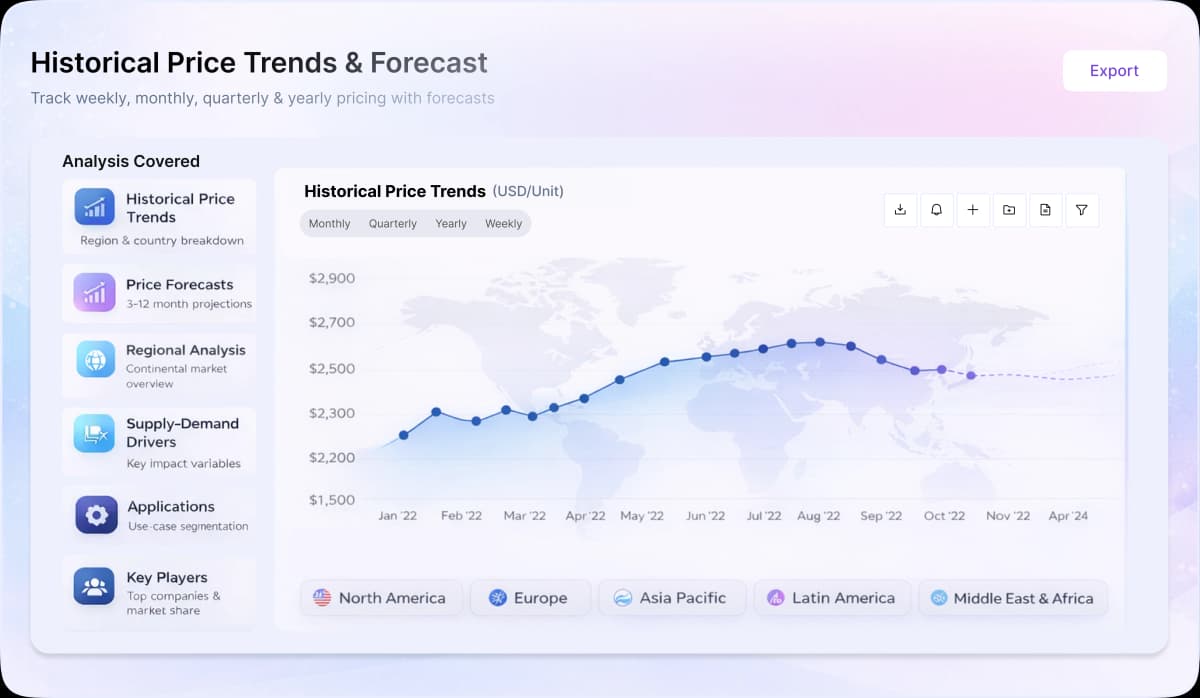
Turn price intelligence into action with the Procurement Resource Database. Log in or subscribe to unlock live price trends, historical charts, supplier databases, cost curves, and analyst-backed insights across chemicals, agriculture, energy, packaging, and more. Use these tools to benchmark your contracts, plan budgets with confidence, and stay ahead of market moves on every product you buy.
0
+Products
0
+Regions
0
+Subscriptions
Dimethylamine is a colorless, flammable gas with a strong ammonia odor with high solubility in water and organic solvents. This gas is a secondary amine, and is characterized for its basicity and reactivity, explored widely in chemical synthesis. It also forms salts and derivatives under normal conditions which are used in a number of applications. In chemical industries, dimethylamine gas is primarily used for the production of pharmaceuticals, agrochemicals, rubber chemicals, and water treatment chemicals.
(CH3)2NH
Agricultural Chemicals, Pharmaceutical Synthesis, Rubber Chemicals, Water Treatment Process
Eastman Chemical, BASF, Celanese, Mitsubishi Gas Chemical Company, Balaji Amines, Hualu Hengsheng, Alkyl Amines Chemicals, Nanjing Qinzuofu Chemical
CurrencyUS$ (Data can also be provided in local currency)
Supplier Database AvailabilityYes
Customization ScopeThe report can be customized as per the requirements of the customer
Post-Sale Analyst Support360-degree analyst support after report delivery
Note: Our supplier search experts can assist your procurement teams in compiling and validating a list of suppliers indicating they have products, services, and capabilities that meet your company's needs.
This reaction requires the presence of a solid catalyst, such as alumina, which can cause dehydration and amination. It also requires elevated temperatures in the range of 380-430 °C. Under these conditions, ammonia and methanol react to give dimethylamine, along with monomethylamine and triethylamine as the side products.
Our Price Analysis Methodology
AVP - Strategy and Solutions
Leading procurement research solutions across chemicals, materials, and food & beverages, with expertise in price forecasting and market analytics.
Experience how Procurement Resource transforms raw material price data into clear, decision ready intelligence. Optimise your performance with reliable, expert market data and analysis. Schedule your demo today to experience a live walk-through where our experts will showcase interactive price charts, forecasted prices, and insights driving the prices for your key commodities, tailored to your workflows. Contact us now!
Our Team will be happy to assist you
We are just a text away
Still Need Help?
This study analyzes Dimethylamine Production by Catalytic Reaction of Methanol and Ammonia, covering manufacturing, process flow, operating expenses, and financial considerations.
Dimethylamine Manufacturing Plant Project Report thoroughly focuses on every detail that encompasses the cost of manufacturing. Our extensive cost model meticulously covers breaking down expenses around raw materials, labour, technology, and manufacturing expenses. This enables precise cost structure optimization and helps in identifying effective strategies to reduce the overall cash cost of manufacturing.
Unlock full access to Procurement Resource's price databases, interactive charts, and short-term forecasts for thousands of commodities. Elevate your sourcing decisions by comparing prices across regions, downloading historical data, and layering in analyst-backed insights, all with our flexible plans that scale as your portfolio grows.
Still have any Questions
Contact Us



Price Trend Dashboard - What's Included
Price trends across a diverse portfolio of categories and products, spanning board to niche chemicals
Coverage extendable to grade-specific chemicals based on procurement requirements
Regular price tracking supported by robust historical datasets
News, policy updates, and key market drivers impacting price movements
Short-term and long-term price outlooks and forecasts
Supply–demand dynamics and capacity-driven market analysis

Track prices, market movements, supply-demand dynamics, and industry developments across hundreds of commodities through a centralized intelligence platform built for informed procurement decisions.

Understand market fluctuations using analyst-backed forecasts, historical pricing patterns, and evolving industry trends to strengthen sourcing strategies and budget planning.

Leverage cost models, pricing benchmarks, and procurement insights to evaluate purchasing opportunities, improve negotiations, and enhance operational efficiency.
Access region-specific price trends, trade activities, capacity changes, and supply chain developments influencing commodity markets worldwide.

