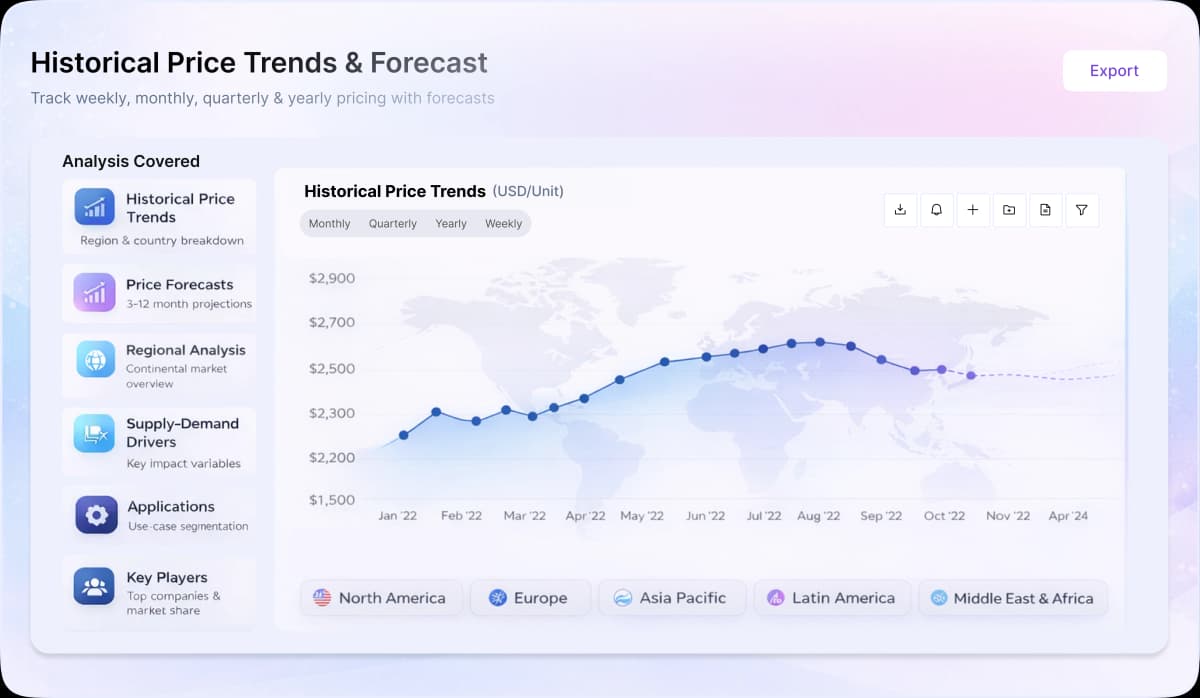
Ethylamine market prices are heavily influenced by the dynamics of its primary feedstock, ammonia, and acetaldehyde, across various global regions. In Asia, despite an initial price drop in January due to oversupply, the prices mildly recovered later in the quarter.
This recovery was catalyzed by disruptions in global transportation—stemming from conflicts in Europe and the Middle East and Houthi attacks in the Red Sea—which strained supply chains and pushed up oil prices, indirectly affecting the costs of various commodities, including ethylamine. However, the price movement still largely remained confined. The difficult offshore trade situations were consistently constricting the profit margins for supplies, and after that point, prices bottomed out. Suppliers started hoarding products to prevent further losses since the upstream costs were rising.
In Europe, the scenario was somewhat bleaker with a feeble start in January as subdued domestic consumption drove prices downwards. The situation was exacerbated by Ukrainian attacks on Russian oil refineries, which damaged the region's energy infrastructure and complicated the upstream supply situation, leading to fluctuating prices throughout the quarter.
The situation was not much different in American markets as well. The ethylamine market mirrored Asia's with a steady yet modest performance, as weak end-user consumption capped any significant price movements. Rising production costs provided some upward momentum, but this was largely offset by geopolitical tensions affecting industrial and trade activities, leading to mixed market sentiments and subdued international orders. Across all regions, the first quarter marked a period of constrained market dynamics and cautious supplier and consumer behavior.