

Prakhar Panchbhaiya
Assistant Manager: Business Insights and Content
Supporting procurement teams with category intelligence, market research, price trends, supply-demand analysis, and strategic sourcing insights across key industries.

Asia
During the second half of 2025, Ethylene Brassylate prices in Asia followed a weak yet stable trend. The market was affected by soft ethylene conditions in the region, especially due to oversupply in China. Although Ethylene Brassylate is a specialty product used mainly in fragrances and personal care, demand growth remained limited as buyers adopted cautious purchasing behaviour. Manufacturers faced no major supply disruptions, and availability stayed sufficient throughout the period. Downstream industries such as cosmetics and household care products showed steady but not aggressive demand. With ample feedstock availability and controlled production, suppliers focused on maintaining balance rather than pushing prices higher.
Europe
In Europe, Ethylene Brassylate prices remained mostly stable during H2’25. Weak industrial sentiment and slow recovery in consumer goods limited demand expansion. At the same time, high operating and energy costs encouraged producers to carefully manage output levels. Although upstream ethylene prices stayed weak to stable, this did not translate into strong price pressure on Ethylene Brassylate due to its specialty nature. Buyers in fragrance and aroma chemical sectors maintained regular procurement but avoided stock building. Imports were available, but demand remained balanced, preventing major price swings.
North America
In North America, Ethylene Brassylate prices showed a stable to slightly firm trend in H2’25. The region benefited from relatively steady ethylene supply and controlled inventory levels. Demand from personal care, fragrance, and household product manufacturers remained consistent. Producers avoided oversupply and focused on matching output with demand. While upstream ethylene costs were firmer compared to other regions, suppliers absorbed part of the cost pressure to maintain long-term customer relationships.
Analyst Insight
According to Procurement Resource, Ethylene Brassylate prices are expected to remain stable, supported by steady demand and controlled supply across the global markets.
Related Report
Need Latest Ethylene Brassylate Prices?
Get real-time price assessments, periodic trends, forecasts and price driver insights across key global markets.
Our Clients































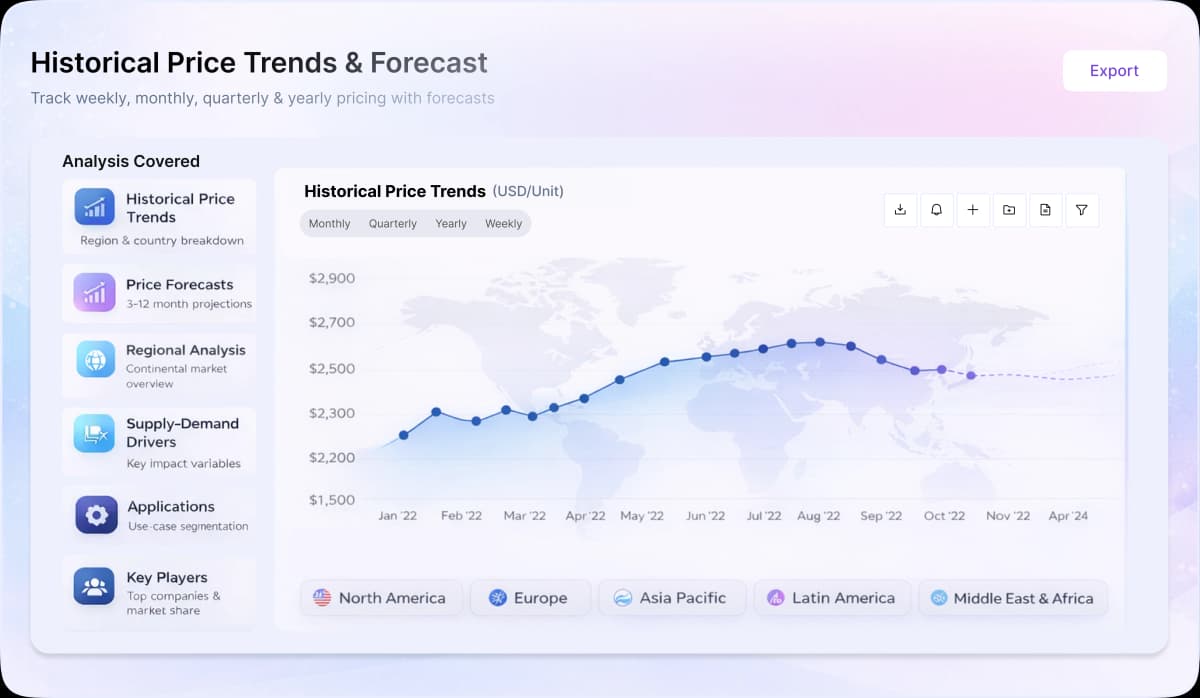
Turn price intelligence into action with the Procurement Resource Database. Log in or subscribe to unlock live price trends, historical charts, supplier databases, cost curves, and analyst-backed insights across chemicals, agriculture, energy, packaging, and more. Use these tools to benchmark your contracts, plan budgets with confidence, and stay ahead of market moves on every product you buy.
0
+Products
0
+Regions
0
+Subscriptions
Asia
In the first half of 2025, the Ethylene Brassylate market in Asia experienced a downward trend. This was largely due to weak demand across major downstream industries like personal care and fragrances, which often reflect broader consumer sentiment. Ethylene, a key raw material, also saw declining prices in the region, putting additional downward pressure on Ethylene Brassylate values.
Manufacturers operated cautiously as high inventory levels persisted, and buyers showed limited interest in fresh purchases. Although there were brief supply concerns stemming from maintenance at Middle Eastern facilities, they had minimal impact on overall price trends. As a result, market activity in Asia remained subdued.
Europe
The European market followed a similar path, with Ethylene Brassylate prices moving lower during H1’25. The decline was driven by continued overcapacity in the ethylene market and sluggish demand from the fragrance and cosmetic sectors. Ongoing structural challenges, such as plant closures and renegotiation of long-term supply contracts, signaled instability in the supply chain.
Production costs were also under pressure due to fluctuating feedstock availability and high energy prices. However, despite these challenges, downstream industries like automotive and construction key brass rod consum ersoffered some support to the overall chemical market, helping limit the extent of the price drop.
North America
In North America, Ethylene Brassylate prices also faced downward pressure throughout the first half of the year. Weaker demand from end-use industries, coupled with high ethylene inventories and stable production rates, contributed to the soft pricing environment. Temporary supply disruptions due to weather events had limited influence, as operations resumed quickly. Buyers remained conservative in procurement, given the uncertain market conditions and fluctuating feedstock costs. Broader softness in the polyethylene and MEG markets further reflected a lack of momentum across derivative sectors.
Ethylene Brassylate belongs to the family of the fragrance structural group macrocyclic lactone and lactide derivatives. It is exceptionally tenacious and exhibits characteristics of a good fixative. It is widely utilised in the perfumery as a fixative and intensifier of sweet-floral notes. In fact, Ethylene Brassylate is a component of fragrances for soaps, detergents, food, etc.
C15H26O4
Fragrance in Oriental Perfumes, Cosmetics, Personal Care Products, Soaps and Detergents, Food
1,4-Dioxacycloheptadecane-5,17-dione, 105-95-3, Astratone, Musk T
Takasago International Corporation, BERJÉ INC, Qingdao Bo-Sin International Co., LTD, Eastern Agencies Aromatics Pvt. Ltd, Pell Wall Perfumes, MOELLHAUSEN S.P.A.
CurrencyUS$ (Data can also be provided in local currency)
Supplier Database AvailabilityYes
Customization ScopeThe report can be customized as per the requirements of the customer
Post-Sale Analyst Support360-degree analyst support after report delivery
Note: Our supplier search experts can assist your procurement teams in compiling and validating a list of suppliers indicating they have products, services, and capabilities that meet your company's needs.
Ethylene Brassylate is produced from Brassylic acid (DCA13) through the process of chemical synthesis This kind of macrocydic esters is produced using chemical synthesis and it is a high quality musk compound, which is relatable to natural musk in molecular structure. This technology is utilised as it provides high yield and good quality, without creating environmental problems.
Our Price Analysis Methodology
Assistant Manager: Business Insights and Content
Supporting procurement teams with category intelligence, market research, price trends, supply-demand analysis, and strategic sourcing insights across key industries.
Experience how Procurement Resource transforms raw material price data into clear, decision ready intelligence. Optimise your performance with reliable, expert market data and analysis. Schedule your demo today to experience a live walk-through where our experts will showcase interactive price charts, forecasted prices, and insights driving the prices for your key commodities, tailored to your workflows. Contact us now!
Our Team will be happy to assist you
We are just a text away
Still Need Help?
Unlock full access to Procurement Resource's price databases, interactive charts, and short-term forecasts for thousands of commodities. Elevate your sourcing decisions by comparing prices across regions, downloading historical data, and layering in analyst-backed insights, all with our flexible plans that scale as your portfolio grows.
Still have any Questions
Contact Us



Price Trend Dashboard - What's Included
Price trends across a diverse portfolio of categories and products, spanning board to niche chemicals
Coverage extendable to grade-specific chemicals based on procurement requirements
Regular price tracking supported by robust historical datasets
News, policy updates, and key market drivers impacting price movements
Short-term and long-term price outlooks and forecasts
Supply–demand dynamics and capacity-driven market analysis

Track prices, market movements, supply-demand dynamics, and industry developments across hundreds of commodities through a centralized intelligence platform built for informed procurement decisions.

Understand market fluctuations using analyst-backed forecasts, historical pricing patterns, and evolving industry trends to strengthen sourcing strategies and budget planning.

Leverage cost models, pricing benchmarks, and procurement insights to evaluate purchasing opportunities, improve negotiations, and enhance operational efficiency.
Access region-specific price trends, trade activities, capacity changes, and supply chain developments influencing commodity markets worldwide.