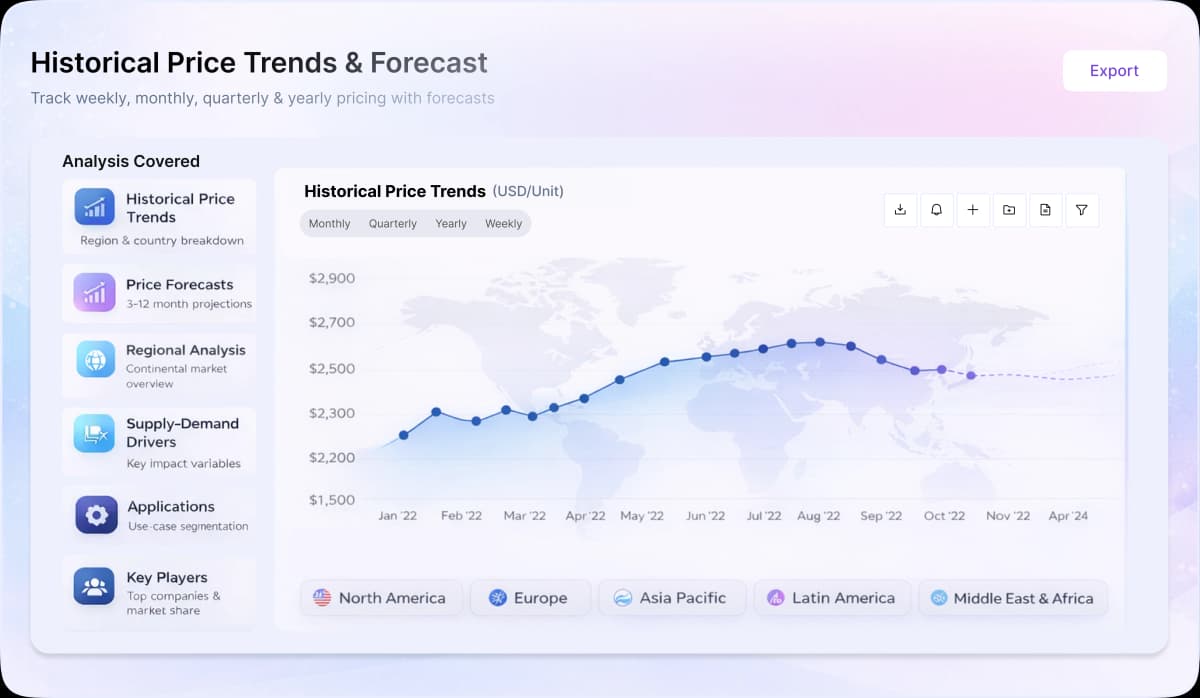
- Fluoroelastomer prices remained firm across major regions in Q1’26, supported by tight fluorochemical feedstock conditions and higher logistics risk.
- Upstream pressure came from stronger hydrofluoric acid and fluorite trends in Asia, along with import dependence for fluorspar in North America and Europe.
- Demand was steady from automotive seals, aerospace parts, semiconductor processing, chemical equipment, and oilfield applications, though buyers avoided excess inventories.
Asia
Fluoroelastomer prices in Asia moved upward during Q1’26 as the fluorochemical chain strengthened. Hydrofluoric acid prices rose in China during March, supported by tight fluorite availability and delayed restarts at some fluorite units. This lifted production cost pressure for fluorinated intermediates used in FKM manufacturing. Downstream demand from automotive sealing, electronics, chemical processing, and semiconductor-related applications remained stable. The Iran war and Strait of Hormuz closure increased freight risk and energy-linked cost pressure, adding support to regional offers.
Europe
Fluoroelastomer prices in Europe were steady to firm in Q1’26, mainly due to cost pressure rather than a sharp demand recovery. The region remained exposed to imported fluorochemical feedstocks and higher logistics costs after the Middle East disruption. The Strait of Hormuz closure increased uncertainty in shipping, insurance, and energy markets, which affected specialty polymer cost structures. Demand from aerospace, automotive, and chemical-processing industries remained selective, with buyers purchasing mainly against confirmed orders.
North America
Fluoroelastomer prices in North America stayed firm during Q1’26 as upstream supply risk outweighed moderate downstream buying. The United States was reported as 100.0% net import reliant for fluorspar, making the region sensitive to global feedstock and freight disruptions. Acid-grade fluorspar is used to produce anhydrous hydrogen fluoride in Louisiana and Texas, linking fluorspar availability directly with the fluorochemical supply chain. Demand remained steady from automotive, oil and gas, aerospace, and industrial sealing applications, but buyers resisted aggressive restocking.
Analyst Insight
According to Procurement Resource, near-term, fluoroelastomer prices are expected to remain firm if fluorite and hydrofluoric acid trends stay strong. Any easing in freight risk or feedstock availability may limit further increases.