| Product |
Category |
Region |
Price |
Last Updated Month |
| Fluoropolymer |
Chemicals |
USA |
USD 13563/MT |
September 2025 |
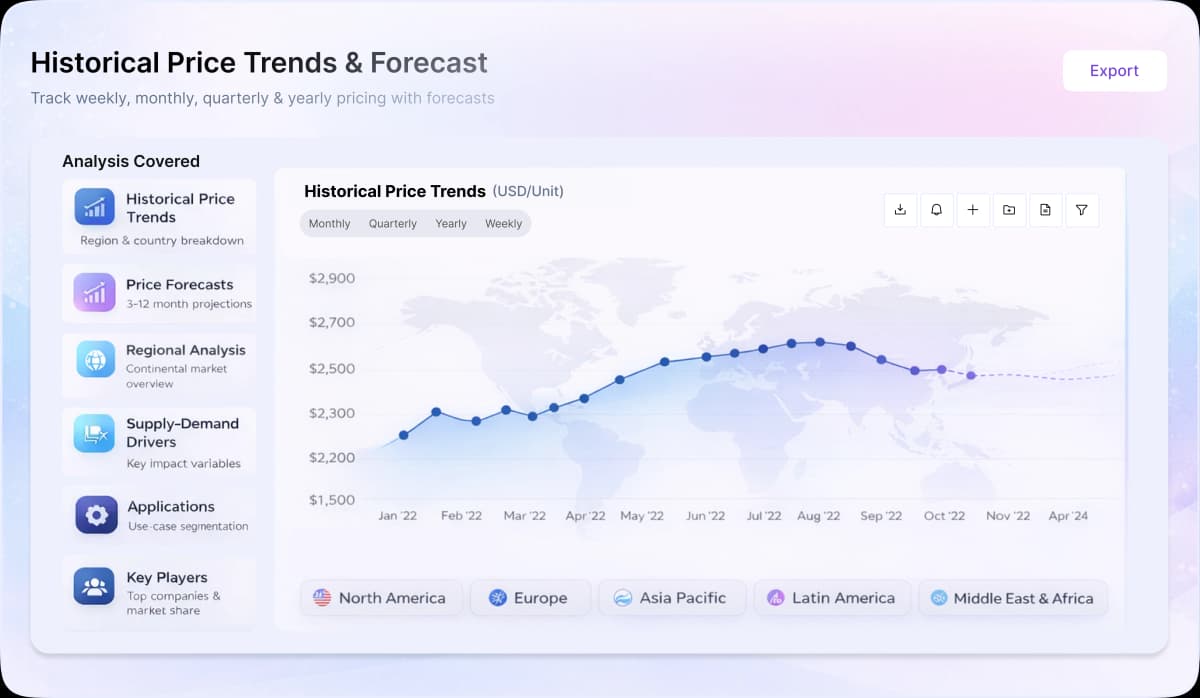
Stay updated with the latest Fluoropolymer prices, historical data, and tailored regional analysis
Asia
During the first half of 2025, fluoropolymer prices across most of Asia remained steady, driven by balanced supply-demand conditions and reliable demand from core sectors like semiconductors and pharmaceuticals. China maintained price stability throughout H1, supported by consistent industrial output and sufficient inventory levels, although demand from the automotive sector was relatively subdued.
Vietnam and Taiwan saw similar trends, with strong support from electronics and semiconductor manufacturing. In South Korea, demand from advanced tech industries and pharmaceuticals ensured a steady market, while stable supply prevented any major fluctuations. India, however, was an exception.
In early Q2, the country experienced a slight price dip due to reduced pharmaceutical demand and weaker procurement from electronics and wire coating industries. The rest of the period showed some recovery as API manufacturing picked up again, balancing the market.
Europe
In Europe, fluoropolymer prices stayed mostly stable over H1’25. The pharmaceutical sector provided a steady base of demand, especially as large-scale semiconductor activity was limited compared to Asia. Even with minor shipping delays and logistical challenges, ample inventory and controlled import costs kept the market in equilibrium. Although some softness in semiconductor demand early in the year led to slightly weaker consumption, this was offset by consistent specialty chemical activity, allowing prices to remain largely unchanged.
North America
North America saw a slightly bearish trend in the early months of 2025. In Q1, demand for fluoropolymers weakened, largely due to a slump in the automotive and aerospace sectors. This led to cautious procurement behaviour. Supply levels remained adequate, but logistical issues like port congestion and weather disruptions added complexity to the supply chain. By Q2, the market stabilized somewhat, with consistent pharmaceutical demand and moderate improvements in trading activity helping to restore balance.