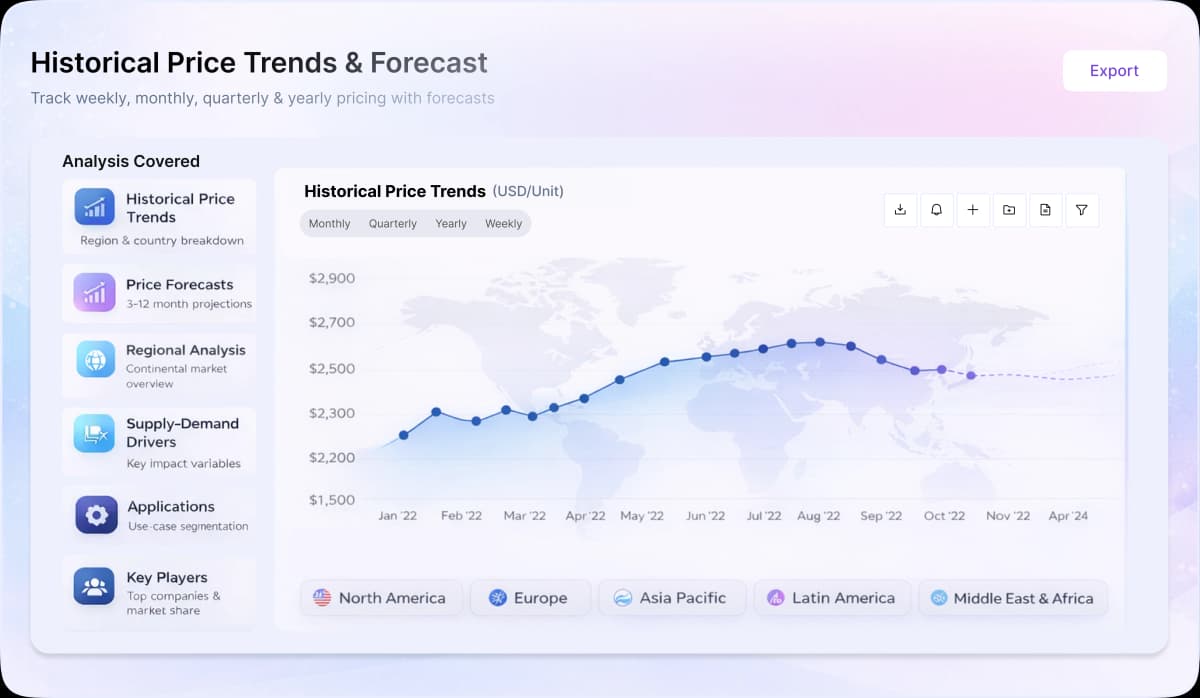
- Global Fumaric Acid prices followed a firm upward trend during Q1’26 as tightening feedstock conditions, elevated freight costs, and geopolitical disruptions increased production and replacement expenses globally.
- Feedstock pressure remained strong due to fluctuations in maleic anhydride and energy markets, while Strait of Hormuz disruptions raised marine freight, insurance, and utility costs.
- Downstream demand from food additives, beverages, unsaturated polyester resins, pharmaceuticals, and coatings remained stable, supporting procurement despite cautious buying activity.
Asia
In Asia, Fumaric Acid prices increased significantly during Q1’26 due to tighter feedstock availability and stronger export activity. In China, prices rose by approximately 25.5% from January to April 2026, supported by improving post-holiday procurement and stable demand from food additives and resin applications. In India, prices surged by nearly 16.1% amid higher import replacement costs and elevated freight expenses. Shipping disruptions linked to the Iran conflict and Strait of Hormuz uncertainty further tightened regional supply chains and increased delivered costs.
Europe
In Europe, Fumaric Acid prices remained firm as higher energy, logistics, and import replacement costs supported the market. Germany recorded the highest increase globally, with prices rising by approximately 28.1% between January and April 2026. Elevated marine freight rates, vessel delays, and rising utility costs linked to Middle East disruptions continued supporting sentiment, while demand from food, beverage, and construction-linked resin sectors remained moderate.
North America
In North America, Fumaric Acid prices stayed firm during Q1’26 as rising global logistics costs and stable downstream demand supported the market. In the USA, prices increased by nearly 23.4% from January to April 2026 due to higher replacement costs and stronger sentiment across imported chemical intermediates. Demand from food processing, beverages, coatings, and resin manufacturing remained relatively balanced throughout the quarter.