Garlic Oleoresin Price Trend Analysis 2026: Historical Prices, Price Drivers, Market Insights, Supply Demand Analysis & Latest News

Procurement Resource Database

Laptop screen

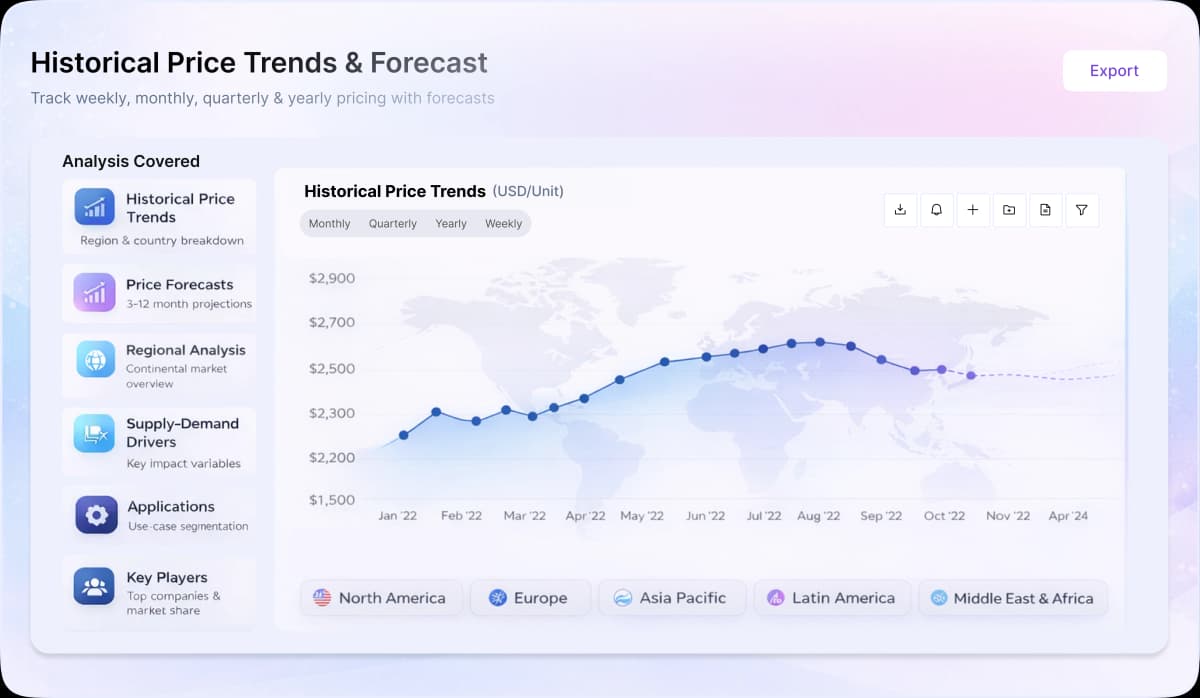
Turn price intelligence into action with the Procurement Resource Database. Log in or subscribe to unlock live price trends, historical charts, supplier databases, cost curves, and analyst-backed insights across chemicals, agriculture, energy, packaging, and more. Use these tools to benchmark your contracts, plan budgets with confidence, and stay ahead of market moves on every product you buy.

0

+

Products

0

+

Regions

0

+

Subscriptions

In the first half of 2025, garlic oleoresin prices experienced a gradual decline, mainly influenced by the weakening prices of fresh garlic and garlic powder globally. As raw garlic became cheaper in key producing countries like India, China, and Egypt, the overall cost of production for garlic-derived products, including oleoresin, dropped. Since garlic oleoresin is extracted from dehydrated garlic products, the lower input costs from garlic powder directly impacted its pricing.

In India, a large surplus of fresh garlic led to aggressive processing activity. With garlic being abundantly available, processors had easier access to raw material, which supported higher production of oleoresin and created a supply-heavy market. This put additional downward pressure on prices. In Egypt, the initial tightness in garlic supply eased by late Q1, giving processors more confidence to scale up operations. The resulting increase in processed output further weighed on oleoresin prices.

China, being a major supplier of garlic-based ingredients, maintained a stable production pace. Although there were some concerns over weather, expectations for a strong harvest in June kept buyers cautious. This anticipation limited aggressive purchasing, further reducing market momentum and keeping oleoresin prices soft. Overall, the high availability of raw garlic and processed forms like garlic powder contributed to a bearish trend for garlic oleoresin during H1’25.


About Garlic Oleoresin

Garlic Oleoresin, a brown viscous liquid, is derived from cloves of dried garlic or Garlic Allium Sativum L using solvent extraction process. It has aroma and characteristic pungency of garlic. It can dissolve in oil. It is most commonly utilised in seasoning industry. It further helps to increase the beneficial high-density lipoproteins in the blood, suppressing harmful cholesterol in the body.

Garlic Oleoresin Product Detail

Industrial Uses

Batters and bread mixes, Dairy, Marinades, Salad dressing, Sauces, Seasonings, Snacks, Flavouring agent, Insect repellent, Volatile oils

Supplier Database

Synthite Industries Ltd, Akay Group Ltd, Plant Lipids, Universal Oleoresins, BOS Natural Flavours (P) Limited

Regional Coverage

Asia Pacific

China, India, Indonesia, Pakistan, Bangladesh, Japan, Philippines, Vietnam, Iran, Thailand, South Korea, Iraq, Saudi Arabia, Malaysia, Nepal, Taiwan, Sri Lanka, UAE, Israel, Hongkong, Singapore, Oman, Kuwait, Qatar, Australia, and New Zealand

Europe

Germany, France, United Kingdom, Italy,Spain, Russia, Turkey, Netherlands, Poland, Sweden, Belgium, Austria, Ireland Switzerland, Norway, Denmark, Romania, Finland, Czech Republic, Portugal and Greece

North America

United States and Canada

Latin America

Brazil, Mexico, Argentina, Columbia, Chile, Ecuador, and Peru

Africa

South Africa, Nigeria, Egypt, Algeria, Morocco

CurrencyUS$ (Data can also be provided in local currency)

Supplier Database AvailabilityYes

Customization ScopeThe report can be customized as per the requirements of the customer

Post-Sale Analyst Support360-degree analyst support after report delivery

Note: Our supplier search experts can assist your procurement teams in compiling and validating a list of suppliers indicating they have products, services, and capabilities that meet your company's needs.

Garlic Oleoresin Production process

  • Production of Garlic Oleoresin via Solvent Extraction Process

It is derived or extracted through the solvent extraction of crushed bulbs and cloves of garlic, Allium sativum L. A suitable organic solvent is used in this process to extract Garlic Oleoresin, followed by the removal of left-over solvent traces through vacuum distillation.

Frequently Asked Questions

The current garlic oleoresin outlook remains firm but uncertain. Stable demand from food manufacturers favouring oleoresins to hedge against fresh garlic price swings tends to provide consistent purchasing support. However, tighter raw material availability in India, driven by weaker farm returns and supply-demand imbalance, could constrain output and keep upward pressure on prices. Rising edible oil and freight costs add processing cost inflation. Improved farm profitability or tariff and trade-flow changes could ease raw material constraints and reduce risk premiums.
Garlic oleoresin prices tend to trend firm when rising edible oil costs push up processing and freight expenses across the extraction industry. In India, weaker farm returns can constrain high-quality raw garlic availability, tightening supply. U.S. buyers diversifying away from certain Asian suppliers, combined with tariff shifts, can complicate global procurement and add risk premiums. Meanwhile, stable food manufacturer demand provides consistent support as buyers substitute fresh garlic with oleoresins.
China and India dominate global garlic oleoresin production and trade. China, the world's largest garlic producer, shapes global markets through pricing and availability, while India hosts major manufacturers including Synthite Industries, Akay Group, and Bioingredia Natural. The U.S. is diversifying sourcing away from Chinese suppliers, and Europe and North America are key import markets. Concentration in just two countries creates supply security exposure, with weather-driven yield volatility, trade flow shifts, and tariff changes threatening availability.
Garlic is grown primarily in China, India and Egypt, with seasonal cycles directly governing oleoresin supply and pricing. Peak harvests, notably India's early-summer surplus and China's June harvest, flood the market with raw garlic, lowering input costs and pushing oleoresin prices down. Off-season periods and weather shocks, such as unseasonal rains and harsh summers disrupting Indian and Bangladeshi crops, tighten supply and lift prices. Egypt's winter-driven export cycles to the EU add further seasonal layering to global availability.
Garlic oleoresin demand is driven by food processing industries, including sauces, seasonings, snacks, marinades, salad dressings, and dairy, as a natural flavoring agent in meat, seafood, and poultry. The chemical sector contributes through insect repellents and perfumery, while volatile oils production adds another outlet. The flavouring agent segment tends to stay stable as manufacturers hedge against fresh garlic price volatility. Steady downstream offtake generally supports consistent purchasing and firm pricing, even when raw garlic supply constraints or tariff-related trade shifts add cost pressure on processors.
Procurement Resource assesses garlic oleoresin prices through a structured methodology combining primary engagement with producers, suppliers and traders, secondary market data, continuous monitoring of raw material and input costs, trade-flow and inventory tracking, and exchange or spot benchmarks. All inputs are validated and translated into a transparent price assessment and outlook. The detailed methodology is available on the Procurement Resource website.

Our Price Analysis Methodology

About the Author

Prakhar Panchbhaiya profile photo

Prakhar Panchbhaiya

Assistant Manager: Business Insights and Content

Supporting procurement teams with category intelligence, market research, price trends, supply-demand analysis, and strategic sourcing insights across key industries.

Schedule Demo

Schedule A Demo

Experience how Procurement Resource transforms raw material price data into clear, decision ready intelligence. Optimise your performance with reliable, expert market data and analysis. Schedule your demo today to experience a live walk-through where our experts will showcase interactive price charts, forecasted prices, and insights driving the prices for your key commodities, tailored to your workflows. Contact us now!

Our Team will be happy to assist you

We are just a text away

+1

Still Need Help?

Europe & Africa

+44 7573 171117

[email protected]

USA & Canada

+1 307 363 1045

[email protected]

APAC

+91 8850629517

[email protected]

Other Related Reports

Garlic Oleoresin Production from Solvent Extraction

This report provides the cost structure of garlic oleoresin production by the solvent extraction method. This process involves the extraction of crushed bulbs and dried cloves of Garlic Allium Sativum L with suitable organic solvent such as acetone and ethanol.

Unlock full access to Procurement Resource's price databases, interactive charts, and short-term forecasts for thousands of commodities. Elevate your sourcing decisions by comparing prices across regions, downloading historical data, and layering in analyst-backed insights, all with our flexible plans that scale as your portfolio grows.

Still have any Questions

Contact Us
Mastercard
Wire
VISA
Stripe

Related News

View All

Why Procurement Database

Commodity Market Intelligence

Commodity Market Intelligence

Track prices, market movements, supply-demand dynamics, and industry developments across hundreds of commodities through a centralized intelligence platform built for informed procurement decisions.

Price Forecasts & Market Outlooks

Price Forecasts & Market Outlooks

Understand market fluctuations using analyst-backed forecasts, historical pricing patterns, and evolving industry trends to strengthen sourcing strategies and budget planning.

Cost & Procurement Optimization

Cost & Procurement Optimization

Leverage cost models, pricing benchmarks, and procurement insights to evaluate purchasing opportunities, improve negotiations, and enhance operational efficiency.

Global & Regional Market Insights

Global & Regional Market Insights

Access region-specific price trends, trade activities, capacity changes, and supply chain developments influencing commodity markets worldwide.

1/4