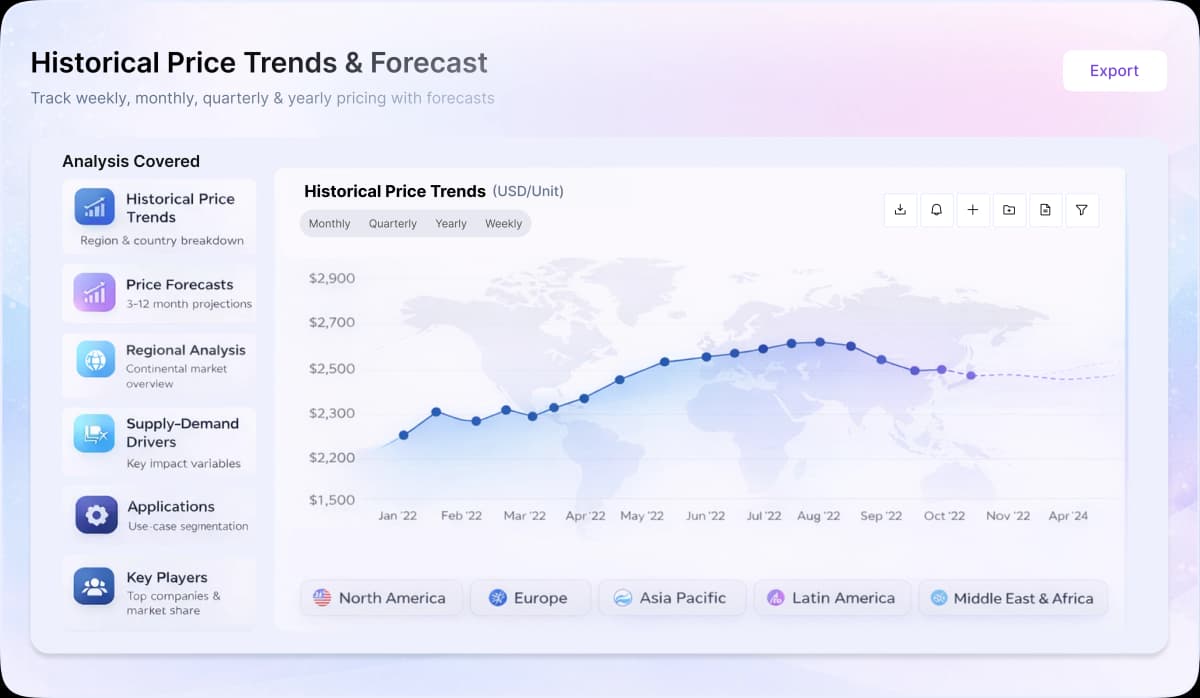
- Helium prices declined in Q2 2026 as supply routes improved, despite persistent geopolitical risks and structurally limited global production sources.
- Natural-gas processing remained the key supply base, making helium availability sensitive to gas infrastructure, recovery capacity and regional disruptions.
- Semiconductor manufacturing remained a major demand driver, alongside medical imaging, aerospace, cryogenics, welding and scientific applications.
In China, helium prices fell from ~USD 205.94/kg in April to ~USD 163.00/kg in June, showing a ~20.9% decrease. The decline reflected easing supply pressure despite continued geopolitical risks affecting Middle Eastern flows. Qatar accounted for around 30% of global helium supply in 2025, making regional disruptions significant for Asian buyers; however, semiconductor manufacturers maintained inventory buffers and diversified sourcing, limiting immediate demand pressure. Helium availability remained structurally constrained because production depends on specialized recovery from natural-gas reservoirs. Europe faced indirect pressure from global supply movements, while North America benefited from established domestic production infrastructure. In Germany, the prices of Helium were ~USD 331.94/kg April and ~USD 164.00/kg In June, while in the United States, the prices of Helium were ~USD 206.02/kg and ~USD 164.00/kg, respectively. Semiconductor manufacturing, medical imaging, aerospace and cryogenic applications continued supporting consumption, although inventory management and alternative sourcing reduced near-term purchasing urgency.
Analyst Insight
According to Procurement Resource, helium prices may remain volatile as geopolitical supply risks persist, while diversified sourcing and inventory buffers could moderate immediate price pressure.