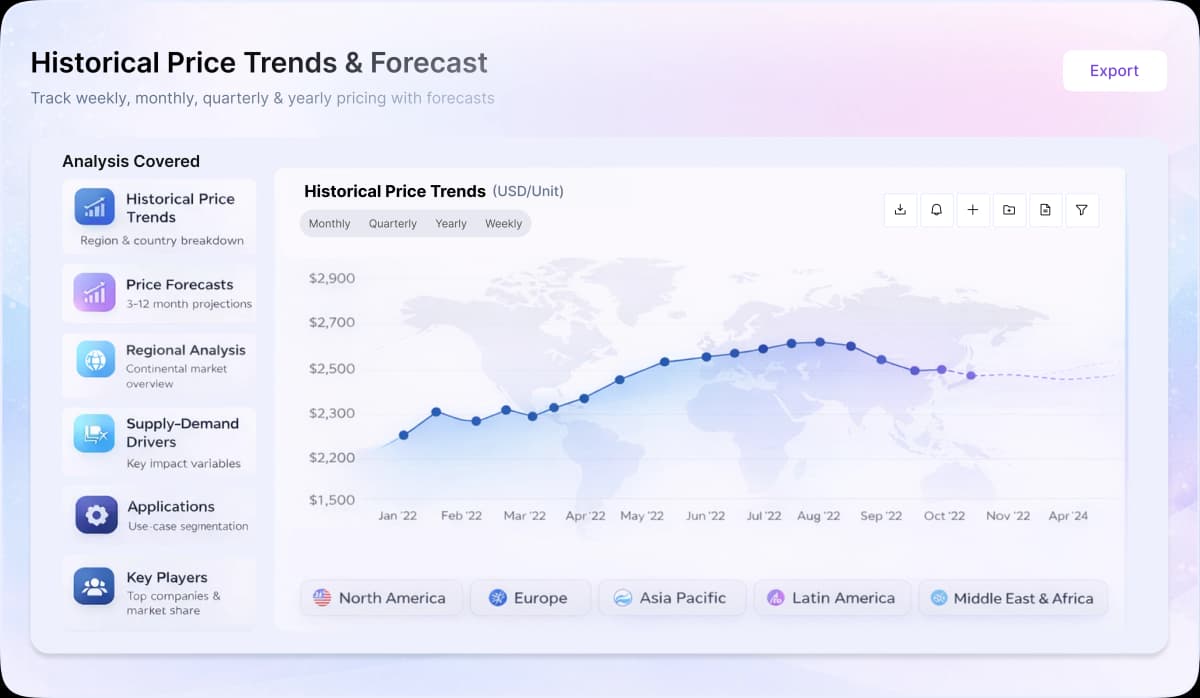
Hot Rolled Peeled Bar Price Trend H1 2026
- Hot rolled peeled bar markets maintained a firm-to-volatile trajectory during H1 2026, as movements in nickel and ferrochrome costs influenced stainless-steel production economics for 304 and 316 grades.
- Stainless-steel production remained strong in Asia, while supply constraints and changing trade conditions shaped availability across European and North American markets.
- Demand from aerospace components, valve manufacturing, pump shafts, automotive components, and precision engineering supported procurement of peeled bar, where improved surface quality and dimensional accuracy are important.
Asia
Asian hot rolled peeled bar markets remained relatively firm during H1 2026, supported by strong stainless-steel production and industrial demand. According to worldstainless, the international stainless-steel industry association, Asian stainless melt-shop production increased by approximately 6% year-on-year during H1 2026, while Chinese production rose by about 7%. Higher output supported availability of stainless feedstock, although nickel volatility continued to influence the economics of 304 and more alloy-intensive 316 peeled bar. Demand from machinery, automotive components, valve bodies, pump shafts, and construction-related applications provided a stable consumption base, while buyers remained cautious about building inventories.
Europe
European markets faced a tighter operating environment as stainless-steel production declined. worldstainless reported that EU stainless melt-shop production fell by approximately 4% year-on-year during H1 2026 to around 2.9 million tonnes. Reduced regional output and changing import conditions supported a relatively firm environment for peeled bar, while ferrochrome and nickel movements continued to influence alloy surcharges. 304 remained widely used across engineering and equipment applications, while 316 demand was supported by chemical processing, marine, and corrosion-sensitive equipment.
North America
North American hot rolled peeled bar markets remained supported by domestic production and trade protection. worldstainless reported that U.S. stainless melt-shop production increased by approximately 3% during H1 2026. Domestic availability and elevated import barriers supported the regional supply environment, while demand from automotive, industrial machinery, food processing, and precision-engineering applications remained constructive. The 316 grade continued to attract demand from chemical and offshore applications requiring greater corrosion resistance, while 304 remained the broader-volume grade.
Analyst Insight
Hot rolled peeled bar values are expected to remain firm but volatile, with alloy-cost movements and regional stainless production shaping the cost environment. Stable industrial demand should support 304 and 316 grades, while improved feedstock availability could moderate upward pressure.