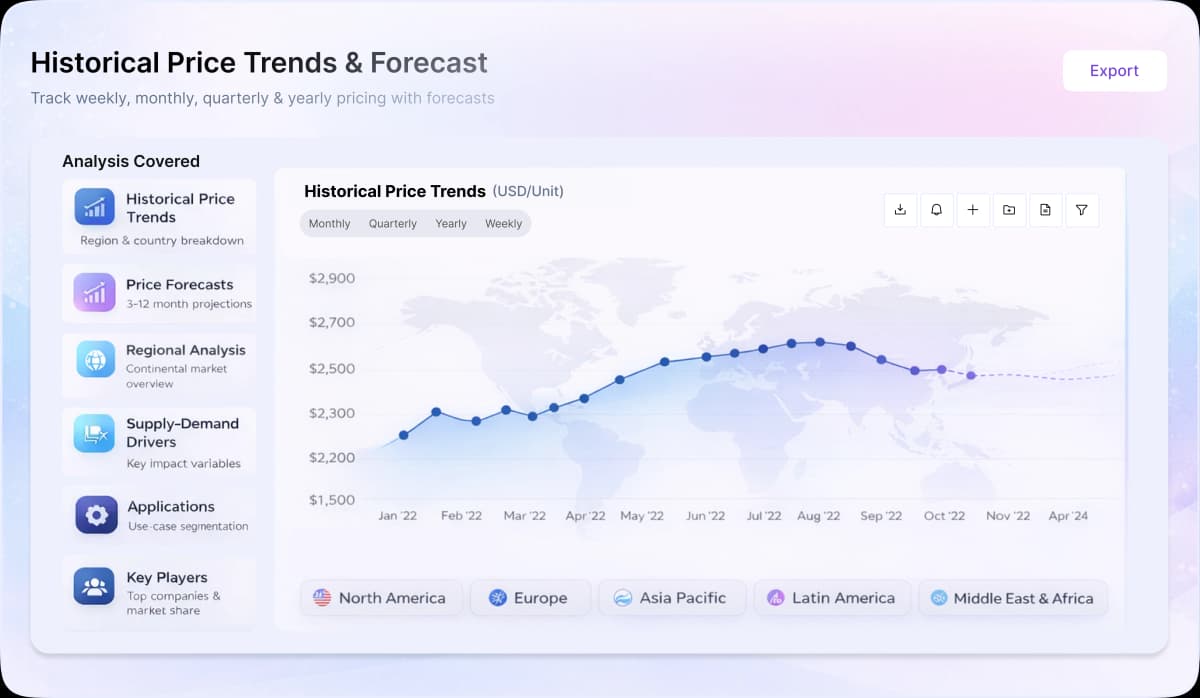
Hot Rolled Steel Price Trend Analysis 2026: Historical Prices, Market Insights, Price Drivers, Supply Demand Analysis & Latest News

Pragati Agarwal profile photo
Written ByPragati Agarwal

Procurement Resource Database

Laptop screen

Turn price intelligence into action with the Procurement Resource Database. Log in or subscribe to unlock live price trends, historical charts, supplier databases, cost curves, and analyst-backed insights across chemicals, agriculture, energy, packaging, and more. Use these tools to benchmark your contracts, plan budgets with confidence, and stay ahead of market moves on every product you buy.

Hot Rolled Steel Dashboard Inclusions

Hot Rolled Steel Price Dasboard

0

+

Products

0

+

Regions

0

+

Subscriptions

In the second half of 2025, the global hot rolled steel market witnessed mixed trends in terms of prices, where regional variations were prominent. In the third quarter, the prices of hot rolled steel were seen moving in a narrow range. At the start of this period, positive government support, along with increased expenditure by the infrastructure and manufacturing sectors, helped the overall sentiment of the market. This led to a positive movement in prices. The demand for construction equipment, home appliances, and automobiles helped the hot rolled steel market. However, this positive trend declined during the second half of the quarter, as high prices led to a decline in export demand. The production of hot rolled steel continued as usual, keeping it high. At the end of this period, inventory levels increased, causing a correction, followed by a seasonal movement.

In the fourth quarter, regional markets saw different market conditions. In the European markets, prices improved slightly due to stringent import regulations, which boosted the prices offered by local producers. In Asia, the market continued to face pressure due to high inventories, slow demand revival from the monsoon season, and competitive export offers, keeping prices subdued. Buyers remained cautious, avoiding large transactions, which resulted in limited transactions, keeping the market balanced.

About Hot Rolled Steel

Hot rolled steel is a type of steel processed at high temperatures above 1,700°F, which is above the recrystallization temperature. This makes it easier to shape and form, resulting in products with a rough surface finish and looser tolerances compared to cold rolled steel. It's commonly used in construction, automotive frames, rail tracks, and agricultural equipment due to its strength, durability, and cost-effectiveness. Hot rolled steel is ideal for applications where precise shapes and smooth finishes aren't critical.

Hot Rolled Steel Product Detail

Hs Code
7208
Supplier Database

ArcelorMittal, Nippon Steel & Sumitomo Metal Corporation (NSSMC), Hebei Iron and Steel Group, Baosteel, Wuhan Iron and Steel Group

Regional Coverage

Asia Pacific

China, India, Indonesia, Pakistan, Bangladesh, Japan, Philippines, Vietnam, Iran, Thailand, South Korea, Iraq, Saudi Arabia, Malaysia, Nepal, Taiwan, Sri Lanka, UAE, Israel, Hongkong, Singapore, Oman, Kuwait, Qatar, Australia, and New Zealand

Europe

Germany, France, United Kingdom, Italy,Spain, Russia, Turkey, Netherlands, Poland, Sweden, Belgium, Austria, Ireland Switzerland, Norway, Denmark, Romania, Finland, Czech Republic, Portugal and Greece

North America

United States and Canada

Latin America

Brazil, Mexico, Argentina, Columbia, Chile, Ecuador, and Peru

Africa

South Africa, Nigeria, Egypt, Algeria, Morocco

CurrencyUS$ (Data can also be provided in local currency)

Supplier Database AvailabilityYes

Customization ScopeThe report can be customized as per the requirements of the customer

Post-Sale Analyst Support360-degree analyst support after report delivery

Note: Our supplier search experts can assist your procurement teams in compiling and validating a list of suppliers indicating they have products, services, and capabilities that meet your company's needs.

Hot Rolled Steel Industrial Uses

Hot rolled steel is widely used in various industrial applications due to its strength, versatility, and cost-efficiency. It is commonly utilized in construction for beams, columns, and structural frameworks. In the automotive industry, it’s used for frames, wheel rims, and chassis components. It also serves in the manufacturing of agricultural equipment, railroad tracks, and heavy machinery. Additionally, hot rolled steel is used in shipbuilding, pipeline construction, and storage tanks, where precise dimensions are less critical but durability is essential.

Frequently Asked Questions

Global hot rolled steel prices stayed mixed in Q1 2026, with feedstock, energy, and freight costs providing cost-side support. However, weak construction and manufacturing demand limited strong upward movement across major regional markets.
Hot rolled steel prices are expected to remain stable to moderately firm in 2026, supported by feedstock and logistics costs. However, global overcapacity, cautious construction activity, and uneven manufacturing demand may continue restricting major price gains.
The hot rolled steel supply chain begins with iron ore, coking coal, and steel scrap, which are processed into crude steel through blast furnaces or electric arc furnaces. The steel is then reheated and rolled into hot rolled coils, sheets, or plates for industrial and construction use.
Hot rolled steel prices are influenced by iron ore, coking coal, steel scrap, electricity, freight, exchange rates, tariffs, and regional demand cycles. Mill operating rates, inventory levels, and shipping disruptions also shape short-term price movement.
China remains the largest producer and exporter of hot rolled steel products, supported by large steelmaking capacity and competitive export offers. Japan, South Korea, India, Germany, and Turkey are also important suppliers in the global hot rolled steel market.

Hot rolled steel demand is driven by construction, automotive, machinery, shipbuilding, pipes and tubes, and general manufacturing. In Q1 2026, cautious buying from construction and industrial users kept consumption selective, limiting price recovery.
Rising SHFE inventories and higher mill stocks usually signal weak offtake and exert downward pressure on hot-rolled steel prices. In Q1 2026, slower construction activity and cautious restocking kept inventories elevated, restricting mills’ ability to raise offers.


China plays a major role in global hot rolled steel pricing because of its large production base, export volumes, and domestic demand cycles. Seasonal slowdowns, mill output changes, and export pricing from China directly affect prices across Asia, Europe, and the Middle East.
Hot rolled steel is commonly traded through spot purchases, monthly contracts, quarterly fixed-price agreements, and index-linked contracts. Larger buyers may also use SHFE or CME HRC-linked pricing to manage procurement risk.
Procurement Resource employs a structured methodology combining primary research, secondary market data, analytical models, and validation processes to assess commodity prices and trends. Price evaluations incorporate supply-demand dynamics, feedstock movements, trade flows, and value chain analysis, supported by continuous market monitoring to ensure accurate and reliable insights.

About the Author

Pragati Agarwal profile photo

Pragati Agarwal

Senior Business Insights Analyst

Delivering price trend analysis and procurement market insights at Procurement Resource, with expertise in identifying commodity patterns, supporting purchasing strategies, and improving cost efficiency through actionable market intelligence.

Our Price Analysis Methodology

Schedule Demo

Schedule a demo

Experience how Procurement Resource transforms raw material price data into clear, decision ready intelligence. Optimise your performance with reliable, expert market data and analysis. Schedule your demo today to experience a live walk-through where our experts will showcase interactive price charts, forecasted prices, and insights driving the prices for your key commodities, tailored to your workflows. Contact us now!

Our Team will be happy to assist you

We are just a text away

+1

Still Need Help?

Europe & Africa

+44 7573 171117

[email protected]

USA & Canada

+1 307 363 1045

[email protected]

APAC

+91 8850629517

[email protected]

Unlock full access to Procurement Resource's price databases, interactive charts, and short-term forecasts for thousands of commodities. Elevate your sourcing decisions by comparing prices across regions, downloading historical data, and layering in analyst-backed insights, all with our flexible plans that scale as your portfolio grows.

Still have any Questions

Contact Us
Mastercard
Wire
VISA
Stripe

Why Procurement Database

Commodity Market Intelligence

Commodity Market Intelligence

Track prices, market movements, supply-demand dynamics, and industry developments across hundreds of commodities through a centralized intelligence platform built for informed procurement decisions.

Price Forecasts & Market Outlooks

Price Forecasts & Market Outlooks

Understand market fluctuations using analyst-backed forecasts, historical pricing patterns, and evolving industry trends to strengthen sourcing strategies and budget planning.

Cost & Procurement Optimization

Cost & Procurement Optimization

Leverage cost models, pricing benchmarks, and procurement insights to evaluate purchasing opportunities, improve negotiations, and enhance operational efficiency.

Global & Regional Market Insights

Global & Regional Market Insights

Access region-specific price trends, trade activities, capacity changes, and supply chain developments influencing commodity markets worldwide.

1/4