Isobutyraldehyde Price Trend Analysis 2026: Market Insights, Historical Prices, Supply Demand Analysis, Price Drivers & Latest News

Shriya Singh profile photo
Written ByShriya Singh

Procurement Resource Database

Laptop screen

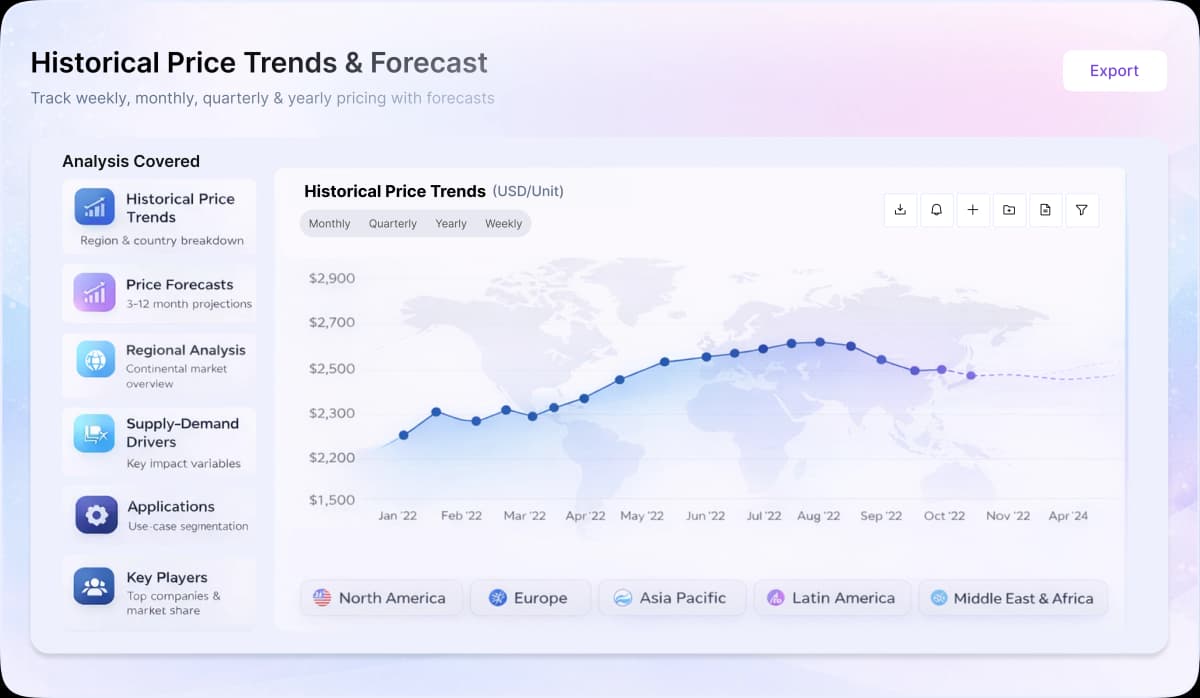
Turn price intelligence into action with the Procurement Resource Database. Log in or subscribe to unlock live price trends, historical charts, supplier databases, cost curves, and analyst-backed insights across chemicals, agriculture, energy, packaging, and more. Use these tools to benchmark your contracts, plan budgets with confidence, and stay ahead of market moves on every product you buy.

0

+

Products

0

+

Regions

0

+

Subscriptions

Asia

In Asia, Isobutyraldehyde prices declined during Q4’25. Early in the quarter, some stockpiling occurred before the holiday season, but after that, buying slowed as downstream users reduced orders. Supply remained stable, with producers keeping production steady, and feedstock propylene costs were generally low, which kept production cheap. High inventories in China added pressure on the market, while demand from sectors like polyols and polyurethane remained weak. In India, new duties on some imports encouraged local buying but also slowed demand for imported material. Overall, the market mood was cautious, and prices moved downward gradually.

Europe

In Europe, Isobutyraldehyde prices also weakened. Demand from construction and automotive sectors slowed, while imports from Asia continued in high volumes. Low feedstock costs kept production expenses down, but buyers were careful, buying only what they immediately needed. The polyether polyols industry, a major consumer, had excess capacity, which reduced purchasing. Market activity was moderate, and negotiation focused on lower price levels. Overall, supply and demand were balanced, but weak consumption kept prices under pressure throughout the quarter.

North America

In North America, the market for Isobutyraldehyde faced similar pressures. Domestic demand was soft, with manufacturers reducing orders and focusing on existing inventories. Exports to Asia and Europe also slowed, adding to local supply levels. Feedstock propylene prices declined due to lower crude oil costs, which reduced production costs and allowed suppliers to lower prices. Plant operations were stable, though minor outages occurred in some facilities. Overall, market sentiment was subdued, and prices trended down moderately.


About Isobutyraldehyde

Isobutyraldehyde is a clear, colourless liquid with a pungent odour. It is insoluble in water, and its vapours are heavier than air. It is used in the chemical industry as an intermediate to produce other chemical products such as resins, varnishes, perfumes and pesticides.

Isobutyraldehyde Product Detail

HS Code
99 78-84-2
Chemical Formula

(CH3)2CHCHO

CAS Number
78-84-2
Molecular Weight
72.11 g/mol
Industrial Uses

Pharmaceuticals, pesticides, synthetic resins, tanning auxiliaries, perfumes

Synonyms

Alpha-Methylpropionaldehyde, 2-formylpropane, Isobutanal, Isopropyl aldehyde

Supplier Database

Eastman Chemical Co., TCI America, BASF, Mitsubishi Chemical Corporation, MilliporeSigma, Pharmaffiliates, Actylis.

Regional Coverage

Asia Pacific

China, India, Indonesia, Pakistan, Bangladesh, Japan, Philippines, Vietnam, Iran, Thailand, South Korea, Iraq, Saudi Arabia, Malaysia, Nepal, Taiwan, Sri Lanka, UAE, Israel, Hongkong, Singapore, Oman, Kuwait, Qatar, Australia, and New Zealand

Europe

Germany, France, United Kingdom, Italy,Spain, Russia, Turkey, Netherlands, Poland, Sweden, Belgium, Austria, Ireland Switzerland, Norway, Denmark, Romania, Finland, Czech Republic, Portugal and Greece

North America

United States and Canada

Latin America

Brazil, Mexico, Argentina, Columbia, Chile, Ecuador, and Peru

Africa

South Africa, Nigeria, Egypt, Algeria, Morocco

CurrencyUS$ (Data can also be provided in local currency)

Supplier Database AvailabilityYes

Customization ScopeThe report can be customized as per the requirements of the customer

Post-Sale Analyst Support360-degree analyst support after report delivery

Note: Our supplier search experts can assist your procurement teams in compiling and validating a list of suppliers indicating they have products, services, and capabilities that meet your company's needs.

Isobutyraldehyde Production Processes

Hydroformylation of propylene gives Isobutyraldehyde as one of the products. The product mixture is then distilled to separate Isobutyraldehyde, followed by its purification.

Frequently Asked Questions

The isobutyraldehyde outlook for 2026 points to prices remaining stable to firm in the near term, supported by elevated feedstock and freight costs. However, a correction could emerge if neopentyl glycol demand weakens and propylene availability improves. Europe faces headwinds from a 9% year-on-year rise in polypropylene imports that is dampening local feedstock consumption, while North America's propane and propylene stocks reaching 101.8 million barrels in early December 2025 signal better feedstock supply. Asia's May-June correction already demonstrated how quickly softer downstream buying can shift the market.

Isobutyraldehyde prices are shaped by several interconnected drivers. In Asia, firmness tends to be underpinned by rising propylene-linked feedstock costs and improved neopentyl glycol demand, though sharp corrections can follow when downstream buying softens. Geopolitical disruptions to shipping routes and energy supply can add freight and fuel cost pressure. In Europe, rising polypropylene imports tend to reduce local propylene consumption and weigh on feedstock demand.
The isobutyraldehyde market is concentrated around a handful of suppliers and key producing regions, including Eastman Chemical Co., BASF, Mitsubishi Chemical Corporation, and Actylis as principal commercial players. China's PDH-linked propylene sector and Iran are identifiable production and export bases, while Europe and North America function primarily as consumption markets for downstream coatings, resins, lubricants, and pharmaceutical intermediates. This concentration in a limited supplier set and a few production hubs creates meaningful supply-chain exposure for buyers, particularly given freight and feedstock volatility.

Isobutyraldehyde is produced via catalytic synthesis from methanol and n-propyl alcohol as the primary feedstocks. These raw materials react in a single-step process over titanium oxide-supported vanadium oxide catalysts to yield isobutyraldehyde, which is then purified. The finished product serves as a key intermediate for neopentyl glycol, isobutanol, pharmaceutical intermediates, agrochemicals, resins, and flavors and fragrances. Demand is largely driven by neopentyl glycol and isobutanol production, while methanol and n-propyl alcohol costs are the main procurement considerations.

Isobutyraldehyde demand is driven primarily by neopentyl glycol, pharmaceutical intermediates, agrochemicals, resins and plasticizers, flavors and fragrances, coatings, lubricants, inks, and plastic additives. When these sectors ramp up procurement, they tighten spot availability and push prices higher; when buying turns selective, price gains are capped. Asia can see early strength from rising propylene costs and improved neopentyl glycol demand before corrections when downstream buying softens, while Europe and North America tend to stay cost-supported but lack the downstream momentum for sharper moves.
Procurement Resource assesses isobutyraldehyde prices through a structured, data-driven methodology. It combines primary engagement with producers, suppliers and traders with secondary market data, continuous monitoring of feedstock and input costs, trade-flow and inventory tracking, and exchange or spot benchmarks. These inputs are validated and translated into a transparent price assessment and outlook. The detailed methodology is available on the Procurement Resource website.

Our Price Analysis Methodology

About the Author

Shriya Singh profile photo

Shriya Singh

Business Insights Analyst

Helping procurement and sourcing teams navigate complex markets through data-driven research, category intelligence, and actionable insights - with a focus on identifying market trends, analyzing supply-side developments, and delivering clear intelligence that supports informed business decisions.

Schedule Demo

Schedule A Demo

Experience how Procurement Resource transforms raw material price data into clear, decision ready intelligence. Optimise your performance with reliable, expert market data and analysis. Schedule your demo today to experience a live walk-through where our experts will showcase interactive price charts, forecasted prices, and insights driving the prices for your key commodities, tailored to your workflows. Contact us now!

Our Team will be happy to assist you

We are just a text away

+1

Still Need Help?

Europe & Africa

+44 7573 171117

[email protected]

USA & Canada

+1 307 363 1045

[email protected]

APAC

+91 8850629517

[email protected]

Unlock full access to Procurement Resource's price databases, interactive charts, and short-term forecasts for thousands of commodities. Elevate your sourcing decisions by comparing prices across regions, downloading historical data, and layering in analyst-backed insights, all with our flexible plans that scale as your portfolio grows.

Still have any Questions

Contact Us
Mastercard
Wire
VISA
Stripe

Why Procurement Database

Commodity Market Intelligence

Commodity Market Intelligence

Track prices, market movements, supply-demand dynamics, and industry developments across hundreds of commodities through a centralized intelligence platform built for informed procurement decisions.

Price Forecasts & Market Outlooks

Price Forecasts & Market Outlooks

Understand market fluctuations using analyst-backed forecasts, historical pricing patterns, and evolving industry trends to strengthen sourcing strategies and budget planning.

Cost & Procurement Optimization

Cost & Procurement Optimization

Leverage cost models, pricing benchmarks, and procurement insights to evaluate purchasing opportunities, improve negotiations, and enhance operational efficiency.

Global & Regional Market Insights

Global & Regional Market Insights

Access region-specific price trends, trade activities, capacity changes, and supply chain developments influencing commodity markets worldwide.

1/4