Oil Prices Rise, Fueling Inflation Concerns
Crude oil prices are rising, adding pressure to domestic inflation. The volatility is expected to continue influencing commodity market trends.

Crude oil prices are rising, adding pressure to domestic inflation. The volatility is expected to continue influencing commodity market trends.
The conflict between the U.S., Israel and Iran has disrupted oil flows through the Strait of Hormuz, pushing up crude oil prices. Higher crude costs have lifted gasoline and diesel prices, contributing to broader inflation. Supply constraints are expected to keep prices elevated until mid‑2027.
Isononanol, a branched-chain fatty alcohol derived from octenes via hydroformylation and subsequent hydrogenation, is an important chemical intermediate and fragrance ingredient, with its primary downstream application in diisononyl phthalate and related plasticizers used across flexible PVC, coatings, adhesives, and lubricants.
Through H1 2026, isononanol markets maintained a predominantly soft tone, extending the subdued sentiment from much of the prior year. In Asia, domestic Chinese producers continued operating at elevated utilization rates, keeping inventories ample and limiting scope for price recovery; propylene, the principal feedstock, traded on a soft footing through much of the first two quarters. European conditions mirrored this caution, with steady domestic production and competitive Asian import availability keeping local suppliers under margin pressure, while demand tied to construction and automotive end-uses stayed restrained. North America stayed balanced, with moderate offtake from specialty chemical and coatings end-users keeping conditions range-bound.
Analyst Insight
According to Procurement Resource, softness should persist until construction and automotive activity recovers meaningfully.
Related Report
Need Latest Isononanol Prices?
Get real-time price assessments, periodic trends, forecasts and price driver insights across key global markets.
Our Clients































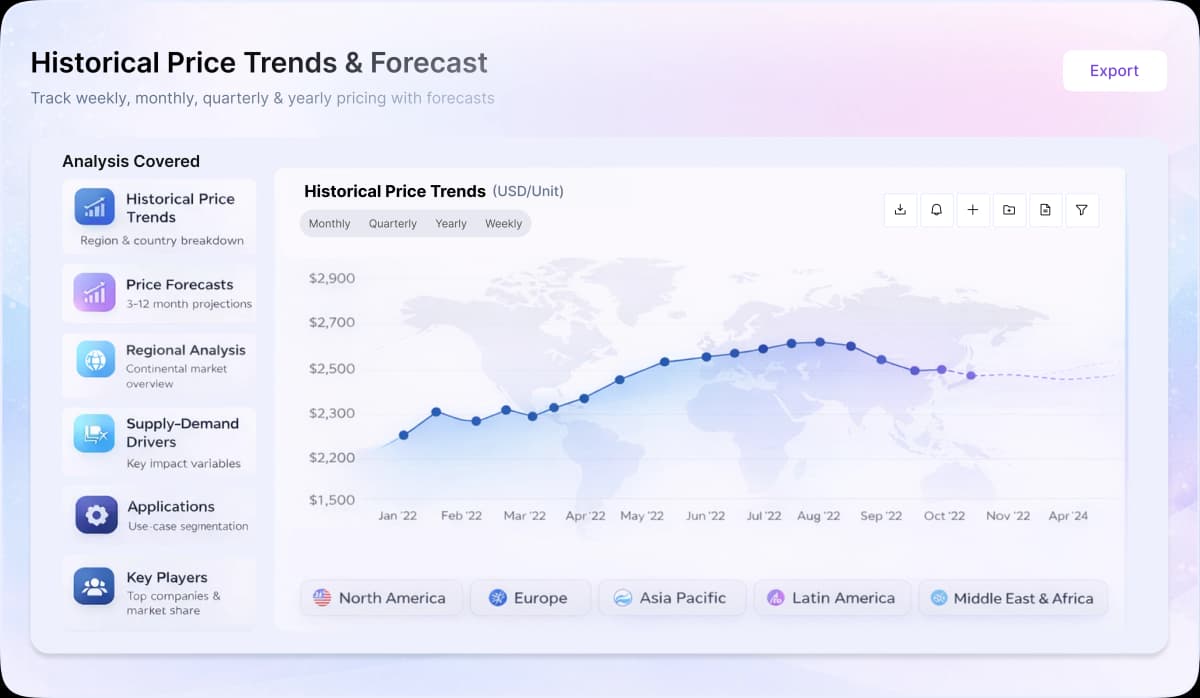
Turn price intelligence into action with the Procurement Resource Database. Log in or subscribe to unlock live price trends, historical charts, supplier databases, cost curves, and analyst-backed insights across chemicals, agriculture, energy, packaging, and more. Use these tools to benchmark your contracts, plan budgets with confidence, and stay ahead of market moves on every product you buy.
0
+Products
0
+Regions
0
+Subscriptions
Asia
The Asian market for isononanol faced downward pressure during the fourth quarter of 2025, primarily influenced by weakening feedstock costs and sluggish demand. Propylene prices, a key upstream material, declined throughout the quarter, reducing production cost support for manufacturers. Supply conditions varied across the period, October saw some temporary tightness when certain production units underwent maintenance, which briefly lifted prices in early weeks. However, as these facilities completed their shutdowns and resumed operations, material availability improved significantly by November and December. Downstream demand remained the biggest challenge, with buyers from plasticizer and specialty chemical sectors maintaining minimal purchasing activity.
European Market
European markets experienced relatively stable but soft conditions during the quarter. Feedstock costs provided moderate support, though not enough to drive prices higher. Demand from coating, resin, and plasticizer applications remained disappointing as the year-end approached. The traditional seasonal slowdown in industrial activity further dampened purchasing interest. Production facilities operated normally without any major supply constraints, ensuring adequate material circulation. However, buyers held the upper hand in negotiations due to ample availability and limited consumption requirements.
North American Region
North American prices consolidated within a narrow range through the fourth quarter. Supply remained balanced with steady production rates following earlier maintenance completions. Demand from chemical intermediate and plasticizer segments stayed moderate, lacking any meaningful growth drivers. Buyers adopted cautious attitude and maintained minimal inventory.
Isononanol is a clear liquid readily soluble in an organic solvent but has very low solubility in water. It is a common irritant of the eyes and skin and is highly hazardous to aquatic life. It is produced from octenes via hydroformylation and hydrogenation processes. It has a specific odor and is primarily used as a fragrance agent and feedstock for various plasticizers.
C9H20O
Fragrance Ingredient, Plasticizers, Paints and Coatings, Lubricants
Isononyl alcohol, 7-methyloctan-1-ol, 7-Methyloctanol
BASF SE, Sinopec, Evonik Industries AG, ExxonMobil Corporation
CurrencyUS$ (Data can also be provided in local currency)
Supplier Database AvailabilityYes
Customization ScopeThe report can be customized as per the requirements of the customer
Post-Sale Analyst Support360-degree analyst support after report delivery
Note: Our supplier search experts can assist your procurement teams in compiling and validating a list of suppliers indicating they have products, services, and capabilities that meet your company's needs.
Isononanol is produced by the hydroformylation of octenes to form the corresponding aldehyde. The intermediate is further distilled and subjected to hydrogenation to obtain the corresponding alcohol, i.e., Isononanol.
Our Price Analysis Methodology

Senior Business Insights Analyst
Delivering price trend analysis and procurement market insights at Procurement Resource, with expertise in identifying commodity patterns, supporting purchasing strategies, and improving cost efficiency through actionable market intelligence.
Experience how Procurement Resource transforms raw material price data into clear, decision ready intelligence. Optimise your performance with reliable, expert market data and analysis. Schedule your demo today to experience a live walk-through where our experts will showcase interactive price charts, forecasted prices, and insights driving the prices for your key commodities, tailored to your workflows. Contact us now!
Our Team will be happy to assist you
We are just a text away
Still Need Help?
Unlock full access to Procurement Resource's price databases, interactive charts, and short-term forecasts for thousands of commodities. Elevate your sourcing decisions by comparing prices across regions, downloading historical data, and layering in analyst-backed insights, all with our flexible plans that scale as your portfolio grows.
Still have any Questions
Contact Us



Price Trend Dashboard - What's Included
Price trends across a diverse portfolio of categories and products, spanning board to niche chemicals
Coverage extendable to grade-specific chemicals based on procurement requirements
Regular price tracking supported by robust historical datasets
News, policy updates, and key market drivers impacting price movements
Short-term and long-term price outlooks and forecasts
Supply–demand dynamics and capacity-driven market analysis

Track prices, market movements, supply-demand dynamics, and industry developments across hundreds of commodities through a centralized intelligence platform built for informed procurement decisions.

Understand market fluctuations using analyst-backed forecasts, historical pricing patterns, and evolving industry trends to strengthen sourcing strategies and budget planning.

Leverage cost models, pricing benchmarks, and procurement insights to evaluate purchasing opportunities, improve negotiations, and enhance operational efficiency.
Access region-specific price trends, trade activities, capacity changes, and supply chain developments influencing commodity markets worldwide.
