Lime Oil Price Trend Analysis 2026: Supply Demand Analysis, Historical Prices, Price Drivers, Latest News & Market Insights

Pragati Agarwal profile photo
Written ByPragati Agarwal

Procurement Resource Database

Laptop screen

Turn price intelligence into action with the Procurement Resource Database. Log in or subscribe to unlock live price trends, historical charts, supplier databases, cost curves, and analyst-backed insights across chemicals, agriculture, energy, packaging, and more. Use these tools to benchmark your contracts, plan budgets with confidence, and stay ahead of market moves on every product you buy.

0

+

Products

0

+

Regions

0

+

Subscriptions

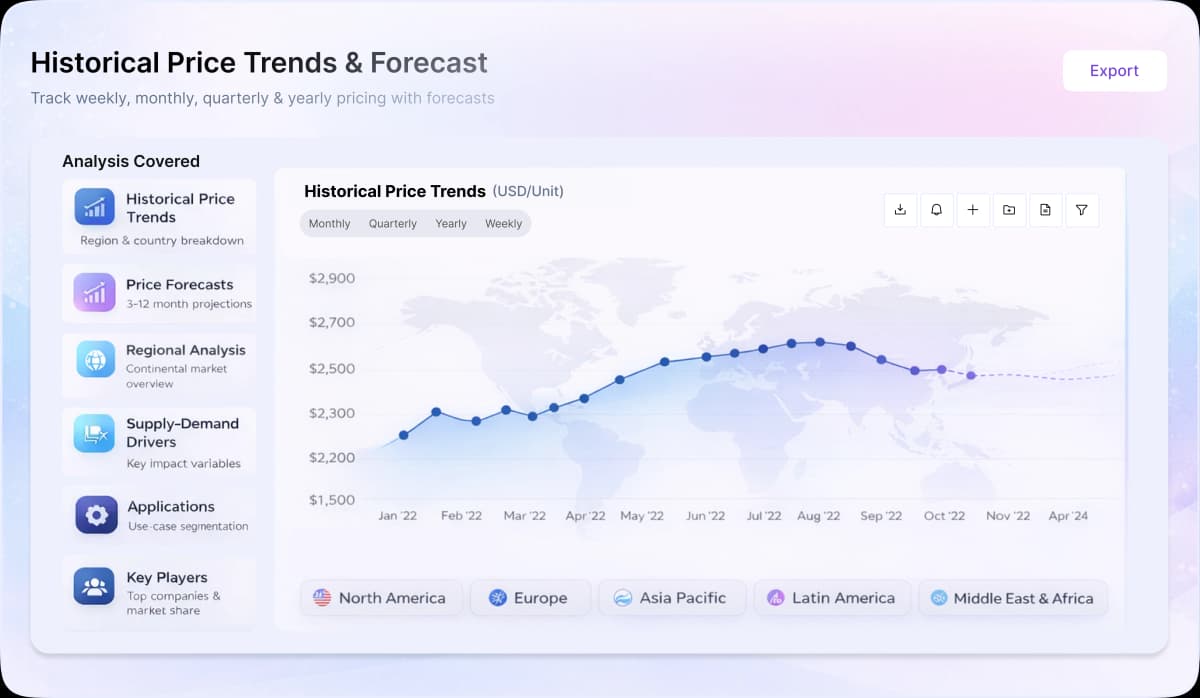
Lime oil prices in the second half of 2025 displayed a fluctuating trajectory, shaped by supply disruptions in key producing regions and mounting pressure across the global citrus value chain. According to the Lime Oil price database, production instability in Mexico, the world's third largest lime producer, weighed significantly on feedstock availability. Security challenges in major cultivation zones, including organized criminal activity disrupting packing operations, alongside adverse weather events, reduced both harvest volumes and fruit quality, constraining the raw material supply available for oil extraction.

The Lime Oil price curve reflected these structural pressures throughout the period, with trade activity adding further tension. Farmer protests and widespread road blockades across multiple producing states disrupted logistics and delayed the distribution of perishable citrus supply. Meanwhile, the Lime Oil price graph captured a degree of divergence in global sourcing patterns, as buyers increasingly turned to Brazilian lime supplies to offset Mexican shortfalls. European import activity remained relatively active, supported by improving logistics compared to prior years, though prices across the Lime Oil market stayed below seasonal averages for much of the half, reflecting a gradual rather than sharp recovery in feedstock values.


About Lime Oil

Lime oil, derived from the rind of Citrus aurantiifolia, is a highly aromatic essential oil known for its sharp, refreshing citrus fragrance. It is widely used in the fragrance industry to enhance perfumes, colognes, and air fresheners. Lime oil is also valued for its antiseptic, antibacterial, and antiviral properties, making it a popular ingredient in cleaning products. In skincare, it is used for its rejuvenating effects, helping to brighten the skin and fight acne. Additionally, lime oil is employed in the food and beverage industry as a natural flavoring, adding a zesty, tangy taste to products like drinks, candies, and desserts.

Lime Oil Product Detail

Hs Code
5201
Supplier Database

Chevron Corp., ADM Co., Givaudan S.A., Symrise AG, Cargill Corp.

Regional Coverage

Asia Pacific

China, India, Indonesia, Pakistan, Bangladesh, Japan, Philippines, Vietnam, Iran, Thailand, South Korea, Iraq, Saudi Arabia, Malaysia, Nepal, Taiwan, Sri Lanka, UAE, Israel, Hongkong, Singapore, Oman, Kuwait, Qatar, Australia, and New Zealand

Europe

Germany, France, United Kingdom, Italy,Spain, Russia, Turkey, Netherlands, Poland, Sweden, Belgium, Austria, Ireland Switzerland, Norway, Denmark, Romania, Finland, Czech Republic, Portugal and Greece

North America

United States and Canada

Latin America

Brazil, Mexico, Argentina, Columbia, Chile, Ecuador, and Peru

Africa

South Africa, Nigeria, Egypt, Algeria, Morocco

CurrencyUS$ (Data can also be provided in local currency)

Supplier Database AvailabilityYes

Customization ScopeThe report can be customized as per the requirements of the customer

Post-Sale Analyst Support360-degree analyst support after report delivery

Note: Our supplier search experts can assist your procurement teams in compiling and validating a list of suppliers indicating they have products, services, and capabilities that meet your company's needs.

Lime Oil Industrial Uses

Lime oil, extracted from the peel of limes (Citrus aurantiifolia), has a broad range of industrial applications due to its invigorating aroma and beneficial properties. In the fragrance industry, lime oil is widely used in perfumes, air fresheners, and scented products for its fresh, citrusy scent. It is also a popular ingredient in cleaning products due to its antibacterial, antiviral, and degreasing properties. Lime oil is used in the food and beverage industry as a natural flavoring agent, particularly in soft drinks, candies, and baked goods. Additionally, it is incorporated into skincare products for its refreshing, rejuvenating, and antiseptic qualities, making it highly versatile across multiple industries.



Frequently Asked Questions

The lime oil outlook for 2026 remains cautiously mixed. Latin American feedstock availability is the primary near-term price driver, with Mexico showing tentative recovery from prior security and logistics disruptions while seasonal harvest timing and residual vulnerabilities keep supply uncertain. Brazilian volumes offer partial offset for European buyers, though weather variability limits confidence in sustained supply. Stable fragrance and flavour compounding demand provides a floor, but any renewed security issues, poor weather, or logistics disruptions in Mexico or Brazil could tighten spot availability and push prices higher.
Lime oil prices are driven mainly by feedstock availability from Latin America, since Mexico is the dominant extraction origin, with Brazil and Peru as partial offsets, so citrus crop conditions, weather and any security or logistics disruption in these origins set supply. Harvest, energy and freight costs add to the base. Demand from fragrance and flavour compounding provides a steady floor. Tight or variable Latin American supply lifts prices, while ample, good-quality feedstock eases them.
Mexico is the dominant global producer and exporter of lime oil, with Brazil and Peru acting as partial offsets for European buyers. Key consuming and importing regions include Europe, North America, and Asia Pacific. Concentration of production in Latin America, particularly Mexico, is the primary supply-security consideration for buyers.
During H1 2026, Mexico's feedstock availability showed tentative improvement as prior security-related disruptions and logistics bottlenecks eased, though residual vulnerabilities around seasonal harvest timing kept buyers cautious. Brazilian lime supply remained available but weather variability limited confidence in sustained volumes. Demand from fragrance and flavour compounding sectors held broadly stable, with buyers sourcing selectively amid variable feedstock quality from certain origins. Latin American feedstock availability remains the primary near-term price driver for the market.
Lime oil is extracted from the peel of Citrus aurantiifolia, the key botanical source. The production route begins with harvesting fresh lime fruit, followed by cold-pressing or steam distillation of the outer peel to capture the essential oil. The crude oil is then refined and filtered to produce finished lime oil. This oil is supplied primarily to the fragrance industry for perfumes and air fresheners, to cleaning product manufacturers for its antibacterial and degreasing properties, to skincare formulators, and to food and beverage producers as a natural flavoring agent.
Lime oil comes in several grades with distinct commercial value: food-grade from South Africa meets regulatory requirements for premium food-sector contracts; cosmetic-grade requires formulation-specific dilution guidance; and a 99% pure industrial grade supports bulk repeat procurement for fragrances and cleaners. Cold-pressed oil is insoluble in water but soluble in alcohol and oils, while steam-distilled oil has a sharp, tart lime odor. Density ranges from 0.855 to 0.870 kg/L, with a pale yellow to olive-green appearance. CAS 8008-26-2 is the standard identifier across grades.
Procurement Resource assesses lime oil prices through a structured, data-driven methodology that combines primary engagement with producers, suppliers and traders, secondary market data, continuous monitoring of feedstock and input costs, trade-flow and inventory tracking, and exchange or spot benchmarks. These inputs are validated and translated into a transparent price assessment and outlook. The detailed methodology is available on the Procurement Resource website.

Our Price Analysis Methodology

About the Author

Pragati Agarwal profile photo

Pragati Agarwal

Senior Business Insights Analyst

Delivering price trend analysis and procurement market insights at Procurement Resource, with expertise in identifying commodity patterns, supporting purchasing strategies, and improving cost efficiency through actionable market intelligence.

Schedule Demo

Schedule a demo

Experience how Procurement Resource transforms raw material price data into clear, decision ready intelligence. Optimise your performance with reliable, expert market data and analysis. Schedule your demo today to experience a live walk-through where our experts will showcase interactive price charts, forecasted prices, and insights driving the prices for your key commodities, tailored to your workflows. Contact us now!

Our Team will be happy to assist you

We are just a text away

+1

Still Need Help?

Europe & Africa

+44 7573 171117

Sales@procurementresource.com

USA & Canada

+1 307 363 1045

Sales@procurementresource.com

APAC

+91 8850629517

Sales@procurementresource.com

Unlock full access to Procurement Resource's price databases, interactive charts, and short-term forecasts for thousands of commodities. Elevate your sourcing decisions by comparing prices across regions, downloading historical data, and layering in analyst-backed insights, all with our flexible plans that scale as your portfolio grows.

Still have any Questions

Contact Us
Mastercard
Wire
VISA
Stripe

Why Procurement Database

Commodity Market Intelligence

Commodity Market Intelligence

Track prices, market movements, supply-demand dynamics, and industry developments across hundreds of commodities through a centralized intelligence platform built for informed procurement decisions.

Price Forecasts & Market Outlooks

Price Forecasts & Market Outlooks

Understand market fluctuations using analyst-backed forecasts, historical pricing patterns, and evolving industry trends to strengthen sourcing strategies and budget planning.

Cost & Procurement Optimization

Cost & Procurement Optimization

Leverage cost models, pricing benchmarks, and procurement insights to evaluate purchasing opportunities, improve negotiations, and enhance operational efficiency.

Global & Regional Market Insights

Global & Regional Market Insights

Access region-specific price trends, trade activities, capacity changes, and supply chain developments influencing commodity markets worldwide.

1/4