New HCl Synthesis Unit Boosts Supply
Gujarat Alkalies announced construction of a new hydrochloric acid synthesis unit to support its phosphoric acid plant. The expansion increases domestic HCl supply, potentially easing price pressure.

Gujarat Alkalies announced construction of a new hydrochloric acid synthesis unit to support its phosphoric acid plant. The expansion increases domestic HCl supply, potentially easing price pressure.
Lincomycin Hydrochloride, a fermentation-derived antibiotic used across human medicine and veterinary applications to treat bacterial infections, saw its price trajectory in H1 2026 shaped by cautious pharmaceutical procurement, shifting feedstock dynamics, and an active regulatory environment.
Procurement activity from pharmaceutical formulators remained orderly through the first half of the year. Buyers maintained conservative inventory strategies, preferring to replenish in smaller tranches rather than build forward positions, a pattern that had taken root in late 2025. On the supply side, Chinese producers, who account for the bulk of global output, operated at measured utilisation rates, and corn, the principal fermentation feedstock, experienced mixed availability signals in Asian producing regions. In India, CDSCO compliance requirements and NPPA oversight maintained a cautious procurement climate among domestic formulators, while European importers maintained modest buffer stocks as part of broader supply-chain diversification strategies.
Analyst Insight
According to Procurement Resource, prices should stay broadly stable, driven by regulatory and corn feedstock trends.
Related Report
Need Latest Lincomycin Hydrochloride Prices?
Get real-time price assessments, periodic trends, forecasts and price driver insights across key global markets.
Our Clients




























Turn price intelligence into action with the Procurement Resource Database. Log in or subscribe to unlock live price trends, historical charts, supplier databases, cost curves, and analyst-backed insights across chemicals, agriculture, energy, packaging, and more. Use these tools to benchmark your contracts, plan budgets with confidence, and stay ahead of market moves on every product you buy.
0
+Products
0
+Regions
0
+Subscriptions
During the first half of 2025, Lincomycin Hydrochloride price curve moved within a mixed range, reflecting the impact of evolving trade conditions and policy measures on pharmaceutical intermediates.
In the early part of the period, downstream demand from the pharmaceutical industry remained steady. Consumption was supported by the use of Lincomycin Hydrochloride as an active pharmaceutical ingredient for antibiotic formulations, with procurement activity aligned to regular manufacturing schedules. Supply remained consistent, though procurement costs showed sensitivity to broader movements in raw material availability.
As the quarter progressed, regulatory measures significantly influenced market conditions. The directive issued by the Central Drugs Standard Control Organisation (CDSCO) on the suspension of several fixed-dose combination (FDC) drugs created ripples across the domestic market.
While Lincomycin Hydrochloride was not directly banned, the heightened scrutiny over licensing and compliance slowed procurement activity in some downstream segments. Manufacturers adopted a cautious approach in securing raw materials, preferring smaller lots to align with anticipated production volumes. This tempered the pace of demand growth and affected spot price sentiment.
Toward the later part of the half-year, sentiment improved slightly as downstream pharmaceutical companies resumed steady purchasing, though overall activity continued to reflect cautious operating strategies. The market closed the period with a balanced structure between supply and demand, albeit under close observation from regulators.
Lincomycin hydrochloride belongs to the category of antibiotic medicines that is used in the treatment of bacterial infections in humans as well as animals. It inhibits the growth of bacteria by inhibiting the protein synthesis process in them. This pharmaceutical compound is available in various forms, including capsules and injectable solutions. It is commonly used in clinical and veterinary medicine to combat a range of bacterial infections, including respiratory, skin, and soft tissue infections.
C18H34N2O6S.HCl.H2O
Pharmaceutical Manufacturing, Veterinary Medicine, Biomedical Research, Quality control and testing
Anhui Wanbei Pharmaceutical Co Ltd, Hangzhou Think Chemical Co Ltd, Hengdian Group Holding Co Ltd, Jiangxi Guoyao Pharmaceutical Limited Liability Company, Livzon Group Fuzhou Fuxing Pharmaceutical Co Ltd, Xinyu Pharmaceutical Co Ltd
CurrencyUS$ (Data can also be provided in local currency)
Supplier Database AvailabilityYes
Customization ScopeThe report can be customized as per the requirements of the customer
Post-Sale Analyst Support360-degree analyst support after report delivery
Note: Our supplier search experts can assist your procurement teams in compiling and validating a list of suppliers indicating they have products, services, and capabilities that meet your company's needs.
Our Price Analysis Methodology

Senior Business Insights Analyst
Delivering price trend analysis and procurement market insights at Procurement Resource, with expertise in identifying commodity patterns, supporting purchasing strategies, and improving cost efficiency through actionable market intelligence.
Experience how Procurement Resource transforms raw material price data into clear, decision ready intelligence. Optimise your performance with reliable, expert market data and analysis. Schedule your demo today to experience a live walk-through where our experts will showcase interactive price charts, forecasted prices, and insights driving the prices for your key commodities, tailored to your workflows. Contact us now!
Our Team will be happy to assist you
We are just a text away
Still Need Help?
Unlock full access to Procurement Resource's price databases, interactive charts, and short-term forecasts for thousands of commodities. Elevate your sourcing decisions by comparing prices across regions, downloading historical data, and layering in analyst-backed insights, all with our flexible plans that scale as your portfolio grows.
Still have any Questions
Contact Us



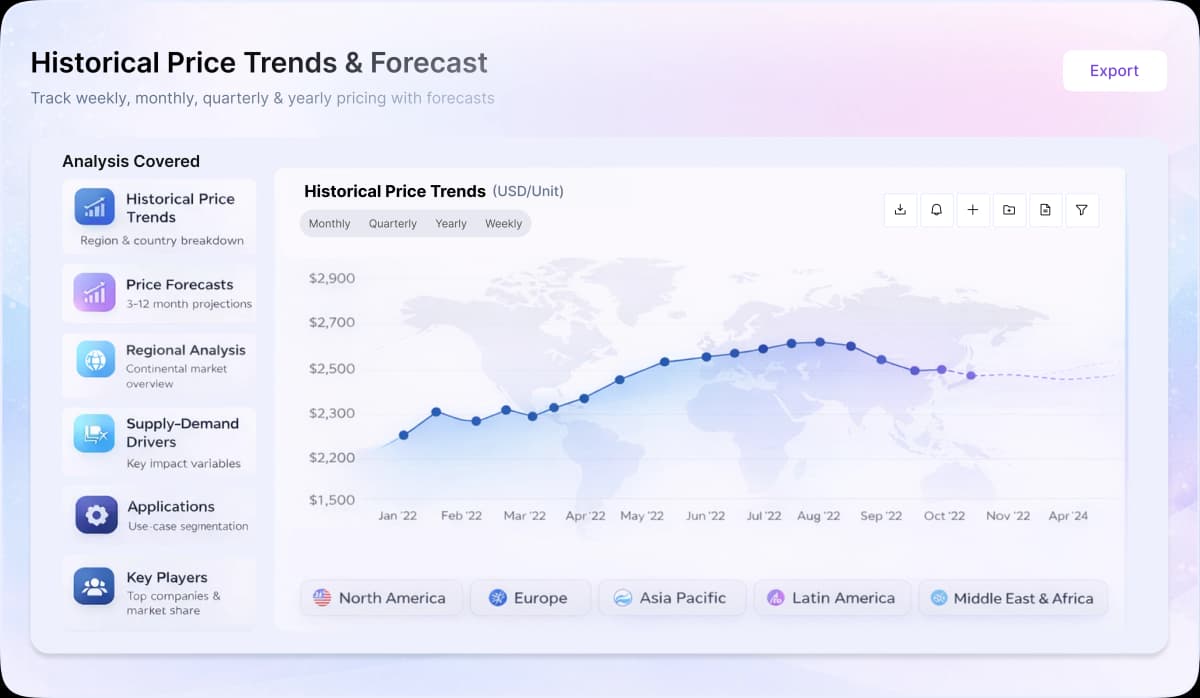
Price Trend Dashboard - What's Included
Price trends across a diverse portfolio of categories and products, spanning board to niche chemicals
Coverage extendable to grade-specific chemicals based on procurement requirements
Regular price tracking supported by robust historical datasets
News, policy updates, and key market drivers impacting price movements
Short-term and long-term price outlooks and forecasts
Supply–demand dynamics and capacity-driven market analysis

Track prices, market movements, supply-demand dynamics, and industry developments across hundreds of commodities through a centralized intelligence platform built for informed procurement decisions.

Understand market fluctuations using analyst-backed forecasts, historical pricing patterns, and evolving industry trends to strengthen sourcing strategies and budget planning.

Leverage cost models, pricing benchmarks, and procurement insights to evaluate purchasing opportunities, improve negotiations, and enhance operational efficiency.
Access region-specific price trends, trade activities, capacity changes, and supply chain developments influencing commodity markets worldwide.
