Lithium Hydroxide Price Trend Analysis 2026: Price Drivers, Market Insights, Latest News, Historical Prices & Supply Demand Analysis

Udeesha Tomar profile photo
Written ByUdeesha Tomar

Procurement Resource Database

Laptop screen

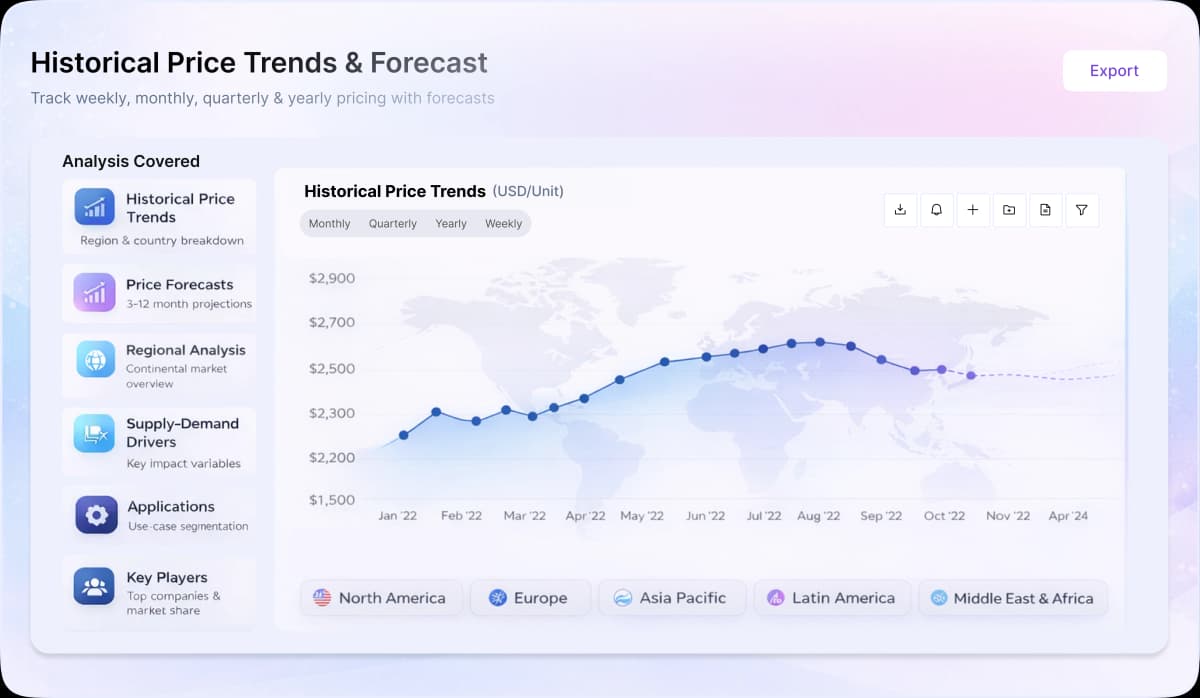
Turn price intelligence into action with the Procurement Resource Database. Log in or subscribe to unlock live price trends, historical charts, supplier databases, cost curves, and analyst-backed insights across chemicals, agriculture, energy, packaging, and more. Use these tools to benchmark your contracts, plan budgets with confidence, and stay ahead of market moves on every product you buy.

Lithium Hydroxide Dashboard Inclusions

Lithium Hydroxide Price Dasboard

0

+

Products

0

+

Regions

0

+

Subscriptions

Asia

In 2025, lithium hydroxide prices in Asia moved mostly lower through the year. The market stayed under pressure because supply grew faster than demand. Several new mines and brine projects started production, while some previously paused operations restarted, which added more supply into the system. At the same time, many buyers already held high inventories and were cautious about restocking. Demand from battery makers improved only gradually, as LFP batteries continued to gain market share and reduced the need for lithium hydroxide compared with lithium carbonate. As a result, sellers faced strong competition and limited pricing power, especially in China, where most refining capacity was located.

Europe

In Europe, lithium hydroxide prices in 2025 were influenced mainly by developments in Asia. European buyers relied heavily on imported material, so oversupply in global markets worked their way easily. Battery and auto producers remained focused on cost control and often delayed long-term commitments, waiting for clearer signals of demand growth. Although EV sales continued to expand, the pace was not fast enough to absorb the excess supply seen globally. This kept prices soft for much of the year, with only brief periods of stability when supply disruptions or logistics issues occurred.

North America

In North America, lithium hydroxide prices also stayed weak during 2025, though the decline was less sharp than in Asia. Some support came from government projects and efforts to build local supply chains, which created longer-term confidence. However, in the short term, demand growth from EVs and energy storage did not fully offset the global surplus. Buyers remained selective, often sourcing material linked to strategic or domestic projects rather than spot purchases, which limited price recovery.

About Lithium Hydroxide

Lithium hydroxide is a clear to water-white liquid with a pungent odour. It is non-combustible on its own but produces toxic fumes on heating. It is toxic and corrosive in nature. It is widely used to make rechargeable batteries for electric vehicles, laptops, and phones and also used to make non-rechargeable batteries for heart pacemakers, toys and clocks.

Lithium Hydroxide Product Detail

Hs Code
28252000
Chemical Formula

LiOH

Cas Number
1310-65-2
Molecular Weight
24g/mol
Industrial Uses

Additives in lithium-based greases, batteries, lithium soaps, lithium salts, absorbent of carbon dioxide, cleaning products.

Supplier Database

Albemarle, SQM, Jiangxi Dongpeng New Materials, Tianqi Lithium, Livent, Ganfeng Lithium, , Sichuan Yahua Group and Ruifu Lithium

Regional Coverage

Asia Pacific

China, India, Indonesia, Pakistan, Bangladesh, Japan, Philippines, Vietnam, Iran, Thailand, South Korea, Iraq, Saudi Arabia, Malaysia, Nepal, Taiwan, Sri Lanka, UAE, Israel, Hongkong, Singapore, Oman, Kuwait, Qatar, Australia, and New Zealand

Europe

Germany, France, United Kingdom, Italy,Spain, Russia, Turkey, Netherlands, Poland, Sweden, Belgium, Austria, Ireland Switzerland, Norway, Denmark, Romania, Finland, Czech Republic, Portugal and Greece

North America

United States and Canada

Latin America

Brazil, Mexico, Argentina, Columbia, Chile, Ecuador, and Peru

Africa

South Africa, Nigeria, Egypt, Algeria, Morocco

CurrencyUS$ (Data can also be provided in local currency)

Supplier Database AvailabilityYes

Customization ScopeThe report can be customized as per the requirements of the customer

Post-Sale Analyst Support360-degree analyst support after report delivery

Note: Our supplier search experts can assist your procurement teams in compiling and validating a list of suppliers indicating they have products, services, and capabilities that meet your company's needs.

Lithium Hydroxide Production Processes

Lithium hydroxide can be produced via the electrolysis method, which involves the electrolysis of lithium chlorides obtained from brines or lithium sulfates. The process requires removing the impurities from the starting materials, followed by electrolysis to give lithium hydroxide.

Frequently Asked Questions

During Q1 2026, lithium hydroxide prices showed a mild upward trend across tracked regions. In China, prices showed a 0.85% increase from January to March, while in India they witnessed a 0.58% increase, in the USA a 0.86% increase, in Germany a 0.65% increase, and in Australia a 0.54% increase. The steady rise reflected firm battery-sector demand and cautious restocking.
The lithium hydroxide outlook for 2026 remains steady, supported by demand from high-nickel cathode chemistries, electric vehicles, grid storage, and battery manufacturing. Prices may remain sensitive to spodumene costs, lithium carbonate conversion economics, refinery utilization, and regional inventory levels. Battery-grade lithium hydroxide demand is expected to remain stronger than industrial-grade demand because of its role in advanced lithium-ion batteries.
The main factors affecting lithium hydroxide prices in Q1 2026 were battery-sector demand and feedstock availability. Restocking by cathode and battery material producers supported prices, while spodumene and lithium carbonate availability shaped refinery costs. Since lithium hydroxide is closely tied to battery-grade conversion economics, even moderate changes in feedstock supply influenced regional price sentiment.
Major lithium hydroxide markets include China, Australia, the United States, Germany, South Korea, Japan, India, Chile, Argentina, and Canada. China remains the leading conversion and battery-material hub, while Australia is expanding mine-to-refinery capacity. Key companies include Albemarle, SQM, Ganfeng Lithium, Tianqi Lithium, Rio Tinto, Covalent Lithium, Leverton HELM, Livent-related assets, Pilbara Minerals, and Mineral Resources.
In February 2026, De Nora and Tuleva signed a binding agreement to support development of a large-scale lithium hydroxide monohydrate refinery in the United States. The facility is expected to produce approximately 11,000 tonnes per year of battery-grade lithium hydroxide and represents part of a broader effort to strengthen domestic battery-material supply chains. The project highlights growing investment in localized lithium refining capacity as manufacturers seek to reduce dependence on imported battery chemicals and support North American EV production.


Lithium hydroxide is mainly produced from spodumene concentrate or through conversion from lithium carbonate. The value chain includes hard-rock mining, concentration, roasting, leaching, impurity removal, crystallization, drying, packaging, and battery-grade qualification. Some emerging routes also use brines, geothermal fluids, or direct lithium extraction before conversion. Lithium hydroxide is then supplied to cathode producers, battery manufacturers, and specialty chemical users.
Lithium hydroxide is mainly sold as battery-grade, technical-grade, and industrial-grade material. Battery-grade lithium hydroxide has stricter purity, moisture, and impurity specifications because it is used in cathode materials for lithium-ion batteries. Technical and industrial grades are used in lubricating greases, dyes, carbon dioxide absorption, ceramics, specialty chemicals, and other industrial applications where battery-level purity is not required.
Lithium hydroxide demand is mainly driven by electric vehicles, battery manufacturing, grid storage, consumer electronics, lubricating greases, ceramics, specialty chemicals, and aerospace applications. Battery manufacturing remains the most important demand center because lithium hydroxide is preferred for high-nickel cathode materials. Growth in long-range EVs and energy storage systems continues to strengthen demand for battery-grade lithium hydroxide.
Procurement Resource employs a structured methodology combining primary research, secondary market data, analytical models, and validation processes to assess lithium hydroxide prices and trends. Price evaluations incorporate supply-demand dynamics, feedstock movements, trade flows, and value chain analysis, supported by continuous market monitoring to ensure accurate and reliable insights.

About the Author

Udeesha Tomar profile photo

Udeesha Tomar

AVP - Strategy and Solutions

Leading procurement research solutions across chemicals, materials, and food & beverages, with expertise in price forecasting and market analytics.

Our Price Analysis Methodology

Schedule Demo

Schedule a demo

Experience how Procurement Resource transforms raw material price data into clear, decision ready intelligence. Optimise your performance with reliable, expert market data and analysis. Schedule your demo today to experience a live walk-through where our experts will showcase interactive price charts, forecasted prices, and insights driving the prices for your key commodities, tailored to your workflows. Contact us now!

Our Team will be happy to assist you

We are just a text away

+1

Still Need Help?

Europe & Africa

+44 7573 171117

[email protected]

USA & Canada

+1 307 363 1045

[email protected]

APAC

+91 8850629517

[email protected]

Unlock full access to Procurement Resource's price databases, interactive charts, and short-term forecasts for thousands of commodities. Elevate your sourcing decisions by comparing prices across regions, downloading historical data, and layering in analyst-backed insights, all with our flexible plans that scale as your portfolio grows.

Still have any Questions

Contact Us
Mastercard
Wire
VISA
Stripe

Why Procurement Database

Commodity Market Intelligence

Commodity Market Intelligence

Track prices, market movements, supply-demand dynamics, and industry developments across hundreds of commodities through a centralized intelligence platform built for informed procurement decisions.

Price Forecasts & Market Outlooks

Price Forecasts & Market Outlooks

Understand market fluctuations using analyst-backed forecasts, historical pricing patterns, and evolving industry trends to strengthen sourcing strategies and budget planning.

Cost & Procurement Optimization

Cost & Procurement Optimization

Leverage cost models, pricing benchmarks, and procurement insights to evaluate purchasing opportunities, improve negotiations, and enhance operational efficiency.

Global & Regional Market Insights

Global & Regional Market Insights

Access region-specific price trends, trade activities, capacity changes, and supply chain developments influencing commodity markets worldwide.

1/4