Futures Rally Amid Port Restocking
Iron ore futures climb after short-covering, with faster port restocking and falling arrivals. Supply build and weak demand keep upside limited, but price momentum may continue.

Iron ore futures climb after short-covering, with faster port restocking and falling arrivals. Supply build and weak demand keep upside limited, but price momentum may continue.
Margin widened as spot prices rise, with port stocks building and hot metal output easing. The combination supports a modest upward pressure on iron ore prices.
| Product | Region | Incoterm Basis | Price | Last Updated Month |
|---|---|---|---|---|
| Lithium Iron Phosphate | China | SPOT | USD 7,572.00/MT | October 2026 |
| Lithium Iron Phosphate | China | SPOT | USD 8,170.00/MT | September 2026 |
Stay updated with the latest Lithium Iron Phosphate prices, historical data, and tailored regional analysis
In China, the average price of Lithium Iron Phosphate rose slightly from ~USD 8,522.00/MT (DDP) in July to ~USD 8,574.00/MT in August, an increase of ~0.6%. The modest rise reflected a balance between volatile raw material costs and steady demand. Lithium carbonate prices fell in July as mines restarted in China and Australia, which lowered cathode production costs. In August, carbonate recovered as a key mine restart stalled and weather disrupted output in Argentina, lifting costs again and supporting cathode offers. Lithium iron phosphate reached a record 83.3% of Chinese battery installations, driven by strong growth in energy storage. Cathode output rose 3.59% to 531,000 tonnes in July and was expected to increase further in September. However, buyers stayed cautious ahead of China's new battery consumption tax from September, which limited price gains. In September, prices fell after revised inventory data showed much larger stocks, reducing feedstock costs and putting mild pressure on cathode prices.
Analyst Insight
According to Procurement Resource, in the near term, lithium iron phosphate prices are likely to stay stable to slightly softer, as lower carbonate costs offset strong energy storage demand.
Related Report
Need Latest Lithium Iron Phosphate Prices?
Get real-time price assessments, periodic trends, forecasts and price driver insights across key global markets.
Our Clients































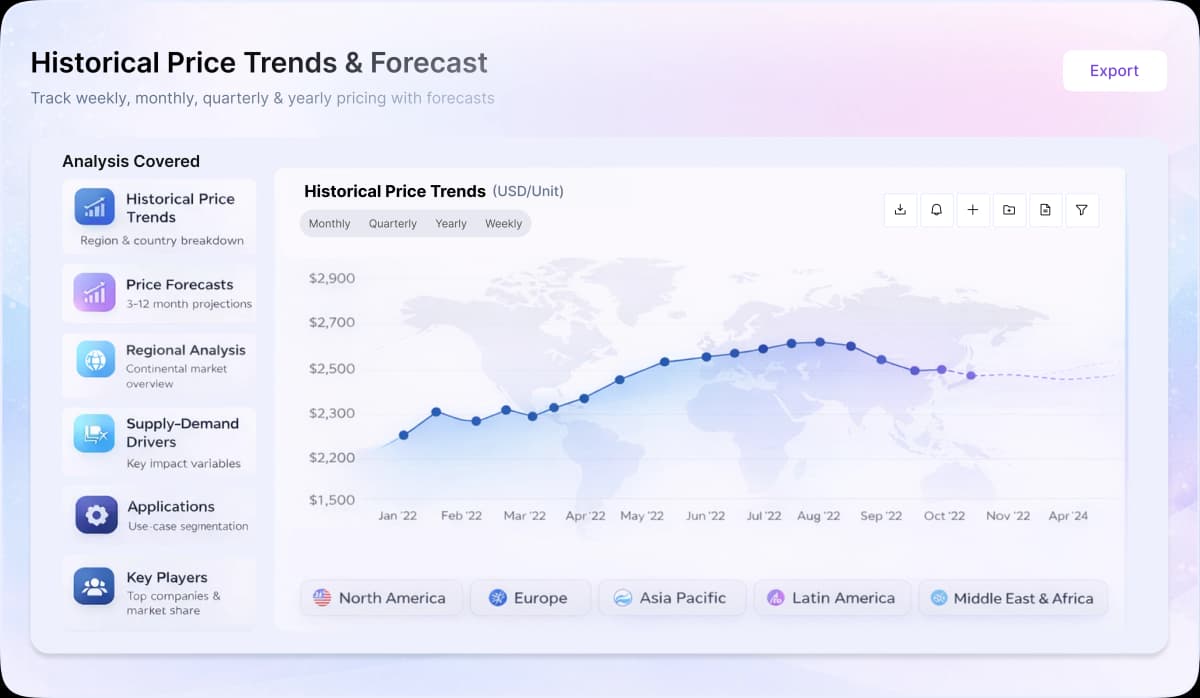
Turn price intelligence into action with the Procurement Resource Database. Log in or subscribe to unlock live price trends, historical charts, supplier databases, cost curves, and analyst-backed insights across chemicals, agriculture, energy, packaging, and more. Use these tools to benchmark your contracts, plan budgets with confidence, and stay ahead of market moves on every product you buy.
0
+Products
0
+Regions
0
+Subscriptions
In China, the monthly average Lithium Iron Phosphate price was ~RMB 33.12/kg in April and about RMB 35.47/kg in the subsequent month, showing an increase of around 7.1%. Prices gained support from steady EV and energy storage demand, while China’s integrated lithium chemical, cathode, and battery supply chain maintained strong production competition. In India, the monthly average Lithium Iron Phosphate price was about INR 464.68/kg in April and approx. INR 497.59/kg in the subsequent month. In the USA the rise in cost of inputs related to lithium carbonate supply affected prices, while increasing use of batteries in vehicles supported demand. Prices were supported by rising interest in affordable EVs and stationary storage, though limited domestic LFP production increased dependence on imported materials. In Germany, the monthly average Lithium Iron Phosphate price was approximately EUR 4.27/kg in April and around EUR 4.57/kg in the subsequent month. An increase in demand was witnessed in Europe because automakers were adopting LFP batteries in less expensive electric cars, though Asia played an important role in the supply chain.
Lithium iron phosphate is an inorganic grey-black coloured compound which is insoluble in water.it is widely used to make lithium-ion batteries because of its good electrochemical performance and lower resistance.
FeLi3O8P2
Lithium-ion batteries, power tools, electric vehicles
Lithium Iron Phosphate Nanopowder, Lithium Iron(II) Phosphate Micronpowder
BYD Company, A123 System, K2 energy, Lithium Werks, Britishvolt, Power Sonic Corporation, Contemporary Amperex Technology Co.Ltd.
CurrencyUS$ (Data can also be provided in local currency)
Supplier Database AvailabilityYes
Customization ScopeThe report can be customized as per the requirements of the customer
Post-Sale Analyst Support360-degree analyst support after report delivery
Note: Our supplier search experts can assist your procurement teams in compiling and validating a list of suppliers indicating they have products, services, and capabilities that meet your company's needs.
One of the methods to produce Lithium iron phosphate is via liquid phase synthesis process, which requires the addition of a solvent to the raw materials in an inert gas environment followed by sealed heating which finally gives the nanoparticles which are filtered, washed, dried and calcined under high temperatures to give Lithium iron phosphate.
Our Price Analysis Methodology

Senior Business Insights Analyst
Delivering price trend analysis and procurement market insights at Procurement Resource, with expertise in identifying commodity patterns, supporting purchasing strategies, and improving cost efficiency through actionable market intelligence.
Experience how Procurement Resource transforms raw material price data into clear, decision ready intelligence. Optimise your performance with reliable, expert market data and analysis. Schedule your demo today to experience a live walk-through where our experts will showcase interactive price charts, forecasted prices, and insights driving the prices for your key commodities, tailored to your workflows. Contact us now!
Our Team will be happy to assist you
We are just a text away
Still Need Help?
Unlock full access to Procurement Resource's price databases, interactive charts, and short-term forecasts for thousands of commodities. Elevate your sourcing decisions by comparing prices across regions, downloading historical data, and layering in analyst-backed insights, all with our flexible plans that scale as your portfolio grows.
Still have any Questions
Contact Us



Price Trend Dashboard - What's Included
Price trends across a diverse portfolio of categories and products, spanning board to niche chemicals
Coverage extendable to grade-specific chemicals based on procurement requirements
Regular price tracking supported by robust historical datasets
News, policy updates, and key market drivers impacting price movements
Short-term and long-term price outlooks and forecasts
Supply–demand dynamics and capacity-driven market analysis

Track prices, market movements, supply-demand dynamics, and industry developments across hundreds of commodities through a centralized intelligence platform built for informed procurement decisions.

Understand market fluctuations using analyst-backed forecasts, historical pricing patterns, and evolving industry trends to strengthen sourcing strategies and budget planning.

Leverage cost models, pricing benchmarks, and procurement insights to evaluate purchasing opportunities, improve negotiations, and enhance operational efficiency.
Access region-specific price trends, trade activities, capacity changes, and supply chain developments influencing commodity markets worldwide.
