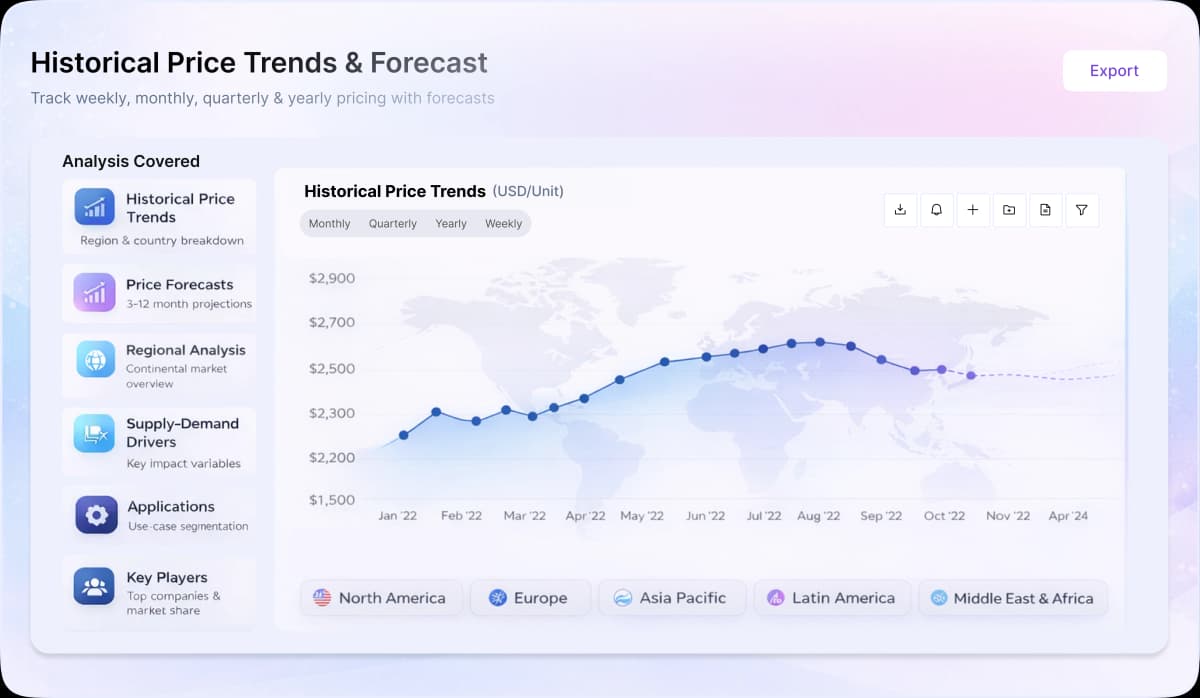
- Magnesium carbonate prices were largely stable to firm in Q1’26, with Asia showing stronger cost support, while Europe and North America faced higher delivered-cost pressure.
- Feedstock pressure came from magnesite, magnesium compounds, thermal coal, power, and freight. The Strait of Hormuz disruption affected the market indirectly, as roughly one-fifth of global oil supply normally moves through the route.
- Downstream demand stayed steady from pharma, rubber, plastics, sports products, food additives, agriculture, and industrial chemical uses. Buyers remained cautious, which limited sharper gains.
Asia
In Asia, magnesium carbonate prices were stable to firm during Q1’26. China’s magnesium chain saw firmer sentiment due to limited spot availability, stronger fuel costs, and producer reluctance to accept low-priced orders. Feedstock pressure came from magnesite, magnesium oxide, magnesium compounds, thermal coal, and power costs. The Iran war and Strait of Hormuz disruption raised freight and fuel-risk sentiment, but the impact was indirect rather than supply-specific. Downstream demand from rubber, plastics, pharma, and food-grade applications stayed steady, supporting firm offers.
Europe
In Europe, magnesium carbonate prices were stable to firm, mainly due to import dependence and higher delivered-cost risk. European buyers remained exposed to freight, energy, and shipping uncertainty after the Strait of Hormuz disruption. Demand from pharma, rubber, plastic additives, and industrial uses stayed moderate, but buyers avoided heavy restocking. This kept the market firm without a sharp price rally.
North America
In North America, magnesium carbonate prices stayed supported by import reliance and higher logistics costs. Buyers remained exposed to China-origin magnesium compounds and international freight movement. Demand from agriculture, industrial chemicals, rubber, plastics, and pharmaceutical applications remained steady. The main support came from replacement-cost pressure rather than strong demand growth.