

Udeesha Tomar
AVP - Strategy and Solutions
Leading procurement research solutions across chemicals, materials, and food & beverages, with expertise in price forecasting and market analytics.

Asia
In the Asian markets, magnesium hydroxide prices experienced fluctuations, mostly trending downward during the first quarter of 2024. The Chinese New Year holidays significantly reduced operational days for factories and filtration units, leading to decreased supply for both domestic and international markets. Additionally, disrupted supply chains due to various disturbances prolonged transportation times along many global trade routes.
The metal and fertilizer industries were also experiencing a slowdown, curbing downstream demand for magnesium hydroxide. The rising energy and processing costs forced manufacturers to reconsider production volumes as existing stocks couldn't be sold favorably. Further, many plants planned maintenance closures, resulting in subdued market sentiments for magnesium hydroxide in Asia.
Europe
The European market for magnesium hydroxide mirrored the low pricing trend seen in Asia. Trade sentiments were weak, and sluggishness in downstream sectors influenced upstream outlooks. Delayed shipments from exporting countries and port congestion exacerbated the situation. Pirate threats further complicated ocean freight logistics, prompting shipping companies to limit their sailing vessels and causing significant shipment delays. Overall, the market performance for magnesium hydroxide in Europe was gloomy.
North America
Reflecting the trends in Asia and Europe, magnesium hydroxide prices remained on a downward trajectory in North America. Weak downstream procurement, especially from the food, pharmaceutical, and agriculture industries amidst high inflation, led to overstocked inventories in the region. Domestic trade for magnesium hydroxide was unsupportive, and international trade faced restrictions due to logistical challenges in the shipping industry. Rising crude oil prices also dampened manufacturers' sentiments throughout the period. Consequently, the price trend for magnesium hydroxide oscillated within narrow margins.
Analyst Insight
According to Procurement Resource, the price trend of Magnesium Hydroxide is estimated to fluctuate under the influence of limited growth of downstream industries and rise in the number of alternatives.
Related Report
Need Latest Magnesium Hydroxide Prices?
Get real-time price assessments, periodic trends, forecasts and price driver insights across key global markets.
Our Clients































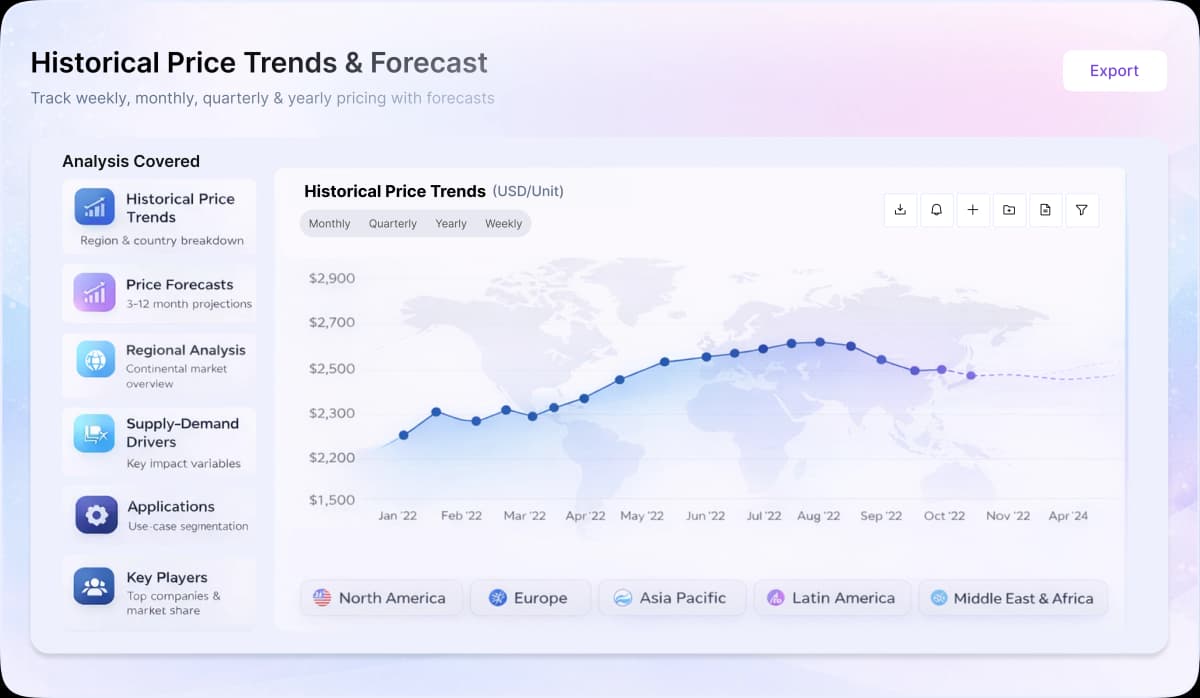
Turn price intelligence into action with the Procurement Resource Database. Log in or subscribe to unlock live price trends, historical charts, supplier databases, cost curves, and analyst-backed insights across chemicals, agriculture, energy, packaging, and more. Use these tools to benchmark your contracts, plan budgets with confidence, and stay ahead of market moves on every product you buy.
0
+Products
0
+Regions
0
+Subscriptions
Magnesium hydroxide is obtained through the precipitation of magnesium salts with alkali hydroxides. The salt is white, amorphous, and odorless with low solubility in water. It is known for its role as a flame retardant and smoke suppressant in industries like plastics, rubber, and textiles, offering a non-toxic and environmentally friendly alternative to traditional halogenated flame retardants.
Magnesium hydroxide also serves as an alkali agent in wastewater treatment processes, where it neutralizes acids and adjusts pH levels effectively. In pharmaceuticals, it acts as a mild laxative and antacid, providing relief from digestive discomforts such as heartburn and indigestion. Its properties make it suitable for various industrial and medicinal applications.
Mg(OH)2
Flame Retardant, Automotive Production, Wastewater Treatment, Antacid
Martin Marietta Materials Ltd, Tateho Chemical Industries Co Ltd, Nedmag B.V., Xinyang Mineral Group, Osian Marine Pvt Ltd, Timab Magnesium SAS, Premier Magnesia LLC
CurrencyUS$ (Data can also be provided in local currency)
Supplier Database AvailabilityYes
Customization ScopeThe report can be customized as per the requirements of the customer
Post-Sale Analyst Support360-degree analyst support after report delivery
Note: Our supplier search experts can assist your procurement teams in compiling and validating a list of suppliers indicating they have products, services, and capabilities that meet your company's needs.
Our Price Analysis Methodology
AVP - Strategy and Solutions
Leading procurement research solutions across chemicals, materials, and food & beverages, with expertise in price forecasting and market analytics.
Experience how Procurement Resource transforms raw material price data into clear, decision ready intelligence. Optimise your performance with reliable, expert market data and analysis. Schedule your demo today to experience a live walk-through where our experts will showcase interactive price charts, forecasted prices, and insights driving the prices for your key commodities, tailored to your workflows. Contact us now!
Our Team will be happy to assist you
We are just a text away
Still Need Help?
Unlock full access to Procurement Resource's price databases, interactive charts, and short-term forecasts for thousands of commodities. Elevate your sourcing decisions by comparing prices across regions, downloading historical data, and layering in analyst-backed insights, all with our flexible plans that scale as your portfolio grows.
Still have any Questions
Contact Us



Price Trend Dashboard - What's Included
Price trends across a diverse portfolio of categories and products, spanning board to niche chemicals
Coverage extendable to grade-specific chemicals based on procurement requirements
Regular price tracking supported by robust historical datasets
News, policy updates, and key market drivers impacting price movements
Short-term and long-term price outlooks and forecasts
Supply–demand dynamics and capacity-driven market analysis

Track prices, market movements, supply-demand dynamics, and industry developments across hundreds of commodities through a centralized intelligence platform built for informed procurement decisions.

Understand market fluctuations using analyst-backed forecasts, historical pricing patterns, and evolving industry trends to strengthen sourcing strategies and budget planning.

Leverage cost models, pricing benchmarks, and procurement insights to evaluate purchasing opportunities, improve negotiations, and enhance operational efficiency.
Access region-specific price trends, trade activities, capacity changes, and supply chain developments influencing commodity markets worldwide.