

Prakhar Panchbhaiya
Assistant Manager: Business Insights and Content
Supporting procurement teams with category intelligence, market research, price trends, supply-demand analysis, and strategic sourcing insights across key industries.

| Product | Region | Incoterm Basis | Price | Last Updated Month |
|---|---|---|---|---|
| Mandarin Oil | Italy | FOB | USD 34,936.00/MT | August 2026 |
| Mandarin Oil | Italy | FOB | USD 35,000.00/MT | July 2026 |
Stay updated with the latest Mandarin Oil prices, historical data, and tailored regional analysis
Mandarin oil prices held broadly steady to slightly firm during Q3 2026, as supply conditions differed across major producing regions. In Brazil, tangerine prices stayed high late in the season as fruit availability dropped sharply, limiting volumes reaching processors, although citrus sold for juice processing was considerably cheaper than a year earlier. In South Africa, mandarin exports came in below the initial forecast, and more fruit was diverted to processing plants, adding raw material for oil production. Argentina’s exports of citrus other than lemons, including mandarins, fell 23.9% in the first half, according to the national statistics agency INDEC, leaving more fruit available locally. On the demand side, flavour and fragrance houses kept purchases steady but expected modest input cost increases and planned price actions to offset them, while higher freight costs linked to the Middle East conflict raised logistics expenses.
Analyst Insight
According to Procurement Resource, in the near term, mandarin oil prices are expected to remain stable, with improved processing volumes offsetting tighter fresh fruit supply and elevated freight costs.
Need Latest Mandarin Oil Prices?
Get real-time price assessments, periodic trends, forecasts and price driver insights across key global markets.
Our Clients































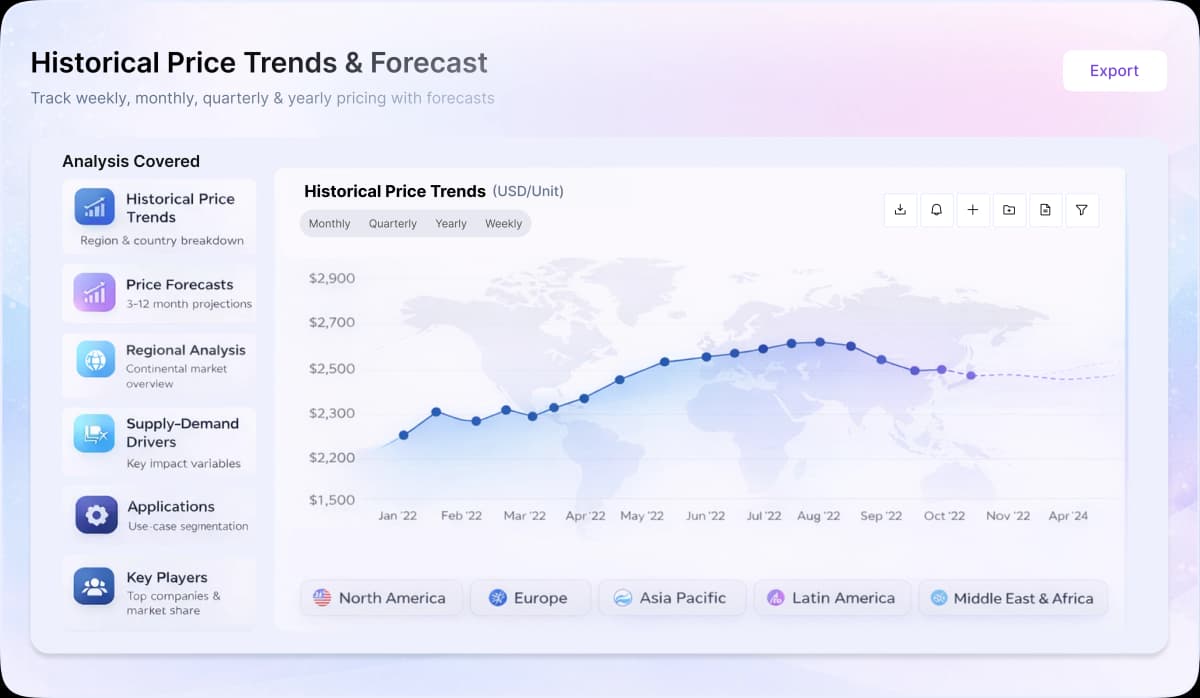
Turn price intelligence into action with the Procurement Resource Database. Log in or subscribe to unlock live price trends, historical charts, supplier databases, cost curves, and analyst-backed insights across chemicals, agriculture, energy, packaging, and more. Use these tools to benchmark your contracts, plan budgets with confidence, and stay ahead of market moves on every product you buy.
0
+Products
0
+Regions
0
+Subscriptions
Mandarin oil prices in the second half of 2025 witnessed an oscillating trajectory, driven by a convergence of supply constraints across major producing regions and sustained seasonal demand. According to the Mandarin Oil price database, feedstock availability tightened considerably as key cultivation zones in Mexico and Spain experienced significant production setbacks. Prolonged droughts, irregular rainfall, and a severe hailstorm event in Spanish growing regions reduced marketable fruit volumes and compromised quality, limiting the raw material supply available for oil extraction.
The Mandarin Oil price curve reflected these shortfalls throughout the period, as processors faced increased competition for available citrus feedstock. In Mexico, the situation was further compounded by rising input costs across the supply chain, including fuel, agricultural materials, and transportation, all of which elevated the cost of bringing fruit to market. The Mandarin Oil price graph also captured the influence of import competition, as Peruvian mandarin volumes attracted consumer and trade interest, reshaping sourcing dynamics within regional markets. Meanwhile, Kazakhstan recorded its highest mandarin import volumes in over a decade, pointing to strong global consumption momentum that kept demand well supported against the tightening supply backdrop.
Analyst Insight
According to Procurement Resource, mandarin oil’s price levels are expected to remain firm as feedstock supply recovery stays gradual across key origins.
Mandarin oil, extracted from the peel of Citrus reticulata, is a sweet, citrus-scented essential oil used in perfumes, air fresheners, and cosmetics for its refreshing aroma. It offers skincare benefits, including calming and brightening properties, and is used in products like lotions and cleansers. With mild antiseptic qualities, mandarin oil is also found in cleaning solutions. In aromatherapy, it helps reduce stress and improve mood. Its versatility makes it a popular choice across fragrance, skincare, and cleaning industries.
Biolandes Group, Bontoux S.A.S, Citrus and Allied Essences Ltd, doTERRA International LLC
CurrencyUS$ (Data can also be provided in local currency)
Supplier Database AvailabilityYes
Customization ScopeThe report can be customized as per the requirements of the customer
Post-Sale Analyst Support360-degree analyst support after report delivery
Note: Our supplier search experts can assist your procurement teams in compiling and validating a list of suppliers indicating they have products, services, and capabilities that meet your company's needs.
Mandarin oil, derived from the peel of mandarin oranges (Citrus reticulata), has various industrial applications due to its sweet, citrus aroma and therapeutic properties. In the fragrance industry, it is commonly used in perfumes, candles, and air fresheners for its refreshing scent. Mandarin oil is also incorporated into skincare products, such as lotions and cleansers, because of its soothing, anti-inflammatory, and skin-brightening benefits. Additionally, its natural antiseptic properties make it a popular ingredient in cleaning products. In the food industry, mandarin oil serves as a natural flavoring agent for beverages, candies, and baked goods. Its versatility makes it valuable across multiple industries.
Our Price Analysis Methodology
Assistant Manager: Business Insights and Content
Supporting procurement teams with category intelligence, market research, price trends, supply-demand analysis, and strategic sourcing insights across key industries.
Experience how Procurement Resource transforms raw material price data into clear, decision ready intelligence. Optimise your performance with reliable, expert market data and analysis. Schedule your demo today to experience a live walk-through where our experts will showcase interactive price charts, forecasted prices, and insights driving the prices for your key commodities, tailored to your workflows. Contact us now!
Our Team will be happy to assist you
We are just a text away
Still Need Help?
Unlock full access to Procurement Resource's price databases, interactive charts, and short-term forecasts for thousands of commodities. Elevate your sourcing decisions by comparing prices across regions, downloading historical data, and layering in analyst-backed insights, all with our flexible plans that scale as your portfolio grows.
Still have any Questions
Contact Us



Price Trend Dashboard - What's Included
Price trends across a diverse portfolio of categories and products, spanning board to niche chemicals
Coverage extendable to grade-specific chemicals based on procurement requirements
Regular price tracking supported by robust historical datasets
News, policy updates, and key market drivers impacting price movements
Short-term and long-term price outlooks and forecasts
Supply–demand dynamics and capacity-driven market analysis

Track prices, market movements, supply-demand dynamics, and industry developments across hundreds of commodities through a centralized intelligence platform built for informed procurement decisions.

Understand market fluctuations using analyst-backed forecasts, historical pricing patterns, and evolving industry trends to strengthen sourcing strategies and budget planning.

Leverage cost models, pricing benchmarks, and procurement insights to evaluate purchasing opportunities, improve negotiations, and enhance operational efficiency.
Access region-specific price trends, trade activities, capacity changes, and supply chain developments influencing commodity markets worldwide.