Melon Price Trend Analysis 2026: Supply Demand Analysis, Latest News, Historical Prices, Market Insights & Price Drivers

Neha Gawande profile photo
Written ByNeha Gawande

Procurement Resource Database

Laptop screen

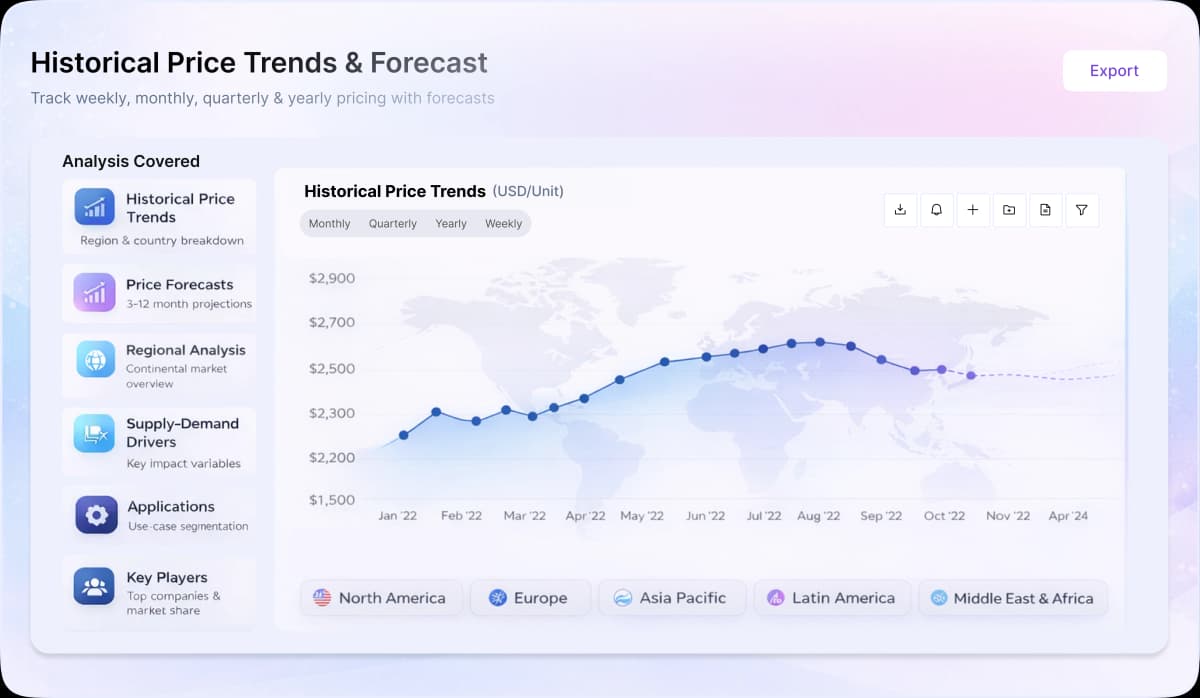
Turn price intelligence into action with the Procurement Resource Database. Log in or subscribe to unlock live price trends, historical charts, supplier databases, cost curves, and analyst-backed insights across chemicals, agriculture, energy, packaging, and more. Use these tools to benchmark your contracts, plan budgets with confidence, and stay ahead of market moves on every product you buy.

Melon Dashboard Inclusions

Melon Price Dasboard

0

+

Products

0

+

Regions

0

+

Subscriptions

The melon market in 2024 moved in different directions across regions, shaped mainly by weather stress, shifting supply, and changes in trade flows. In Turkey, the season was marked by persistent heat and drought, which reduced yields and increased production costs. Farmers spent more on irrigation, fuel and other inputs, and these costs filtered through to retail shelves.

Melons, which normally became cheaper in summer, stayed expensive because the crop struggled under extreme conditions and transport losses added extra pressure.

Central Asia experienced almost the opposite. Uzbekistan entered the season with more melons than the market could absorb. While fields produced heavily, demand at home and abroad remained weak. Exporting became nearly impossible because neighbouring countries also had large volumes and low prices. With transport costs too high to make shipments worthwhile, melons piled up in local markets. Many growers could not sell their fruit at all and used it for animal feed or left it unharvested. This oversupply pushed prices to unusually low levels for much of the season.

In India, the story was more mixed. Some southern regions saw strong buying from neighbouring states, which kept prices supported despite steady arrivals. Markets that supplied Kerala, for example, moved large volumes daily, and this flow of fruit prevented prices from dropping sharply.


About Melon

Melons belong to the Cucurbitaceae family and have a distinct aroma and sweet taste. The most common types of melon are watermelon, cantaloupe, honeydew, muskmelon, etc., with each of one having a unique taste and texture. They have high water content, refreshing taste, and nutritional value and in addition to this, contain essential vitamins, minerals, and antioxidants.

Melon Product Detail

Hs Code
08071900
Industrial Uses

Food processing, Fragrance and cosmetics, Seed oil production

Supplier Database

BASF SE, Yuksel Tohum A.S., Bayer CropScience, Sakata Seed Corporation, Origene Seeds, Limagrain, Ahern Seeds, East-west Seed, Semilas Fito, HaZera Seeds

Regional Coverage

Asia Pacific

China, India, Indonesia, Pakistan, Bangladesh, Japan, Philippines, Vietnam, Iran, Thailand, South Korea, Iraq, Saudi Arabia, Malaysia, Nepal, Taiwan, Sri Lanka, UAE, Israel, Hongkong, Singapore, Oman, Kuwait, Qatar, Australia, and New Zealand

Europe

Germany, France, United Kingdom, Italy,Spain, Russia, Turkey, Netherlands, Poland, Sweden, Belgium, Austria, Ireland Switzerland, Norway, Denmark, Romania, Finland, Czech Republic, Portugal and Greece

North America

United States and Canada

Latin America

Brazil, Mexico, Argentina, Columbia, Chile, Ecuador, and Peru

Africa

South Africa, Nigeria, Egypt, Algeria, Morocco

CurrencyUS$ (Data can also be provided in local currency)

Supplier Database AvailabilityYes

Customization ScopeThe report can be customized as per the requirements of the customer

Post-Sale Analyst Support360-degree analyst support after report delivery

Note: Our supplier search experts can assist your procurement teams in compiling and validating a list of suppliers indicating they have products, services, and capabilities that meet your company's needs.

About the Author

Neha Gawande profile photo

Neha Gawande

Senior Lead Analyst

Delivering procurement intelligence and commodity research across automotive, oil & gas, chemicals, aerospace, and energy, helping sourcing teams decode complex supply chain data to sharpen purchasing strategies and achieve sustainable cost outcomes.

Our Price Analysis Methodology

Schedule Demo

Schedule a demo

Experience how Procurement Resource transforms raw material price data into clear, decision ready intelligence. Optimise your performance with reliable, expert market data and analysis. Schedule your demo today to experience a live walk-through where our experts will showcase interactive price charts, forecasted prices, and insights driving the prices for your key commodities, tailored to your workflows. Contact us now!

Our Team will be happy to assist you

We are just a text away

+1

Still Need Help?

Europe & Africa

+44 7573 171117

[email protected]

USA & Canada

+1 307 363 1045

[email protected]

APAC

+91 8850629517

[email protected]

Unlock full access to Procurement Resource's price databases, interactive charts, and short-term forecasts for thousands of commodities. Elevate your sourcing decisions by comparing prices across regions, downloading historical data, and layering in analyst-backed insights, all with our flexible plans that scale as your portfolio grows.

Still have any Questions

Contact Us
Mastercard
Wire
VISA
Stripe

Why Procurement Database

Commodity Market Intelligence

Commodity Market Intelligence

Track prices, market movements, supply-demand dynamics, and industry developments across hundreds of commodities through a centralized intelligence platform built for informed procurement decisions.

Price Forecasts & Market Outlooks

Price Forecasts & Market Outlooks

Understand market fluctuations using analyst-backed forecasts, historical pricing patterns, and evolving industry trends to strengthen sourcing strategies and budget planning.

Cost & Procurement Optimization

Cost & Procurement Optimization

Leverage cost models, pricing benchmarks, and procurement insights to evaluate purchasing opportunities, improve negotiations, and enhance operational efficiency.

Global & Regional Market Insights

Global & Regional Market Insights

Access region-specific price trends, trade activities, capacity changes, and supply chain developments influencing commodity markets worldwide.

1/4