Merchant Bar Price Trend Analysis 2026: Market Insights, Supply Demand Analysis, Historical Prices, Price Drivers & Latest News

Rakesh Nandi profile photo
Written ByRakesh Nandi

Procurement Resource Database

Laptop screen

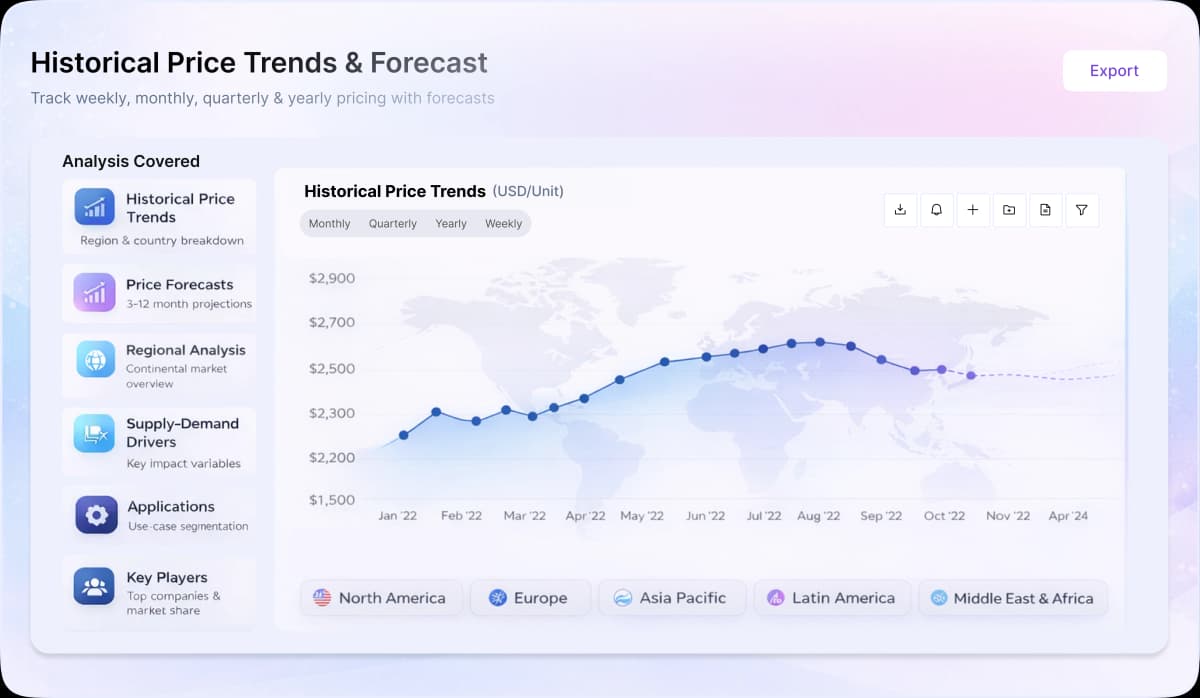
Turn price intelligence into action with the Procurement Resource Database. Log in or subscribe to unlock live price trends, historical charts, supplier databases, cost curves, and analyst-backed insights across chemicals, agriculture, energy, packaging, and more. Use these tools to benchmark your contracts, plan budgets with confidence, and stay ahead of market moves on every product you buy.


0

+

Products

0

+

Regions

0

+

Subscriptions

About Merchant Bar

Merchant bar is a category of hot-rolled steel products commonly used in construction, manufacturing, and fabrication. It includes flat bars, angles, channels, and rounds, which are essential for structural support, frames, and reinforcement. Known for their strength, versatility, and ease of welding and cutting, merchant bars are widely used in infrastructure, machinery, and general engineering applications. Their durability and availability in various sizes make them a practical choice for both industrial and commercial projects requiring reliable steel components.

Merchant Bar Product Detail

HS Code
7228
Supplier Database

ArcelorMittal S.A., Nucor Corp., Nippon Steel Corporation, Tata Steel Ltd., JSW Steel, Shagang Group Inc., Steel Authority of India Limited (SAIL)

Regional Coverage

Asia Pacific

China, India, Indonesia, Pakistan, Bangladesh, Japan, Philippines, Vietnam, Iran, Thailand, South Korea, Iraq, Saudi Arabia, Malaysia, Nepal, Taiwan, Sri Lanka, UAE, Israel, Hongkong, Singapore, Oman, Kuwait, Qatar, Australia, and New Zealand

Europe

Germany, France, United Kingdom, Italy,Spain, Russia, Turkey, Netherlands, Poland, Sweden, Belgium, Austria, Ireland Switzerland, Norway, Denmark, Romania, Finland, Czech Republic, Portugal and Greece

North America

United States and Canada

Latin America

Brazil, Mexico, Argentina, Columbia, Chile, Ecuador, and Peru

Africa

South Africa, Nigeria, Egypt, Algeria, Morocco

CurrencyUS$ (Data can also be provided in local currency)

Supplier Database AvailabilityYes

Customization ScopeThe report can be customized as per the requirements of the customer

Post-Sale Analyst Support360-degree analyst support after report delivery

Note: Our supplier search experts can assist your procurement teams in compiling and validating a list of suppliers indicating they have products, services, and capabilities that meet your company's needs.

Merchant Bar Industrial Uses

Merchant bars are widely used in industrial applications due to their strength, versatility, and ease of fabrication. They are essential in the construction of machinery frames, support structures, storage racks, and equipment bases. In manufacturing, merchant bars serve as key components in the production of tools, ladders, trailers, and conveyor systems. Their use extends to infrastructure projects, including bridges and industrial buildings, where structural integrity is crucial.

Frequently Asked Questions

The merchant bar outlook for 2025 points toward price stabilization in Europe, supported by improving scrap availability and a gradual alignment of market demand with supply. Downside risks remain, however, as any new regulatory developments or supply chain disruptions could shift near-term price dynamics. The balance between feedstock cost trends and downstream demand will be the key variable to monitor through the year.
Merchant bar production is led by Asia (China and India), Europe, and North America. China, home to Shagang Group and the world's largest steel industry, leads output, while India's Tata Steel and JSW Steel drive rapid capacity growth. Europe is anchored by ArcelorMittal, and the US by Nucor's electric arc furnace network. Iron ore and coal from Australia, Brazil, South Africa, and India are shipped to these hubs.
Merchant bar prices are driven primarily by raw-material and energy costs passed through from steelmaking. For electric-arc-furnace mills, steel scrap is the dominant input, while integrated producers are exposed to iron ore and coking coal; movements in these feedstocks feed directly into merchant bar conversion costs. Energy prices add a further layer, given the electricity intensity of electric-arc production. On the demand side, construction, manufacturing and infrastructure activity sets the pull, so when demand is steady against these cost pressures, input-cost pass-through is the main price driver.
Major merchant bar producers include large integrated and electric-arc steelmakers such as ArcelorMittal, Nucor, Nippon Steel, Tata Steel, JSW Steel, Shagang Group and SAIL. These companies supply merchant bar across Asia Pacific, Europe, North America, Latin America and Africa. Because output is concentrated among a small group of major steelmakers, disruptions at any one producer can tighten available volumes for end-users, making supplier and regional diversification a key supply-security consideration.
Merchant bar is primarily traded via long-term contracts between steel producers and end-users, with spot transactions filling the balance. Contract prices are typically benchmarked against regional steel indices or mill price lists, with premiums applied for specific grades, sizes, and delivery timing. Buyers face price exposure tied to raw-material cost movements, particularly scrap and iron ore, which feed directly into electric arc furnace and integrated mill production. Fixed-price contracts offer cost certainty, while index-linked deals transfer price risk back to buyers when steelmaking input costs shift.
Procurement Resource assesses merchant bar prices through a structured, data-driven methodology that combines primary engagement with producers, suppliers and traders, secondary market data, monitoring of feedstock and input costs, trade-flow and inventory tracking, and exchange or spot benchmarks. These inputs are validated and translated into a transparent price assessment and outlook. The detailed methodology is available on the Procurement Resource website.

Our Price Analysis Methodology

About the Author

Rakesh Nandi profile photo

Rakesh Nandi

Team Lead - Market Research

Leading procurement-focused market intelligence across chemicals, composites, advanced materials, aerospace & defense, and energy, delivering commodity forecasts, supply chain analysis, and competitive benchmarking to support sourcing decisions.

Schedule Demo

Schedule A Demo

Experience how Procurement Resource transforms raw material price data into clear, decision ready intelligence. Optimise your performance with reliable, expert market data and analysis. Schedule your demo today to experience a live walk-through where our experts will showcase interactive price charts, forecasted prices, and insights driving the prices for your key commodities, tailored to your workflows. Contact us now!

Our Team will be happy to assist you

We are just a text away

+1

Still Need Help?

Europe & Africa

+44 7573 171117

[email protected]

USA & Canada

+1 307 363 1045

[email protected]

APAC

+91 8850629517

[email protected]

Unlock full access to Procurement Resource's price databases, interactive charts, and short-term forecasts for thousands of commodities. Elevate your sourcing decisions by comparing prices across regions, downloading historical data, and layering in analyst-backed insights, all with our flexible plans that scale as your portfolio grows.

Still have any Questions

Contact Us
Mastercard
Wire
VISA
Stripe

Why Procurement Database

Commodity Market Intelligence

Commodity Market Intelligence

Track prices, market movements, supply-demand dynamics, and industry developments across hundreds of commodities through a centralized intelligence platform built for informed procurement decisions.

Price Forecasts & Market Outlooks

Price Forecasts & Market Outlooks

Understand market fluctuations using analyst-backed forecasts, historical pricing patterns, and evolving industry trends to strengthen sourcing strategies and budget planning.

Cost & Procurement Optimization

Cost & Procurement Optimization

Leverage cost models, pricing benchmarks, and procurement insights to evaluate purchasing opportunities, improve negotiations, and enhance operational efficiency.

Global & Regional Market Insights

Global & Regional Market Insights

Access region-specific price trends, trade activities, capacity changes, and supply chain developments influencing commodity markets worldwide.

1/4