Udeesha Tomar
AVP - Strategy and Solutions
Leading procurement research solutions across chemicals, materials, and food & beverages, with expertise in price forecasting and market analytics.

Asia
In Asia, Nonanoic Acid prices moved mostly downward through 2025. For much of the year, regional chemical markets struggled with high inventories and weak purchasing interest, which also weighed on this segment. A slow recovery in major downstream applications such as coatings, plastics, and industrial chemicals kept demand softer than expected. China, in particular, faced repeated waves of oversupply across several basic chemicals, and this created a cautious buying environment. Even when short periods of improved activity appeared overall sentiment stayed weak. Lower energy-linked costs in several months of the year also limited any upward push. As a result, Asian prices generally stayed under pressure and traded in a soft to bearish pattern throughout 2025.
Europe
Europe followed a similar trend, with Nonanoic Acid prices mostly declining during the year. The region faced persistent oversupply issues due to structural imbalances in the chemicals sector. Many large producers ran at steady rates, but downstream industries like packaging and construction showed little momentum, reducing pull-through demand. Towards the middle of the year, several companies even re-evaluated long-term contracts, which further reduced stable offtake. Although energy-related markets saw occasional volatility, this was not strong enough to change the overall direction. Market participants became increasingly cautious, and spot activity remained low. Germany, in particular, showed muted consumption trends, which reflected broader European conditions. Overall, Europe carried a soft and hesitant tone through 2025.
North America
In North America, the Nonanoic Acid market saw a more mixed path. Early in the year, prices softened due to healthy supply availability and moderate downstream orders. Inventories grew in some months as producers operated steadily and demand from derivatives lacked strong momentum. However, the trend shifted at times when tighter conditions emerged because of stronger demand in consumer goods and packaging applications. Price firmness also appeared temporarily when supply chains became unstable or when energy-linked costs climbed. Even with these brief rises, the year as a whole leaned slightly downward, as overall consumption did not show sustained strength.
Analyst Insight
According to Procurement Resource, Nonanoic Acid prices are expected to stay stable but sensitive to global chemical demand, inventory levels, and broader economic conditions.
Related Report
Need Latest Nonanoic Acid Prices?
Get real-time price assessments, periodic trends, forecasts and price driver insights across key global markets.
Our Clients































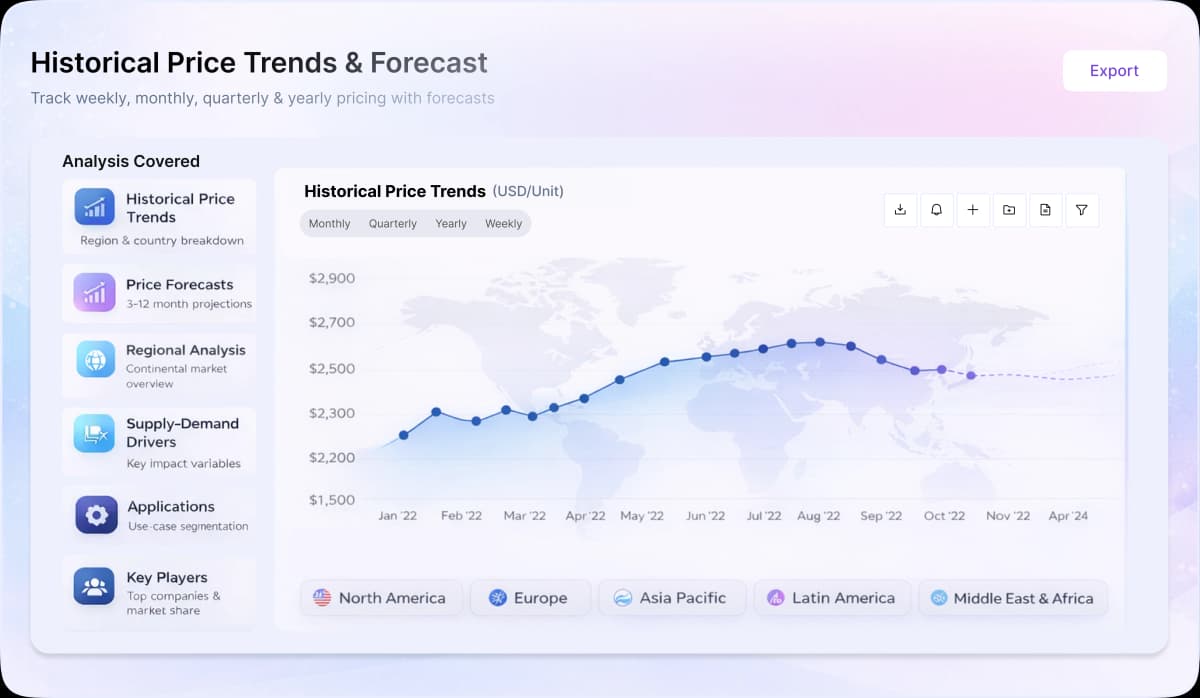
Turn price intelligence into action with the Procurement Resource Database. Log in or subscribe to unlock live price trends, historical charts, supplier databases, cost curves, and analyst-backed insights across chemicals, agriculture, energy, packaging, and more. Use these tools to benchmark your contracts, plan budgets with confidence, and stay ahead of market moves on every product you buy.
0
+Products
0
+Regions
0
+Subscriptions
Asia
In Asia, Nonanoic Acid prices showed a soft to steady trend during the second half of 2024. In the third quarter, weaker industrial activity in major economies reduced buying interest for many basic chemicals, which also affected this market. Slower consumption in coatings, lubricants, and specialty chemical applications kept suppliers cautious. As the quarter progressed, frequent shifts in the regional energy market added uncertainty, leading to mild downward pressure. Moving into the fourth quarter, the market remained subdued as several Asian buyers continued to cut procurement volumes because of slow manufacturing growth and weak margins. Even though there were short-lived improvements caused by geopolitical tensions, the overall mood in Asia stayed muted through the end of the year.
Europe
European prices for Nonanoic Acid moved mostly downward in H2’24. During the third quarter, fading demand across key industries and the broader economic slowdown pushed buyers to operate with smaller inventories. Producers also struggled with oversupply in several segments of the chemical market, which limited their ability to raise prices. The decline continued into the fourth quarter as the region dealt with softer fuel demand and weakening industrial output. Some cost support came from temporary rises in energy-related inputs, but this was not strong enough to shift the overall bearish trend. As a result, Europe saw a largely weak price environment through the second half of the year.
North America
In North America, the Nonanoic Acid market moved in two phases. The third quarter saw pressure from oversupply and easing consumption, which kept prices on the lower side. A steady increase in chemical production within the region added to the availability of materials, reducing upward movement. However, the trend changed slightly in the fourth quarter when supply disruptions and logistical challenges tightened certain chemical chains. This brought mild support to the market, helping prices recover modestly toward the end of the year. Even with this improvement, overall sentiment remained cautious.
Nonanoic acid which is also known as pelargonic acid is a pungent smelling liquid with pale yellow oily appearance. It is a central ingredient in many industrial processes such as production of esters in fragrance and flavor, herbicides, pesticides, and also as a plasticizer in polymer production. In addition to this, it also acts as a corrosion inhibitor for metal protection and manufacturing lubricants.
C9H18O2
Production of esters, Perfumes and fragrance, Pesticides, Herbicides, Plasticizers, Lubricants
Central drug Huse, Tokyo Chemical Industry, Croda International Plc, Glentham Life Sciences Limited, OQ Chemicals GmbH
CurrencyUS$ (Data can also be provided in local currency)
Supplier Database AvailabilityYes
Customization ScopeThe report can be customized as per the requirements of the customer
Post-Sale Analyst Support360-degree analyst support after report delivery
Note: Our supplier search experts can assist your procurement teams in compiling and validating a list of suppliers indicating they have products, services, and capabilities that meet your company's needs.
Our Price Analysis Methodology
AVP - Strategy and Solutions
Leading procurement research solutions across chemicals, materials, and food & beverages, with expertise in price forecasting and market analytics.
Experience how Procurement Resource transforms raw material price data into clear, decision ready intelligence. Optimise your performance with reliable, expert market data and analysis. Schedule your demo today to experience a live walk-through where our experts will showcase interactive price charts, forecasted prices, and insights driving the prices for your key commodities, tailored to your workflows. Contact us now!
Our Team will be happy to assist you
We are just a text away
Still Need Help?
Europe & Africa
+44 7573 171117
Sales@procurementresource.com
USA & Canada
+1 307 363 1045
Sales@procurementresource.com
APAC
+91 8850629517
Sales@procurementresource.com
The study offers a detailed cost analysis of Vitamin E Production from the Fatty Acid Distillate (FAD) of Vegetable Oils. In addition, the report incorporates the manufacturing process with detailed process and material flow, operating costs along with financial expenses and depreciation charges.
This report presents a detailed cost analysis of bio-adipic acid production from fatty acids (like coconut oil) using direct fermentation.
Nonanoic Acid Manufacturing Plant Project Report thoroughly focuses on every detail that encompasses the cost of manufacturing. Our extensive cost model meticulously covers breaking down expenses around raw materials, labour, technology, and manufacturing expenses. This enables precise cost structure optimization and helps in identifying effective strategies to reduce the overall cash cost of manufacturing.
Unlock full access to Procurement Resource's price databases, interactive charts, and short-term forecasts for thousands of commodities. Elevate your sourcing decisions by comparing prices across regions, downloading historical data, and layering in analyst-backed insights, all with our flexible plans that scale as your portfolio grows.
Still have any Questions
Contact Us



Price Trend Dashboard - What's Included
Price trends across a diverse portfolio of categories and products, spanning board to niche chemicals
Coverage extendable to grade-specific chemicals based on procurement requirements
Regular price tracking supported by robust historical datasets
News, policy updates, and key market drivers impacting price movements
Short-term and long-term price outlooks and forecasts
Supply–demand dynamics and capacity-driven market analysis

Track prices, market movements, supply-demand dynamics, and industry developments across hundreds of commodities through a centralized intelligence platform built for informed procurement decisions.

Understand market fluctuations using analyst-backed forecasts, historical pricing patterns, and evolving industry trends to strengthen sourcing strategies and budget planning.

Leverage cost models, pricing benchmarks, and procurement insights to evaluate purchasing opportunities, improve negotiations, and enhance operational efficiency.
Access region-specific price trends, trade activities, capacity changes, and supply chain developments influencing commodity markets worldwide.