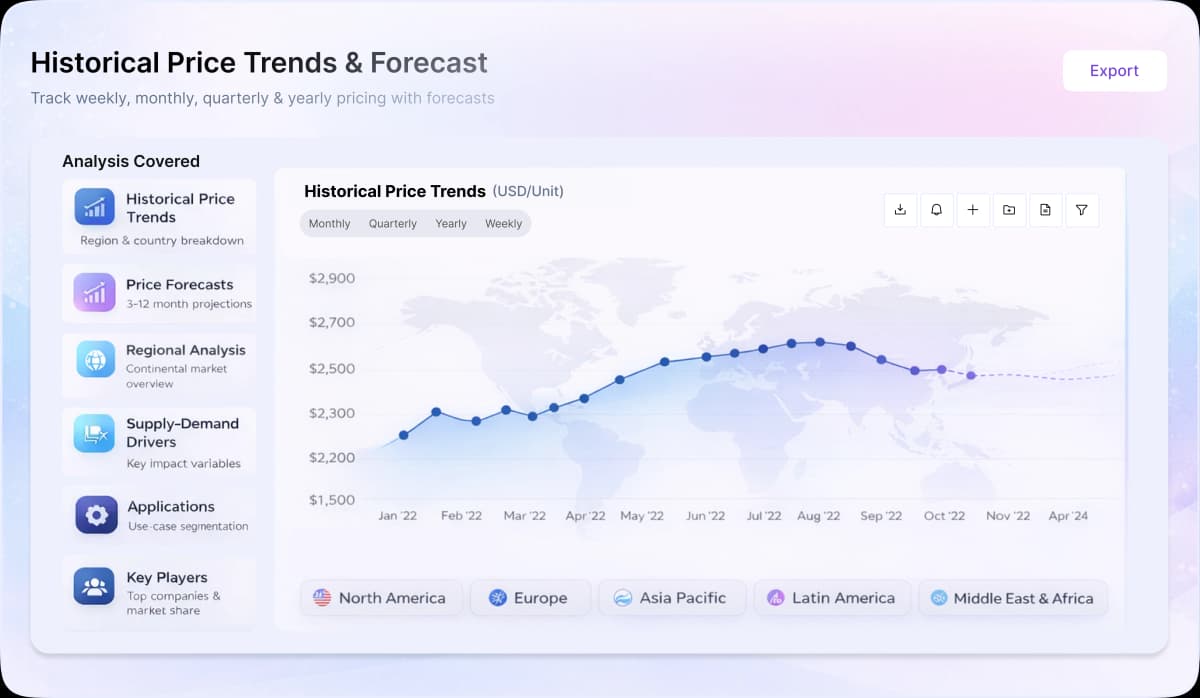
Oleum Price Trend Q1 2024
Asia
During the first quarter of 2024, the oleum market in Asia experienced a mixed price trajectory. In China, prices initially displayed a bearish trend, declining notably from January to February due to overwhelming inventories and steady, casual downstream demand. However, this trend quickly reversed, with prices escalating from February to March, driven by improved market conditions.
In India, the oleum market saw significant growth, with prices increasing steadily throughout the quarter, influenced by a rise in crude oil and energy costs, alongside positive responses from downstream consumption sectors.
Europe
In Europe, the oleum market was heavily influenced by trends in Asia. Prices began the quarter on a downward trend, impacted by swollen inventories and muted industrial demand following the holiday season. As the quarter progressed, the gap between supply and demand narrowed, leading to a stabilization of prices. The European market thus exhibited a varying price trajectory throughout the first quarter.
North America
In North America, the oleum market performed relatively better compared to other global regions. Prices in this market were on the rise from the very beginning of the quarter, supported by strong downstream demand and low inventory levels. Although the price increases were marginal, the overall market sentiment remained positive, with a buoyant trend emerging in the latter part of the quarter. This positive performance was underpinned by supportive downstream demand and better inventory management, contributing to the upward price movement observed during the period.
Analyst Insight
According to Procurement Resource, the price trend of Oleum is expected to depreciate further with the loss of demand from the downstream industries and rising uncertainties in its feedstock sector.
Procurement Resource provides latest prices of Oleum. Each price database is tied to a user-friendly graphing tool dating back to 2014, which provides a range of functionalities: configuration of price series over user defined time period; comparison of product movements across countries; customisation of price currencies and unit; extraction of price data as excel files to be used offline.
Related Report