Orange Terpene Price Trend Analysis 2026: Market Insights, Price Drivers, Supply Demand Analysis, Historical Prices & Latest News

Pragati Agarwal profile photo
Written ByPragati Agarwal

Procurement Resource Database

Laptop screen

Turn price intelligence into action with the Procurement Resource Database. Log in or subscribe to unlock live price trends, historical charts, supplier databases, cost curves, and analyst-backed insights across chemicals, agriculture, energy, packaging, and more. Use these tools to benchmark your contracts, plan budgets with confidence, and stay ahead of market moves on every product you buy.

0

+

Products

0

+

Regions

0

+

Subscriptions

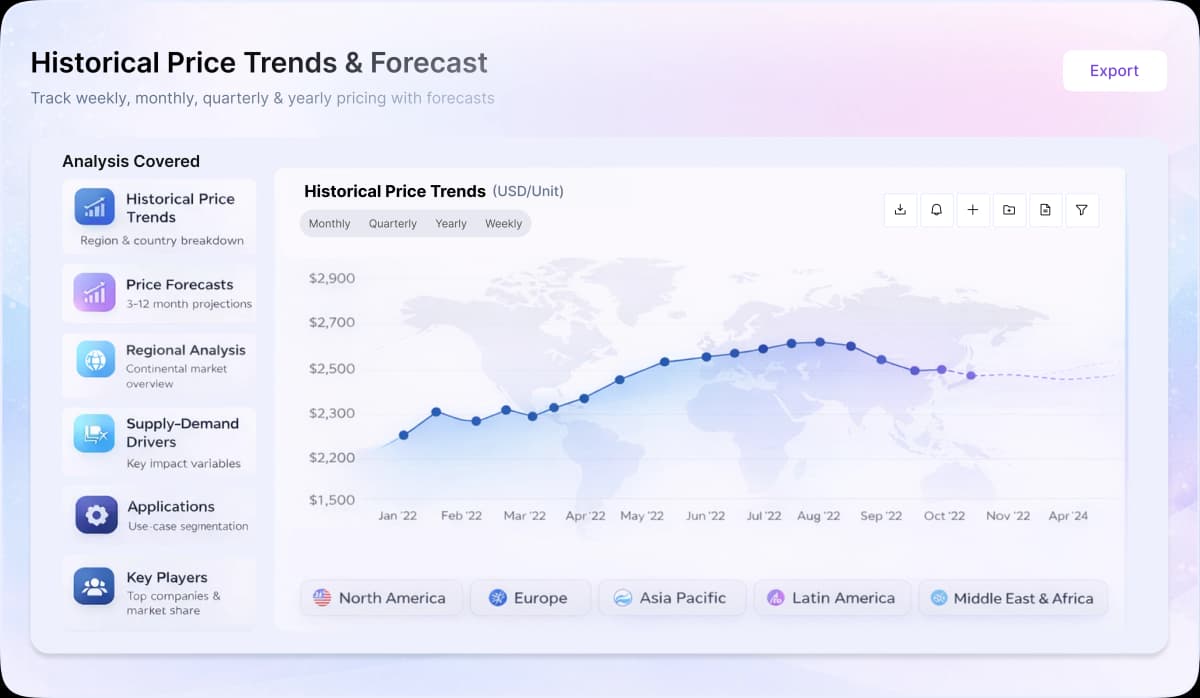
Orange terpene prices in the second half of 2025 followed a slight upward trajectory, shaped by a combination of constrained feedstock availability, shifting trade policy, and sustained demand from end-use industries. According to the Orange Terpene price database, the primary driver of price pressure was the prolonged deterioration of global orange harvests, particularly in Brazil, which remained the dominant supplier of citrus byproducts, including terpene fractions. The compounding effects of citrus greening disease and weather-related crop losses reduced the volume of oranges available for processing, directly limiting terpene output.

The Orange Terpene price curve also reflected the significant influence of US tariff measures during the period. A 40% tariff on orange byproducts, including terpene fractions, remained in place for much of the half, disrupting established trade flows between Brazil and the United States and adding cost pressure across the supply chain. The Orange Terpene price graph captured some relief toward the latter part of the half, when the US administration announced the removal of the 40% tariff on orange essential oil and terpene byproducts, though a baseline 10% tariff remained in effect. Demand from cleaning products, aromatherapy, and fragrance sectors stayed steady throughout the Orange Terpene market.


About Orange Terpene

Orange terpene, primarily composed of D-limonene, is a naturally occurring compound found in the peel of sweet oranges (Citrus sinensis). Known for its refreshing, citrus aroma, it is widely used in the fragrance, cleaning, and food industries. In perfumes and air fresheners, orange terpene provides a pleasant scent. Its solvent properties make it a valuable ingredient in eco-friendly cleaning products, where it helps dissolve grease and oils.


Orange Terpene Product Detail

HS Code
33011200
Synonyms

Citrus Terpene, Orange Oil Terpene

Supplier Database

Florida Chemical Company, Florachem Corporation, Citrus and Allied Essences Ltd., Ventos, Citrus Oleo

Regional Coverage

Asia Pacific

China, India, Indonesia, Pakistan, Bangladesh, Japan, Philippines, Vietnam, Iran, Thailand, South Korea, Iraq, Saudi Arabia, Malaysia, Nepal, Taiwan, Sri Lanka, UAE, Israel, Hongkong, Singapore, Oman, Kuwait, Qatar, Australia, and New Zealand

Europe

Germany, France, United Kingdom, Italy,Spain, Russia, Turkey, Netherlands, Poland, Sweden, Belgium, Austria, Ireland Switzerland, Norway, Denmark, Romania, Finland, Czech Republic, Portugal and Greece

North America

United States and Canada

Latin America

Brazil, Mexico, Argentina, Columbia, Chile, Ecuador, and Peru

Africa

South Africa, Nigeria, Egypt, Algeria, Morocco

CurrencyUS$ (Data can also be provided in local currency)

Supplier Database AvailabilityYes

Customization ScopeThe report can be customized as per the requirements of the customer

Post-Sale Analyst Support360-degree analyst support after report delivery

Note: Our supplier search experts can assist your procurement teams in compiling and validating a list of suppliers indicating they have products, services, and capabilities that meet your company's needs.

Orange Terpene Industrial Uses

In the fragrance industry, it is widely used in perfumes, air fresheners, and scented candles. Its natural solvent capabilities make it a key ingredient in cleaning products, where it helps dissolve grease, oils, and other residues, offering an eco-friendly alternative to synthetic chemicals. Orange terpene is also utilized in the food and beverage industry as a flavoring agent. Additionally, it is employed in the pharmaceutical industry for its antimicrobial properties and as a component in certain drug formulations.

Frequently Asked Questions

The orange terpene outlook for 2026 points to a broadly firm market, sustained by persistent Brazilian feedstock tightness driven by citrus greening disease and adverse weather suppressing peel volumes. European sourcing remains constrained, with Mediterranean producers offering only partial compensatory supply, while the residual US tariff on Brazilian orange byproducts redirects trade flows and complicates cost structures for North American buyers. Steady demand from the household and industrial cleaning segment, supported by the compound's solvent efficacy and alignment with green formulation trends, provides underlying support.
Orange terpene prices are driven mainly by orange-processing volumes, since the terpene (mainly d-limonene) is a byproduct of citrus juice extraction, so the size and health of the orange crop in the main origins (Brazil above all, plus the Mediterranean) set supply. Citrus greening disease, weather and juice-processing rates are the key swing factors, and trade measures can redirect flows. Demand from cleaning, fragrance, food flavouring and pharmaceuticals provides the pull. Tight peel supply against green-solvent demand lifts prices, while better harvests ease them.
Brazil dominates global orange terpene production as the world's principal supplier of orange-derived byproducts, though citrus greening disease and adverse weather have strained output. Spain and other Mediterranean producers offer only partial compensatory supply. Europe draws heavily on Brazilian material, while the United States, a major consumer, faces redirected trade flows due to the residual tariff on Brazilian orange byproducts. Notable orange-terpene processors include Florida Chemical Company, Florachem Corporation, Citrus and Allied Essences, Ventos and Citrus Oleo. Heavy reliance on Brazilian feedstock creates meaningful supply-chain concentration risk for formulators worldwide.
In Brazil, the dominant supplier, citrus greening disease compounded by droughts and floods produced one of the worst orange harvests in decades through H2 2024 into H1 2026, shrinking citrus peel volumes for D-limonene extraction and keeping orange terpene supply constrained and prices firm. In Sicily, early-season drought reduced fruit size and shortened the Washington Navel harvest window, while sporadic rain in Spain's Valencian region offered only partial, weather-disrupted compensatory supply. These adverse conditions across key producing regions sustained upward price pressure on orange terpene throughout the period.
Orange terpene is recovered from sweet orange peel during juice processing, tying supply directly to citrus harvest timing. In Sicily, early-season drought reduced fruit size while later-season Washington Navel oranges faced a shortened harvest window, compressing the processing period. Spain's Valencian region offered steadier year-round supply from local varieties. Brazil, the dominant supplier, saw harvests persistently disrupted by citrus greening and adverse weather. These misaligned regional harvest windows mean European processors depend on partial Mediterranean supply when Brazilian volumes fall short, sustaining firm pricing through H1 2026.
Orange terpene demand is driven primarily by the fragrance, household and industrial cleaning, food-flavouring and pharmaceutical industries. The cleaning segment is particularly influential, as the shift toward green formulations amplifies demand for orange terpene's natural solvent properties. Food and beverage flavouring draws on its fresh citrus profile, while pharmaceutical uses add specialty volume. Because these are broad consumer and industrial end uses, orange terpene consumption is relatively steady, with green-solvent adoption in cleaning the main structural growth driver.
Procurement Resource assesses orange terpene prices through a structured, data-driven methodology combining primary engagement with producers, suppliers and traders, secondary market data, continuous monitoring of feedstock and input costs, trade-flow and inventory tracking, and exchange or spot benchmarks. All inputs are validated and translated into a transparent price assessment and outlook. The detailed methodology is available on the Procurement Resource website.

Our Price Analysis Methodology

About the Author

Pragati Agarwal profile photo

Pragati Agarwal

Senior Business Insights Analyst

Delivering price trend analysis and procurement market insights at Procurement Resource, with expertise in identifying commodity patterns, supporting purchasing strategies, and improving cost efficiency through actionable market intelligence.

Schedule Demo

Schedule A Demo

Experience how Procurement Resource transforms raw material price data into clear, decision ready intelligence. Optimise your performance with reliable, expert market data and analysis. Schedule your demo today to experience a live walk-through where our experts will showcase interactive price charts, forecasted prices, and insights driving the prices for your key commodities, tailored to your workflows. Contact us now!

Our Team will be happy to assist you

We are just a text away

+1

Still Need Help?

Europe & Africa

+44 7573 171117

[email protected]

USA & Canada

+1 307 363 1045

[email protected]

APAC

+91 8850629517

[email protected]

Unlock full access to Procurement Resource's price databases, interactive charts, and short-term forecasts for thousands of commodities. Elevate your sourcing decisions by comparing prices across regions, downloading historical data, and layering in analyst-backed insights, all with our flexible plans that scale as your portfolio grows.

Still have any Questions

Contact Us
Mastercard
Wire
VISA
Stripe

Why Procurement Database

Commodity Market Intelligence

Commodity Market Intelligence

Track prices, market movements, supply-demand dynamics, and industry developments across hundreds of commodities through a centralized intelligence platform built for informed procurement decisions.

Price Forecasts & Market Outlooks

Price Forecasts & Market Outlooks

Understand market fluctuations using analyst-backed forecasts, historical pricing patterns, and evolving industry trends to strengthen sourcing strategies and budget planning.

Cost & Procurement Optimization

Cost & Procurement Optimization

Leverage cost models, pricing benchmarks, and procurement insights to evaluate purchasing opportunities, improve negotiations, and enhance operational efficiency.

Global & Regional Market Insights

Global & Regional Market Insights

Access region-specific price trends, trade activities, capacity changes, and supply chain developments influencing commodity markets worldwide.

1/4