Need latest Paraffin Wax prices?
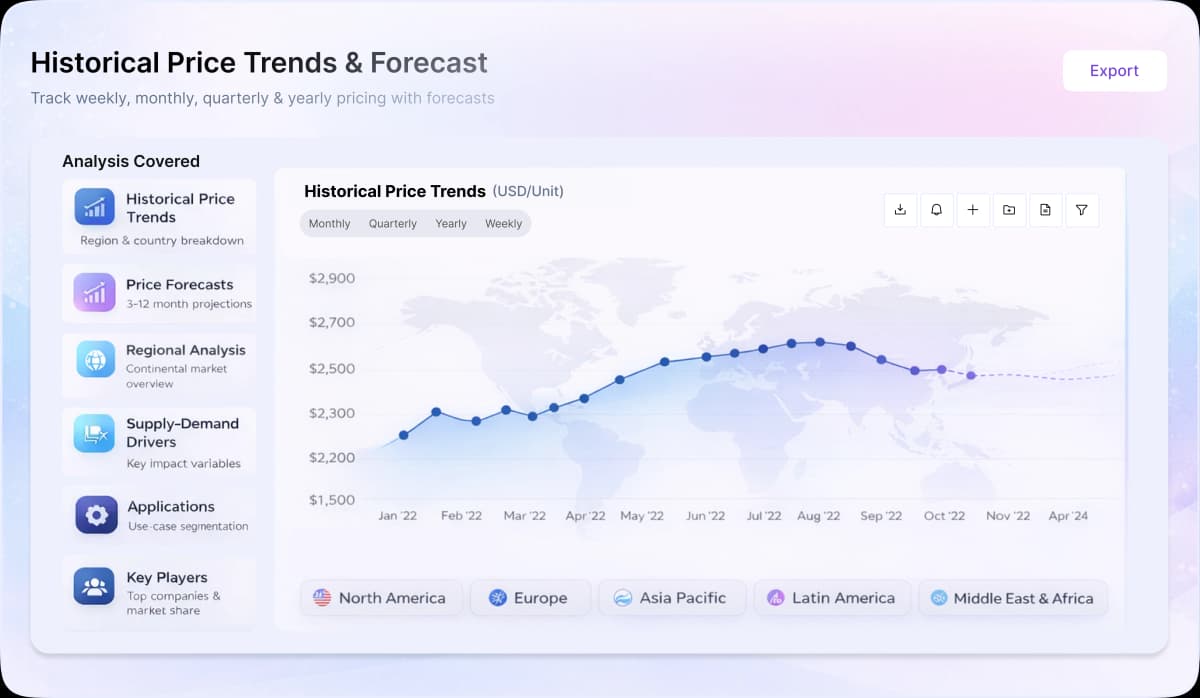
Get real-time price assessments, periodic trends, forecasts and price driver insights across key global markets.
Unlock Price Insights NowOur Clients
| Product | Region | Incoterm Basis | Price | Last Updated Month |
|---|---|---|---|---|
| Paraffin Wax | China | FOB | USD 1,256.76/MT | April 2026 |
| Paraffin Wax | India | FOB | USD 1,713.11/MT | April 2026 |
| Paraffin Wax | USA | FOB | USD 1,343.76/MT | April 2026 |
| Paraffin Wax | Germany | FOB | USD 2,098.00/MT | April 2026 |
| Paraffin Wax | UAE | FOB | USD 1,889.45/MT | April 2026 |
| Paraffin Wax | China | FOB | USD 1,203.00/MT | March 2026 |
| Paraffin Wax | India | FOB | USD 1,722.31/MT | March 2026 |
| Paraffin Wax | USA | FOB | USD 1,290.00/MT | March 2026 |
| Paraffin Wax | Germany | FOB | USD 1,285.00/MT | March 2026 |
| Paraffin Wax | UAE | FOB | USD 970.00/MT | March 2026 |
Stay updated with the latest paraffin wax prices, historical data, and tailored regional analysis
Asia
In Asia, paraffin wax prices showed a fluctuating pattern through the year, largely reflecting movements in feedstock costs and refinery supply conditions. At the beginning of the period, prices moved upward as refiners adjusted production, and procurement activity remained steady from downstream sectors. Demand from candle manufacturers, packaging converters, cosmetics producers, and the downstream rubber processing industries kept supporting baseline consumption, moisture-resistant coatings on paper packaging, and formulation bases in personal care products. During the middle phase, market sentiment shifted as supply availability improved and buyers moderated purchasing volumes. In the latter part of the year, prices gradually softened as inventory levels increased and procurement activity slowed. Overall, the regional trend broadly followed the direction of crude oil, with feedstock cost changes influencing refinery economics and trade activity.
Europe
In Europe, the paraffin wax market moved through phases of initial firmness followed by stabilization and gradual easing. Early in the year, pricing reflected higher production costs and balanced supply conditions from refinery output streams. Consumption remained consistent across major applications, including candles, packaging coatings, cosmetics formulations, and rubber manufacturing, where paraffin wax functions as a protective barrier and processing aid. As the year progressed, additional supply from refinery streams entered the market, which contributed to a gradual correction in prices while downstream demand remained stable rather than expanding. Market participants reported measured procurement behaviour from distributors and converters. Toward the end of the year, prices remained relatively stable as supply and consumption reached a more balanced position. The overall movement remained aligned with trends in crude oil, which continued to influence feedstock costs and refinery margins.
Europe
In North America, paraffin wax prices experienced a similar trajectory characterized by early fluctuations followed by more stable conditions later in the year. Initial market movements reflected changes in refinery operating conditions and procurement activity from candle manufacturers, packaging producers, and personal care product companies. These sectors rely on paraffin wax for candle production, protective coatings on packaging materials, and formulation components in cosmetics and pharmaceutical applications. During the middle portion of the year, supply conditions improved as refinery output remained consistent and inventory availability increased. This contributed to periods of price adjustment and moderated buying activity. In the final phase of the year, the market showed stable to slightly softer conditions as downstream consumption remained steady.
Analyst Insight
According to Procurement Resource, paraffin wax prices are expected to remain stable with moderate fluctuations in the near term as supply and downstream demand mostly appear balanced.
Related Report
Get real-time price assessments, periodic trends, forecasts and price driver insights across key global markets.
Unlock Price Insights NowOur Clients

Turn price intelligence into action with the Procurement Resource Database. Log in or subscribe to unlock live price trends, historical charts, supplier databases, cost curves, and analyst-backed insights across chemicals, agriculture, energy, packaging, and more. Use these tools to benchmark your contracts, plan budgets with confidence, and stay ahead of market moves on every product you buy.

0
+Products
0
+Regions
0
+Subscriptions
Asia
In Q4’24, Paraffin Wax prices in Asia experienced significant fluctuations, influenced by both seasonal demand and geopolitical factors. Heading into the festive season, particularly around the Lunar New Year, the demand for Paraffin Wax increased, especially in sectors such as candle-making and cosmetics. This seasonal boost in consumption contributed to rising prices in markets like India and South Korea. However, the overall price trend was impacted by supply chain disruptions, including port congestion in major exporting countries like China.
Delays in shipments and increased shipping costs created supply shortages, which further pushed up prices in key markets. Despite the softening of crude oil prices, which could typically reduce feedstock costs, the tight supply in the region dominated price movements, causing upward pressure.
Europe
In Europe, the price of Paraffin Wax followed a similar trajectory to Asia, with prices rising during Q4’24. The increase was driven by a combination of factors, including heightened demand in preparation for the holiday season and the disruption of global supply chains. European markets, like their Asian counterparts, faced higher import costs due to shipment delays, particularly from Asia.
The congested ports in Asia, exacerbated by adverse weather and a rush of pre-Lunar New Year cargo, caused significant delays. These delays, combined with rising shipping costs, led to higher Paraffin Wax prices in Europe. Demand from sectors such as cosmetics and candle-making remained steady, but the tightening supply situation kept prices elevated through the quarter.
North America
North American Paraffin Wax prices, in contrast, experienced a decline during Q4’24. Despite steady demand from downstream industries, including cosmetics and candle manufacturing, the prices softened. One of the main reasons for this decline was the easing of freight costs. Lower shipping rates, particularly from Asia, allowed for cheaper imports, which contributed to a more competitive market. Additionally, there was an oversupply of Paraffin Wax due to stockpiling by traders concerned about potential disruptions in the supply chain. While the reduction in freight costs provided some relief to importers, it also resulted in a surplus of Paraffin Wax, putting downward pressure on prices in the region.
Analyst Insight
According to Procurement Resource, Paraffin Wax prices are expected to experience a downward trend. This will likely be due to end-of-year destocking activities and a potential increase in supply, as businesses clear excess inventories before the new year. Additionally, any fluctuations in crude oil prices and the resolution of current shipping disruptions could stabilize the market.
Paraffin wax is a petroleum-derived wax composed of hydrocarbon molecules. It is a white or colorless solid at room temperature but melts easily at low temperatures. It finds applications in candle-making, cosmetics, packaging, pharmaceuticals, rubber and textile manufacturing, food preservation, electrical insulation, art, and more. Its properties of easy melting, moisture resistance, and moldability make it a valuable material for multiple purposes.
Candles, Packaging, Lubricants, Plastics and packaging, Leather production, Foundry and metal works, Electrical insulation
China Petrochemical Corporation, Sasol Limited, Petro Bras, Nippon Seiro Co Ltd, Repsol, Honeywell International Inc, Ergon Inc
CurrencyUS$ (Data can also be provided in local currency)
Supplier Database AvailabilityYes
Customization ScopeThe report can be customized as per the requirements of the customer
Post-Sale Analyst Support360-degree analyst support after report delivery
Note: Our supplier search experts can assist your procurement teams in compiling and validating a list of suppliers indicating they have products, services, and capabilities that meet your company's needs.
Slack wax is cooled during manufacture in order to crystallize the wax content, which is then removed by filtration to produce dewax oil. The dewaxed oil is next bleached to remove any color, and then goes through a hydrogenation reaction to remove impurities in the presence of a catalyst. Slack wax is converted into paraffin wax as a result of this procedure.


Our Price Analysis Methodology

Experience how Procurement Resource transforms raw material price data into clear, decision ready intelligence. Optimise your performance with reliable, expert market data and analysis. Schedule your demo today to experience a live walk-through where our experts will showcase interactive price charts, forecasted prices, and insights driving the prices for your key commodities, tailored to your workflows. Contact us now!
Our Team will be happy to assist you
We are just a text away
Still Need Help ?
Unlock full access to Procurement Resource's price databases, interactive charts, and short-term forecasts for thousands of commodities. Elevate your sourcing decisions by comparing prices across regions, downloading historical data, and layering in analyst-backed insights, all with our flexible plans that scale as your portfolio grows.
Still have any Questions
Contact Us


Price Trend Dashboard - What's Included
Price trends across a diverse portfolio of categories and products, spanning board to niche chemicals
Coverage extendable to grade-specific chemicals based on procurement requirements
Regular price tracking supported by robust historical datasets
News, policy updates, and key market drivers impacting price movements
Short-term and long-term price outlooks and forecasts
Supply–demand dynamics and capacity-driven market analysis