Pasta Price Trend Analysis 2026: Supply Demand Analysis, Price Drivers, Latest News, Historical Prices & Market Insights

Procurement Resource Database

Laptop screen

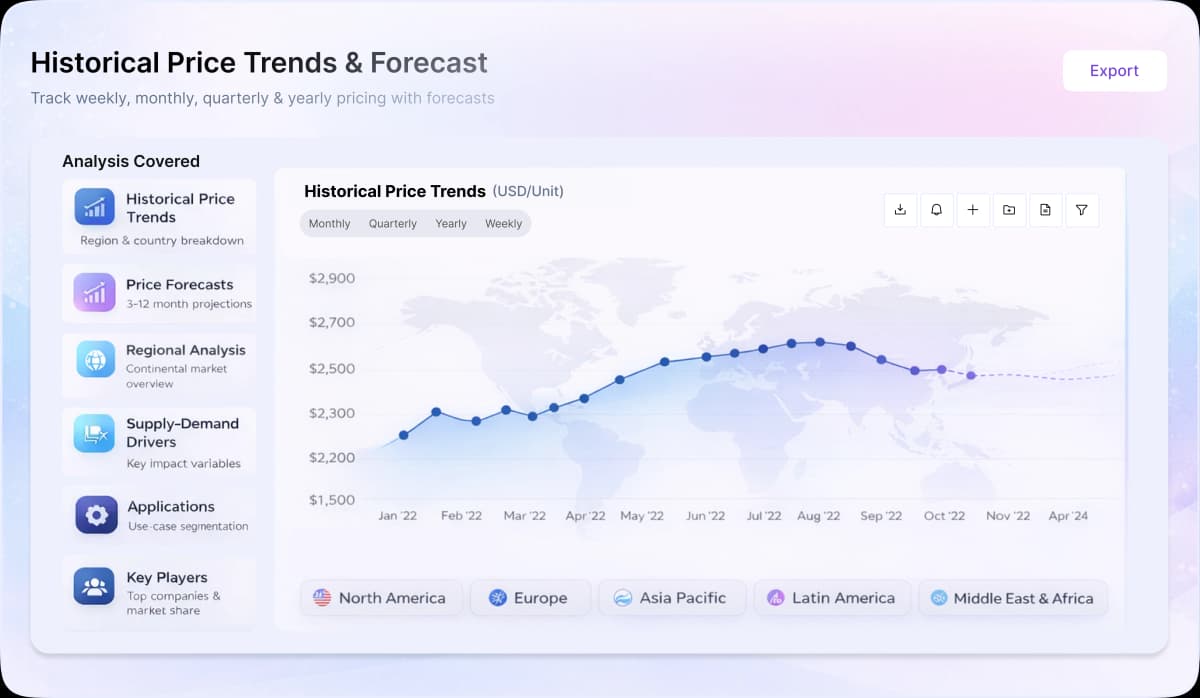
Turn price intelligence into action with the Procurement Resource Database. Log in or subscribe to unlock live price trends, historical charts, supplier databases, cost curves, and analyst-backed insights across chemicals, agriculture, energy, packaging, and more. Use these tools to benchmark your contracts, plan budgets with confidence, and stay ahead of market moves on every product you buy.

Pasta Dashboard Inclusions

Pasta Price Dasboard

0

+

Products

0

+

Regions

0

+

Subscriptions

In 2024, the global pasta market reflected improving supply conditions, shifting trade flows, and steady consumer demand. Italy, the world’s leading pasta producer, recorded stronger output growth, supported by a resilient food manufacturing sector that outperformed the broader industrial economy. Export volumes increased more than export values, suggesting lower average selling prices were used to remain competitive in international markets. At the same time, easing domestic production costs helped reduce retail price pressure in some regions. On the supply side, Türkiye emerged as a key durum wheat exporter, supported by a strong harvest, favorable yields, and currency advantages. Its shipments helped offset weaker crops in Canada and parts of Europe, particularly for Mediterranean buyers such as Italy. Additional supplies from Russia and Kazakhstan also improved trade flexibility. However, despite better availability, global durum wheat stocks remained historically tight, keeping market sentiment cautious. Demand stayed firm across major importing countries, including Germany, France, the United Kingdom, and the United States.



About Pasta

Pasta is of one of the most common yet famous Italian food that is made from a mixture of flour, eggs, and water. It is cooked by boiling or baking. It is formed into different shapes. Spaghetti, macaroni, and noodles are types of pasta. Further, it is available in two varieties, that is, fresh and dried.

Pasta Product Detail
Industrial Uses

Savoury Dishes, Culinary Uses

Supplier Database

Nestlé SA, Unilever, ITC Limited, Barilla G. e R. F.lli S.p.A. P.I., Conagra Foodservice, Inc.

Regional Coverage

Asia Pacific

China, India, Indonesia, Pakistan, Bangladesh, Japan, Philippines, Vietnam, Iran, Thailand, South Korea, Iraq, Saudi Arabia, Malaysia, Nepal, Taiwan, Sri Lanka, UAE, Israel, Hongkong, Singapore, Oman, Kuwait, Qatar, Australia, and New Zealand

Europe

Germany, France, United Kingdom, Italy,Spain, Russia, Turkey, Netherlands, Poland, Sweden, Belgium, Austria, Ireland Switzerland, Norway, Denmark, Romania, Finland, Czech Republic, Portugal and Greece

North America

United States and Canada

Latin America

Brazil, Mexico, Argentina, Columbia, Chile, Ecuador, and Peru

Africa

South Africa, Nigeria, Egypt, Algeria, Morocco

CurrencyUS$ (Data can also be provided in local currency)

Supplier Database AvailabilityYes

Customization ScopeThe report can be customized as per the requirements of the customer

Post-Sale Analyst Support360-degree analyst support after report delivery

Note: Our supplier search experts can assist your procurement teams in compiling and validating a list of suppliers indicating they have products, services, and capabilities that meet your company's needs.

Pasta Production Processes

  • Production of Pasta via Rolling and Drying Process

Pasta is prepared by mixing milled wheat, water, eggs (for egg noodles or egg spaghetti), and often optional ingredients. These ingredients are typically added to a continuous, high capacity auger extruder, that can be equipped with a variety of dies that determine the shape of the pasta.

Our Price Analysis Methodology

Schedule Demo

Schedule A Demo

Experience how Procurement Resource transforms raw material price data into clear, decision ready intelligence. Optimise your performance with reliable, expert market data and analysis. Schedule your demo today to experience a live walk-through where our experts will showcase interactive price charts, forecasted prices, and insights driving the prices for your key commodities, tailored to your workflows. Contact us now!

Our Team will be happy to assist you

We are just a text away

Still Need Help ?

Europe & Africa

+44 7573 171117

[email protected]

USA & Canada

+1 307 363 1045

[email protected]

APAC

+91 8850629517

[email protected]

Other Related Reports

Pasta Production from Rolling and Drying Processes

This report provides the cost structure of pasta production from rolling and drying processes. A mixture is prepared using semolina flour and water, which is constantly kneaded.

Unlock full access to Procurement Resource's price databases, interactive charts, and short-term forecasts for thousands of commodities. Elevate your sourcing decisions by comparing prices across regions, downloading historical data, and layering in analyst-backed insights, all with our flexible plans that scale as your portfolio grows.

Still have any Questions

Contact Us
Mastercard
Wire
VISA
Stripe

Related News

View All

Why Procurement Database

Extensive Commodity Price Database

Extensive Commodity Price Database

Track prices, market movements, supply-demand dynamics, and industry developments across hundreds of commodities through a centralized intelligence platform built for informed procurement decisions.

Reliable Price Forecasting & Market Outlooks

Reliable Price Forecasting & Market Outlooks

Understand market fluctuations using analyst-backed forecasts, historical pricing patterns, and evolving industry trends to strengthen sourcing strategies and budget planning.

Data Driven Cost & Procurement Optimization

Data Driven Cost & Procurement Optimization

Leverage cost models, pricing benchmarks, and procurement insights to evaluate purchasing opportunities, improve negotiations, and enhance operational efficiency.

Global Coverage with region-specific Market Insights

Global Coverage with region-specific Market Insights

Access region-specific price trends, trade activities, capacity changes, and supply chain developments influencing commodity markets worldwide.

1/4