Udeesha Tomar
AVP - Strategy and Solutions
Leading procurement research solutions across chemicals, materials, and food & beverages, with expertise in price forecasting and market analytics.
Asia
In Asia, Polyethylene Glycol (PEG) prices fell in the fourth quarter of 2025. Supply increased as several new ethylene oxide and ethylene glycol units started running, especially in China. Existing plants operated at high rates, which added more material to the market. At the same time, downstream demand from industries like cosmetics, pharmaceuticals, and textiles remained weak. Buyers were careful and limited their purchases, keeping inventories low. Crude oil prices also declined, which reduced production costs but did not support PEG prices. Overall, oversupply combined with cautious buying caused prices to move down steadily through the quarter.
Europe
In Europe, PEG prices mostly stayed stable but trended slightly lower in Q4’25. Supply was balanced, as producers adjusted their production to match demand. There were no major disruptions or new capacities coming online during the period. Downstream demand from sectors such as personal care, detergents, and industrial applications remained moderate but did not increase strongly. Buyers acted cautiously because of slow economic growth and uncertainty in industrial activity. Energy and feedstock costs were lower, which eased production pressure but did not push prices up. As a result, PEG prices moved sideways with a slight downward tendency.
North America
In North America, PEG prices softened gradually in Q4’25. Supply remained ample because production continued steadily, and exports were limited due to port delays. Downstream demand from industries like packaging, pharmaceuticals, and antifreeze applications stayed muted. Buyers avoided long-term commitments and followed a wait-and-see approach. Falling ethylene oxide and crude oil costs reduced cost pressures but also contributed to lower prices. Overall, the market declined slowly, but the drop was less sharp compared to Asia.
Analyst Insight
According to Procurement Resource, Polyethylene Glycol (PEG) prices are expected to remain under pressure as supply growth continues to exceed demand recovery in major regions.
Related Report
Get real-time price assessments, periodic trends, forecasts and price driver insights across key global markets.
Unlock Price Insights NowOur Clients

Turn price intelligence into action with the Procurement Resource Database. Log in or subscribe to unlock live price trends, historical charts, supplier databases, cost curves, and analyst-backed insights across chemicals, agriculture, energy, packaging, and more. Use these tools to benchmark your contracts, plan budgets with confidence, and stay ahead of market moves on every product you buy.

0
+Products
0
+Regions
0
+Subscriptions
Asia
In Asia, the Polyethylene Glycol (PEG) market showed mostly steady movement during Q3’25. Feedstock conditions were stable as ethylene-based derivatives, including glycols, held firm across the region despite some weakness in propylene-related chains.
Domestic demand from pharmaceuticals, cosmetics, and surfactants stayed consistent but not strong, as producers in many Asian countries operated cautiously due to broader oversupply in the polymer and chemical sectors. China’s overall export strength in chemicals continued to shape regional sentiment,
even though direct PEG trade was not as heavily influenced as commodity polymers. Availability remained comfortable because regional plants faced no major disruptions, and upstream aromatics and olefins markets moved within narrow ranges. As a result, PEG prices in Asia experienced only mild changes through the quarter, with sentiment staying quiet.
Europe
Europe’s PEG market remained soft through most of the quarter, weighed down by the region’s broader chemical slowdown. Downstream buyers kept consumption low due to weak economic conditions and slow activity in personal care, detergents, and specialty chemical applications. High production costs and low operating rates across the European chemical sector added pressure,
as many plants struggled with poor margins and limited demand recovery. The weak performance of the continent’s polymer and monomer chains including ethylene, benzene, and acrylates further signaled subdued industrial health. Imported materials from Asia and the Middle East stayed competitive, limiting any chance for upward pricing. With industry sentiment generally pessimistic and little improvement in end-user sectors, PEG prices in Europe moved slightly weaker and remained under strain throughout Q3’25.
North America
In North America, PEG prices showed better stability compared with other regions. Feedstock conditions were supportive, as monoethylene glycol and related glycols saw steady uptake in surfactants and pharma applications. Strong export performance in polymers and balanced logistics helped prevent large inventory builds for many chemical producers, indirectly supporting PEG sentiment. Demand from personal care, pharmaceuticals, and household products stayed steady, and improving expectations for consumer-related sectors toward the end of the quarter provided mild strength. Buyers were still cautious, but overall trading was healthier than in Europe, which helped PEG prices hold within a stable range.
A versatile, water-soluble polymer made up of ethylene glycol repeating units is known as polyethylene glycol (PEG). PEG is used extensively in pharmaceuticals, cosmetics, and industrial applications and comes in a wide range of molecular weights. It serves as an excipient, lubricant, and non-toxic, biocompatible solubilizing agent in pharmaceuticals and personal care products.
PEG can enhance medication delivery systems by increasing drug solubility and bioavailability due to its hydrophilic nature. Additionally, PEG is used in industrial activities including the creation of antifreeze and as a stabilizing agent in a variety of chemical reactions. PEG is a crucial substance in numerous industries because of its adaptability, safety, and efficiency.


H(OCH2CH2)nOH
Packing film, Insulation for wires and cables, Solar Cells, Medical implants
Polyglycol, Polyoxy ethylene
Akzo Nobel N.V., BASF SE, The Dow Chemical Company, Liaoning Oxiranchem Inc, Clariant AG, INEOS Group Holdings S.A., Huntsman Corporation, Jiangsu Haian Petroleum Chemical Factory
CurrencyUS$ (Data can also be provided in local currency)
Supplier Database AvailabilityYes
Customization ScopeThe report can be customized as per the requirements of the customer
Post-Sale Analyst Support360-degree analyst support after report delivery
Note: Our supplier search experts can assist your procurement teams in compiling and validating a list of suppliers indicating they have products, services, and capabilities that meet your company's needs.
The synthesis of propylene glycol is carried out using ethylene oxide. In this procedure, sodium hydroxide or potassium hydroxide act as catalysts while ethylene oxide and ethylene glycox react in their presence. Furthermore, polyethylene glycol is finally produced using suspension polymerization.

AVP - Strategy and Solutions
Leading procurement research solutions across chemicals, materials, and food & beverages, with expertise in price forecasting and market analytics.
Our Price Analysis Methodology

Experience how Procurement Resource transforms raw material price data into clear, decision ready intelligence. Optimise your performance with reliable, expert market data and analysis. Schedule your demo today to experience a live walk-through where our experts will showcase interactive price charts, forecasted prices, and insights driving the prices for your key commodities, tailored to your workflows. Contact us now!
Our Team will be happy to assist you
We are just a text away
Still Need Help?
Unlock full access to Procurement Resource's price databases, interactive charts, and short-term forecasts for thousands of commodities. Elevate your sourcing decisions by comparing prices across regions, downloading historical data, and layering in analyst-backed insights, all with our flexible plans that scale as your portfolio grows.
Still have any Questions
Contact Us


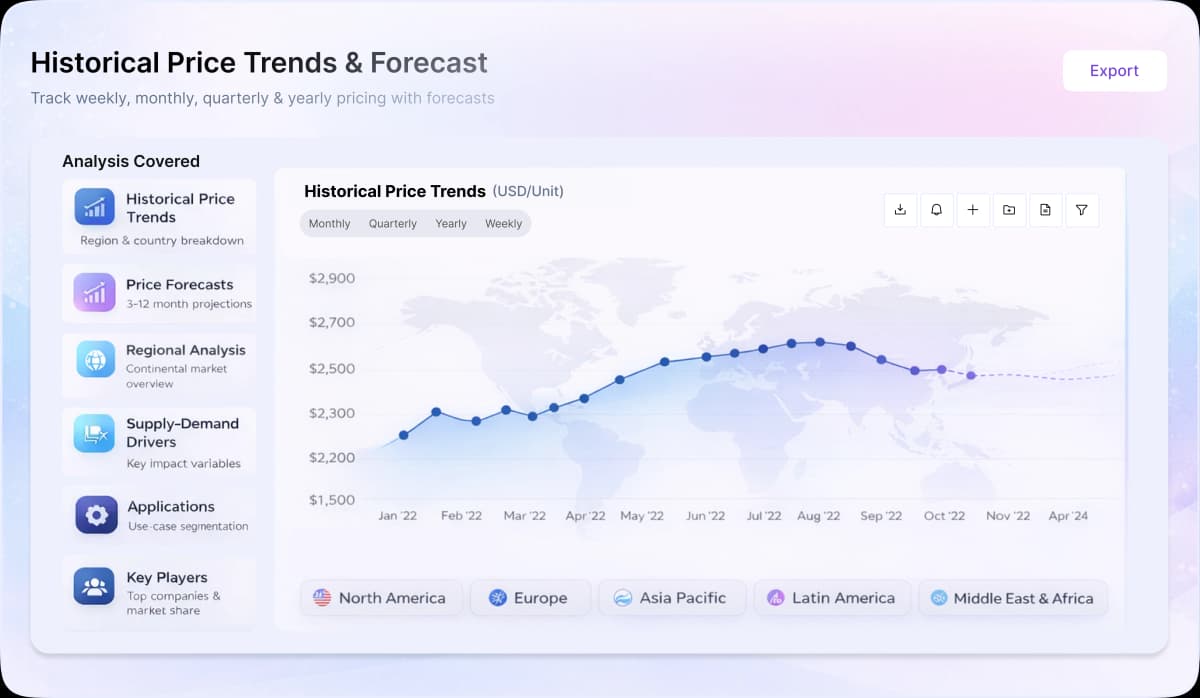
Price Trend Dashboard - What's Included
Price trends across a diverse portfolio of categories and products, spanning board to niche chemicals
Coverage extendable to grade-specific chemicals based on procurement requirements
Regular price tracking supported by robust historical datasets
News, policy updates, and key market drivers impacting price movements
Short-term and long-term price outlooks and forecasts
Supply-demand dynamics and capacity-driven market analysis