

Udeesha Tomar
AVP - Strategy and Solutions
Leading procurement research solutions across chemicals, materials, and food & beverages, with expertise in price forecasting and market analytics.

Asia
Quicklime or calcium oxide showcased varying price trends during the first quarter of the year 2024. With the markets witnessing both upward and downward forces, the price trend was more or less confined as the prices fluctuated within narrow boundaries. The downstream steel industry was giving a positive response as the orders were firm. However, the subdued demands from the construction sector were exerting negative pressure on the prices.
Regionally, the inventories were sufficiently supplied in major key markets, particularly India and China. Manufacturers did incline the prices after witnessing a surge in production costs. The rise in raw material rates and energy costs forced suppliers to uplift the prices to sustain the profit margins. Stable demands helped support the market dynamics. Overall, a largely stable and range-bound price trend was witnessed for quicklime in the Asian markets during the said period.
Europe
In contrast with the stability in the Asian quicklime market, the price trend in the European markets was rather tepid. The construction sector in Europe was challenged amidst the ongoing difficult trading situations. The procurement, especially international procurement of raw materials, was difficult because of the supply chain curtailments. The Russia and Ukraine war heated up even more as it entered its third year. Along with that, the Israel and Hamas conflict further affected the market dynamics.
On the other hand, the pirates started attacking shipments in the Red Sea. These rising Houthi pirate attacks led to an approximate 50% decline in the vessels passing through the Suez Canal. The canal represents the major maritime gateway between Asia and Europe. This reflected the degradation in trade sentiments over the said period. Therefore, a bearish price trend was observed for quicklime in the European markets during Q1’24.
North America
In the American region, the quicklime market was relatively more optimistic compared to the other global markets. The supply and demand outlooks were able to sustain their parity during the said period. Upstream costs increased as the freight charges rose, and the increased demands from the downstream steel and construction sectors also provided a positive push. Despite some occasional dips, the CaO price trajectory mostly remained inclined in America during the concerned span.
Analyst Insight
According to Procurement Resource, Quicklime prices are likely to remain turbulent in the coming months. Demand projections are positive; however, the upstream dynamics will also play a part in driving these prices.
Procurement Resource provides latest prices of Quicklime. Each price database is tied to a user-friendly graphing tool dating back to 2014, which provides a range of functionalities: configuration of price series over user defined time period; comparison of product movements across countries; customisation of price currencies and unit; extraction of price data as excel files to be used offline.
Related Report
Need Latest Quicklime Prices?
Get real-time price assessments, periodic trends, forecasts and price driver insights across key global markets.
Our Clients































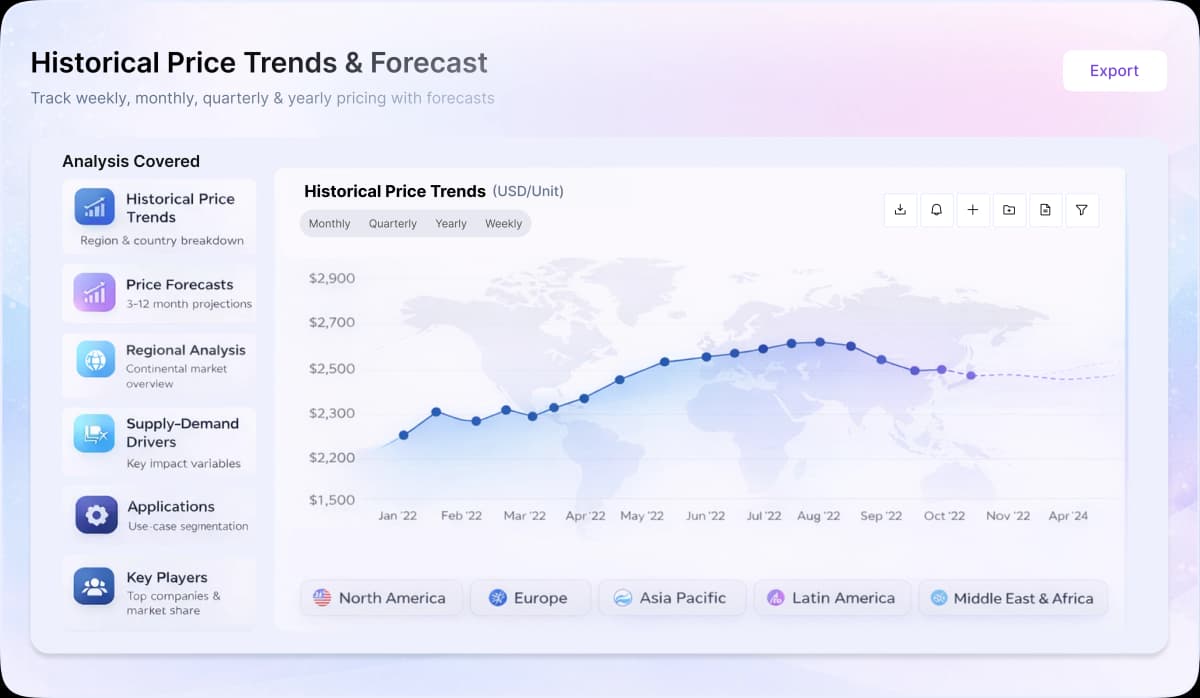
Turn price intelligence into action with the Procurement Resource Database. Log in or subscribe to unlock live price trends, historical charts, supplier databases, cost curves, and analyst-backed insights across chemicals, agriculture, energy, packaging, and more. Use these tools to benchmark your contracts, plan budgets with confidence, and stay ahead of market moves on every product you buy.
0
+Products
0
+Regions
0
+Subscriptions
Quicklime, or calcium oxide (CaO), is a caustic alkaline substance produced by heating limestone (calcium carbonate) in a kiln to at least 825°C, where it undergoes thermal decomposition. This process releases carbon dioxide and leaves quicklime, which is highly reactive with water, producing heat and forming calcium hydroxide. Quicklime is widely used in the steel industry for refining, in environmental applications for water treatment, and as a key component in cement and mortars in construction. It's also used in paper manufacturing and agriculture.
CaO
Steel Manufacturing, Water treatment, Construction, Chemical Production, Paper Production, Mining
Calcium oxide
Carmeuse, Schäfer Kalk GmbH & Co KG, Emirates Lime factory (Al Jazeera Industrial Group), SA Transcar (Royal Volker Stevin), Graymont, Mississippi Lime, Cheney Lime & Cement Company, Pete Lien & Sons, Inc Cape Lime (Pty) Ltd, Linwood Mining & Minerals Corporations
CurrencyUS$ (Data can also be provided in local currency)
Supplier Database AvailabilityYes
Customization ScopeThe report can be customized as per the requirements of the customer
Post-Sale Analyst Support360-degree analyst support after report delivery
Note: Our supplier search experts can assist your procurement teams in compiling and validating a list of suppliers indicating they have products, services, and capabilities that meet your company's needs.
The production process of burnt lime, commonly known as quick lime, begins with the thermal decomposition of limestone. The reaction is initiated by heating limestone or calcium carbonate at a high temperature of approximately 900 °C. The process results in the production of carbon dioxide as a byproduct which is forced off amid the reaction that results in the formation of quicklime as the final product.
Our Price Analysis Methodology
AVP - Strategy and Solutions
Leading procurement research solutions across chemicals, materials, and food & beverages, with expertise in price forecasting and market analytics.
Experience how Procurement Resource transforms raw material price data into clear, decision ready intelligence. Optimise your performance with reliable, expert market data and analysis. Schedule your demo today to experience a live walk-through where our experts will showcase interactive price charts, forecasted prices, and insights driving the prices for your key commodities, tailored to your workflows. Contact us now!
Our Team will be happy to assist you
We are just a text away
Still Need Help?
This study analyzes Quicklime Production By Thermal Decomposition Method, covering manufacturing, process flow, operating expenses, and financial considerations.
Unlock full access to Procurement Resource's price databases, interactive charts, and short-term forecasts for thousands of commodities. Elevate your sourcing decisions by comparing prices across regions, downloading historical data, and layering in analyst-backed insights, all with our flexible plans that scale as your portfolio grows.
Still have any Questions
Contact Us



Price Trend Dashboard - What's Included
Price trends across a diverse portfolio of categories and products, spanning board to niche chemicals
Coverage extendable to grade-specific chemicals based on procurement requirements
Regular price tracking supported by robust historical datasets
News, policy updates, and key market drivers impacting price movements
Short-term and long-term price outlooks and forecasts
Supply–demand dynamics and capacity-driven market analysis

Track prices, market movements, supply-demand dynamics, and industry developments across hundreds of commodities through a centralized intelligence platform built for informed procurement decisions.

Understand market fluctuations using analyst-backed forecasts, historical pricing patterns, and evolving industry trends to strengthen sourcing strategies and budget planning.

Leverage cost models, pricing benchmarks, and procurement insights to evaluate purchasing opportunities, improve negotiations, and enhance operational efficiency.
Access region-specific price trends, trade activities, capacity changes, and supply chain developments influencing commodity markets worldwide.