Rifampicin Price Trend Analysis 2026: Market Insights, Latest News, Supply Demand Analysis, Historical Prices & Price Drivers

Shriya Singh profile photo
Written ByShriya Singh

Procurement Resource Database

Laptop screen

Turn price intelligence into action with the Procurement Resource Database. Log in or subscribe to unlock live price trends, historical charts, supplier databases, cost curves, and analyst-backed insights across chemicals, agriculture, energy, packaging, and more. Use these tools to benchmark your contracts, plan budgets with confidence, and stay ahead of market moves on every product you buy.

0

+

Products

0

+

Regions

0

+

Subscriptions

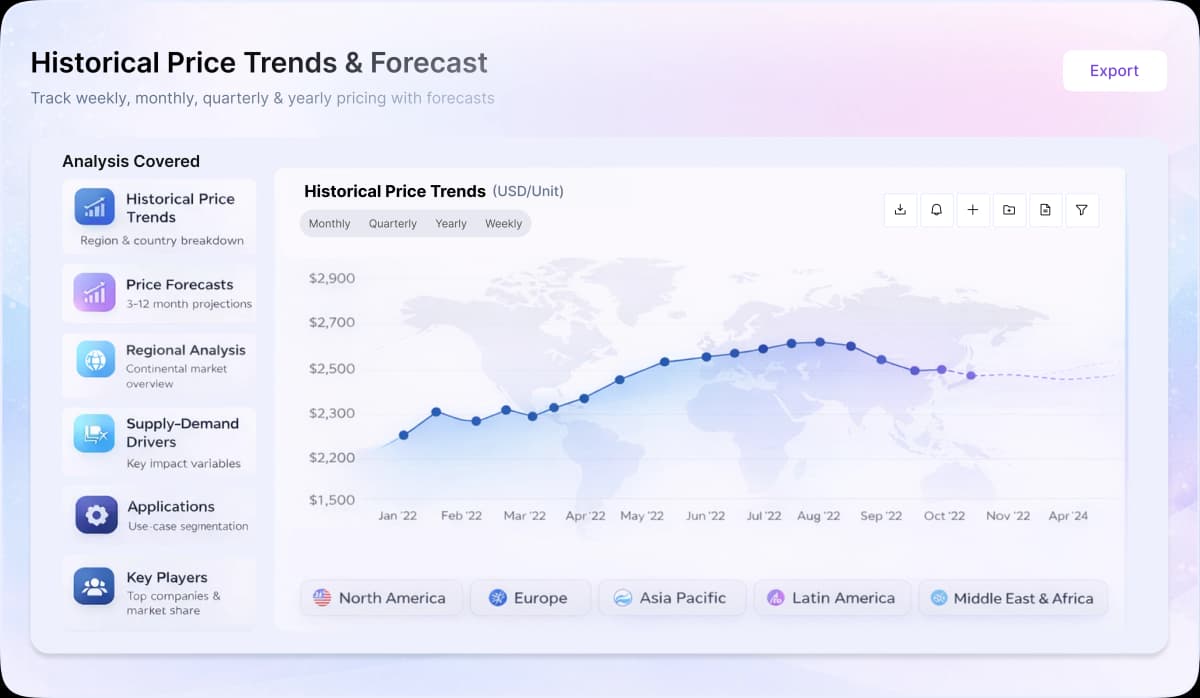
During the second half of 2025, Rifampicin prices in India remained largely stable following the annual Wholesale Price Index (WPI)-linked revision of 1.74% implemented from April 2025. No additional broad-based WPI adjustment was introduced during H2, and prices continued to be governed under the National Pharmaceutical Pricing Authority's (NPPA) ceiling price framework. Manufacturers maintained compliance with notified ceiling prices while ensuring an uninterrupted supply of this essential anti-tuberculosis medicine. Routine retail price notifications issued by the NPPA during the period reflected continued regulatory oversight rather than significant market-driven price revisions.

Government price controls continued to shield the domestic market from fluctuations in raw material and manufacturing costs, keeping Rifampicin affordable despite inflationary pressures affecting the broader pharmaceutical industry. Manufacturers were required to adhere to prescribed ceiling prices, while retailers continued displaying updated prices in accordance with regulatory requirements. Overall, the market exhibited a stable pricing trend during H2 2025, with regulatory mechanisms remaining the primary factor influencing Rifampicin prices rather than supply-demand imbalances.


About Rifampicin

Rifampin, often known as rifampicin, is a macrocyclic antibiotic having significant action against mycobacteria that is frequently used in conjunction with other medications to treat tuberculosis. A semi-synthetic antibiotic produced from Amycolatopsis rifamycinica, rifampicin is a member of the rifamycin family.

As an EC 2.7.7.6 (RNA polymerase) inhibitor, DNA synthesis inhibitor, antitubercular agent, leprostatic drug, Escherichia coli metabolite, protein synthesis inhibitor, neuroprotective agent, angiogenesis inhibitor, pregnancy X receptor agonist, antineoplastic agent, antiamoebic agent, and geroprotector, it also plays these other roles.

Rifampicin Product Detail

HS Code
30049057
Chemical Formula

C43H58N4O12

CAS Number
13292-46-1
Molecular Weight
822.9 g/mol
Industrial Uses

Antibacterial medicine

Synonyms

rifampin, Rifadin

Supplier Database

Wellona Pharma, AVANSCURE LIFESCIENCES PVT. LTD, Hebei Xingang Pharmaceutical Co., Ltd., Mercator Pharmaceutical Solutions

Regional Coverage

Asia Pacific

China, India, Indonesia, Pakistan, Bangladesh, Japan, Philippines, Vietnam, Iran, Thailand, South Korea, Iraq, Saudi Arabia, Malaysia, Nepal, Taiwan, Sri Lanka, UAE, Israel, Hongkong, Singapore, Oman, Kuwait, Qatar, Australia, and New Zealand

Europe

Germany, France, United Kingdom, Italy,Spain, Russia, Turkey, Netherlands, Poland, Sweden, Belgium, Austria, Ireland Switzerland, Norway, Denmark, Romania, Finland, Czech Republic, Portugal and Greece

North America

United States and Canada

Latin America

Brazil, Mexico, Argentina, Columbia, Chile, Ecuador, and Peru

Africa

South Africa, Nigeria, Egypt, Algeria, Morocco

CurrencyUS$ (Data can also be provided in local currency)

Supplier Database AvailabilityYes

Customization ScopeThe report can be customized as per the requirements of the customer

Post-Sale Analyst Support360-degree analyst support after report delivery

Note: Our supplier search experts can assist your procurement teams in compiling and validating a list of suppliers indicating they have products, services, and capabilities that meet your company's needs.

Rifampicin Production Processes

  • Production of Rifampicin from Mixed Carbon Source

In this procedure, a Nocardia mediterranei culture is utilised to inoculate a fermentation media made of starch, glucose, starch from soybeans, peanut meal, and other ingredients. The result of the fermentation is rifamycin B, which is then transformed into rifamycin-O, rifamycin-S, rifamycin SV, and lastly rifampicin.

Frequently Asked Questions

The rifampicin outlook for 2026 remains stable to firm, underpinned by steady TB treatment demand from public-sector programs, hospitals, and fixed-dose combination medicines. India's dominant supply position, with roughly 500 API manufacturers and expanded bulk-drug capacity, supports availability, while API reliability, freight costs, and compliance expenses are the main price influencers. Stable tender supply should cap sharp moves, but any sustained API shortage or freight disruption could push delivered costs higher.

Rifampicin prices tend to stay stable to firm, driven by regulated public-sector TB procurement rather than open spot trading. API supply reliability is the central price lever: API-related shortage concerns for rifampicin capsules push European sentiment firmer, while India's dominant supply base, supported by roughly 500 API manufacturers and expanded bulk drug capacity, underpins supply resilience. Feedstock costs, including KSMs, intermediates, packaging, compliance costs, and freight, add mild delivered-cost pressure, with shipping risk nudging landed costs higher.

Asia dominates rifampicin production and exports, with India and China as the primary supply base. India's pharmaceutical export network reaches 191 countries, supported by roughly 500 API manufacturers representing nearly 8% of global API capacity and expanded bulk drug capacity of approximately 55,100 metric tonnes per year. Lupin is among the established Indian producers, and China also contributes through large API manufacturers. Europe and North America are the key import markets, with Europe facing firmer sentiment due to API-related capsule shortage concerns and North America holding steady under regulated demand and strict quality checks.

Rifampicin is produced through a semi-synthetic route beginning with fermentation of Nocardia mediterranei on starch, glucose, and peanut meal media to yield rifamycin B, which is converted through rifamycin-O and rifamycin-S to rifamycin SV. Rifamycin SV undergoes aminomethylation with formaldehyde and pyrrolidine, oxidation with lead tetraacetate, and hydrolysis with ascorbic acid to form 3-formylrifamycin SV. The final step couples this intermediate with 1-amino-4-methylpiperazine to produce rifampicin API, used in tuberculosis fixed-dose combinations, leprosy therapy, and hospital antibiotic regimens.

Rifampicin demand is primarily driven by pharmaceutical applications, especially tuberculosis treatment and tuberculosis-related mycobacterial infections. Healthcare demand also comes from treating brucellosis, leprosy, other bacterial infections, and pruritus associated with primary biliary cirrhosis. Public-sector tuberculosis programs, hospitals, tenders, and fixed-dose combination medicines sustain regular API requirements. Because treatment commonly involves daily medication for 4-6 months, purchasing activity is steady rather than sporadic. Firm downstream demand supports supplier utilization, while regulated procurement and reliable API availability limit sharp price movements; persistent API, freight, and compliance pressures can keep pricing firm.

China and India dominate rifampicin API supply, with India hosting roughly 500 API manufacturers representing nearly 8% of global API capacity and exporting to 191 countries. This concentration gives suppliers strong negotiating leverage and ties pricing to freight, compliance costs, and shipping risk, adding mild delivered-cost pressure. It also means that any disruption in Indian or Chinese API output, whether from regulatory action, logistics bottlenecks or feedstock shortages, can quickly tighten availability for formulators and public-sector tender buyers worldwide.

Procurement Resource assesses rifampicin prices through a structured, data-driven methodology that combines primary engagement with producers, suppliers and traders, secondary market data, monitoring of feedstock and input costs, trade-flow and inventory tracking, and exchange or spot benchmarks. These inputs are validated and translated into a transparent price assessment and outlook. The detailed methodology is available on the Procurement Resource website.

Our Price Analysis Methodology

About the Author

Shriya Singh profile photo

Shriya Singh

Business Insights Analyst

Helping procurement and sourcing teams navigate complex markets through data-driven research, category intelligence, and actionable insights - with a focus on identifying market trends, analyzing supply-side developments, and delivering clear intelligence that supports informed business decisions.

Schedule Demo

Schedule A Demo

Experience how Procurement Resource transforms raw material price data into clear, decision ready intelligence. Optimise your performance with reliable, expert market data and analysis. Schedule your demo today to experience a live walk-through where our experts will showcase interactive price charts, forecasted prices, and insights driving the prices for your key commodities, tailored to your workflows. Contact us now!

Our Team will be happy to assist you

We are just a text away

+1

Still Need Help?

Europe & Africa

+44 7573 171117

[email protected]

USA & Canada

+1 254 254 1750

[email protected]

APAC

+91 8850629517

[email protected]

Other Related Reports

Rifampicin Production from Mixed Carbon Source

This report presents the economics of rifampicin production from mixed carbon sources (peanut meal, soybean flour, glucose, and starch) via a typical fermentation process.

Unlock full access to Procurement Resource's price databases, interactive charts, and short-term forecasts for thousands of commodities. Elevate your sourcing decisions by comparing prices across regions, downloading historical data, and layering in analyst-backed insights, all with our flexible plans that scale as your portfolio grows.

Still have any Questions

Contact Us
Mastercard
Wire
VISA
Stripe

Why Procurement Database

Commodity Market Intelligence

Commodity Market Intelligence

Track prices, market movements, supply-demand dynamics, and industry developments across hundreds of commodities through a centralized intelligence platform built for informed procurement decisions.

Price Forecasts & Market Outlooks

Price Forecasts & Market Outlooks

Understand market fluctuations using analyst-backed forecasts, historical pricing patterns, and evolving industry trends to strengthen sourcing strategies and budget planning.

Cost & Procurement Optimization

Cost & Procurement Optimization

Leverage cost models, pricing benchmarks, and procurement insights to evaluate purchasing opportunities, improve negotiations, and enhance operational efficiency.

Global & Regional Market Insights

Global & Regional Market Insights

Access region-specific price trends, trade activities, capacity changes, and supply chain developments influencing commodity markets worldwide.

1/4